Top 10 Packaging Options for Custom Leather Handbags
A Practical Guide for Brands, Retailers, and Wholesale Buyers

The best packaging for a custom leather handbag protects the finish, preserves the shape, and presents the brand clearly without adding unnecessary shipping volume. A beautiful gift box matters, but so does the condition of the bag inside it after several rounds of handling.
For wholesale and private label buyers, packaging is a system of layers. A dust bag protects the surface, internal supports help preserve the silhouette, a retail box creates the presentation, and a shipping carton carries the transport load. This guide explains ten useful options, how to combine them, and what to approve before placing a bulk order.
Quick Summary
- Select packaging by bag construction, sales channel and shipping route, rather than appearance alone.
- Use a soft contact layer and separate exposed hardware from leather surfaces.
- Support structured bags without forcing handles, straps or corners into tight spaces.
- Treat retail packaging and transport packaging as separate specifications.
- Compare the complete packed cost, including freight volume, assembly and storage.
- Approve a fully packed sample with the actual handbag before mass production.
Start with the Four Packaging Layers
These options are complementary components, not ten competing replacements for one another. A luxury box cannot replace a properly specified shipping carton, and a plastic bag cannot prevent crushing.
| Layer | Main purpose | Typical components |
| Contact protection | Reduce rubbing and surface marks | Dust bag, tissue, protective sleeves |
| Support and cushioning | Preserve shape and limit movement | Internal filling, dividers, pads |
| Retail presentation | Communicate the brand at handover | Gift box, shopping bag, care card |
| Transport protection | Withstand handling and stacking | Shipping box, master carton, suitable mailer |
Begin with the dimensions and construction of the finished bag. A soft hobo, a structured satchel, and a hard-frame clutch need different supports. Review the BagsPlaza leather handbag collection when defining the product and its packing requirements together.
The Top 10 Handbag Packaging Options
Cotton and Other Soft Dust Bags

A soft dust bag gives the customer a useful storage cover after purchase and offers space for a discreet brand logo. Cotton is one option; other fabrics need their own composition and performance checks. Satin describes a weave, not a fiber, so ask what a satin bag is actually made from.
Best for premium retail collections and reusable storage covers. Specify fabric composition, weight, finished dimensions, seams, closure, and logo placement. Allow room around handles and hardware without excessive loose material.
A dust bag provides little crush protection. Check lint shedding, dye transfer, and rubbing against the actual leather finish, especially for light-colored bags. Do not assume every soft fabric is equally breathable or suitable for long-term contact.
Protective Tissue and Paper Wrap

Tissue separates surfaces, wraps handles, and adds a controlled reveal during unboxing. Clean white paper is often easier to assess than heavily printed wrapping when the leather is pale or absorbent.
Best as a contact layer inside a dust bag or box, and for gentle internal shape support. Choose a paper specification appropriate to the finish and test any print, ink, or coating before approval.
Paper provides limited moisture and impact protection. Avoid tight folds that press into leather and printed surfaces that may transfer color. For storage-oriented protection, discuss unbuffered acid-free tissue with the supplier rather than assuming any decorative tissue is suitable.
Clear PE or PP Polybags

Clear plastic bags provide low-cost unit separation and make style labels visible during stock handling. Identify the actual resin, such as polyethylene or polypropylene; the word polybag does not establish that the material is nylon.
Best for wholesale unit packing inside an appropriate master carton. Specify film thickness, bag size, closure, barcode placement and any destination or sales-channel labeling requirements.
Vent holes do not prevent mold, and a plastic enclosure does not remove moisture already present in the product. Pack dry goods and select the moisture-control approach for the route. A polybag offers no meaningful resistance to stacking pressure.
Frosted Zipper Pouches

A frosted pouch can provide a tidy presentation for a clutch or compact handbag and may be reused by the customer. Ask the supplier to identify the material rather than accepting CPE as a complete technical specification.
Best for flat or compact products where the pouch does not distort the opening or corners. Confirm dimensions, film thickness, zipper closure, and logo adhesion using a finished sample.
The pouch needs separate cushioning and transport protection. Its closure and reduced ventilation may retain moisture under unfavorable conditions. Avoid describing it as waterproof or recyclable without evidence for the actual pouch and disposal market.
Rigid Gift Boxes
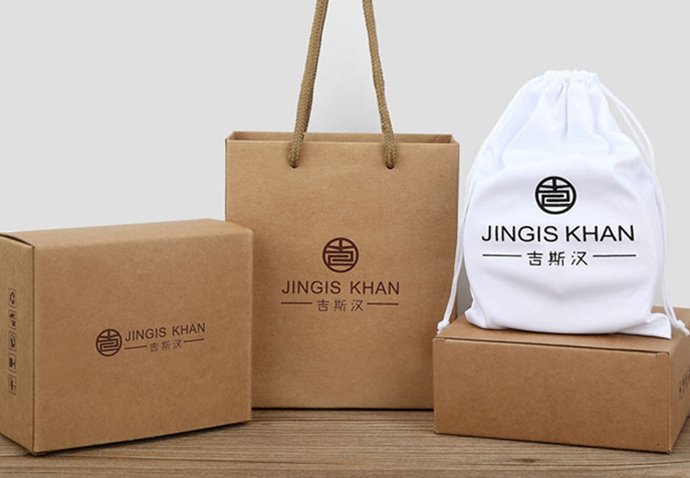
Rigid boxes create a substantial retail presentation and can support premium gifting. Lid-and-base, drawer and magnetic-closure designs offer different opening experiences and assembly requirements.
Best for luxury retail and gift orders where the presentation justifies the added cost and volume. Specify internal dimensions, board construction, covering, closure, logo finish and the method used to hold the bag in place.
A retail gift box is not automatically a shipping box. Verify corner strength and fit, then protect it with an outer carton. Check that an insert restrains the bag without pressing into the leather, and that loose fittings cannot move during handling.
Foldable Presentation Boxes

A foldable box can reduce storage volume before use and still offer a branded retail presentation after assembly. It is a distinct construction choice, not inherently a more sustainable version of a rigid box.
Best for retailers that can assemble boxes locally or keep packaging separate from stock until sale. Approve the assembled box, closure tabs, adhesive areas and product fit.
Flat shipping saves space only while the boxes remain unassembled. If every bag ships inside an assembled box, recalculate the packed volume. Include local assembly labor and confirm that repeated handling will not weaken folds or closures.
Branded Shopping Bags

A shopping bag extends the brand into the customer’s journey after a store purchase. Its paper, handle, and print quality should match the handbag price point without overwhelming the product.
Best for boutiques, stores and events. Specify dimensions, paper weight, reinforced base, handle attachment, and the intended carried load. Ship unused shopping bags separately where this makes packing more efficient.
A shopping bag is not suitable as the only parcel-shipping protection. Laminations, handles and mixed components also affect disposal options; a paper appearance alone does not establish recyclability.
Reusable Fabric and Felt Presentation Bags

Reusable presentation bags can add value when customers have a clear use for them beyond the initial purchase. Felt, woven cotton and other textiles offer different textures and printing possibilities.
Best for collections where a reusable accessory fits the brand. Specify fiber composition, thickness or weight, stitching, closure and expected carrying function. Test for lint and color transfer.
Felt may be wool, synthetic or blended. Reusability does not by itself establish lower environmental impact. Bulkier fabrics may increase carton size, and a decorative fabric pouch does not replace structural transport protection.
Cushioning and Internal Supports

Paper supports, suitable foam pads, dividers and bubble wrap can reduce movement and protect vulnerable areas. Internal filling and external cushioning serve different functions and should be specified separately.
Best for structured silhouettes, exposed metal fittings and products with sensitive corners. Support the body gently, isolate hardware and use an appropriate cushioning layer around the protected product.
Avoid overstuffing, tight wrapping and direct pressure from textured cushioning on delicate finishes. Do not vacuum-compress a shape-sensitive bag. Trial the complete combination rather than judging a cushioning material in isolation.
Shipping Boxes and Master Cartons

A shipping box protects an individual order; a master carton holds multiple units for wholesale distribution. Both need a specification appropriate to product weight, handling and stacking.
Best as the outer layer for structured handbags and most bulk export shipments. Agree on carton dimensions, board performance, unit count, dividers, sealing and carton marks. Use the actual packed product for route-appropriate testing.
An oversized carton raises shipping volume and allows movement; an undersized carton can crush corners and handles. A courier mailer may be considered for suitable soft products after testing, but offers little crush protection and should not be the default for structured leather handbags.
Packaging Combinations for Different Orders
Choose the combination around the point where the customer receives the bag. The factory-to-warehouse journey and the warehouse-to-consumer journey may require different outer packaging.
| Order type | Suggested starting combination | Key check |
| Wholesale stock | Contact protection, shape support, unit bag and master carton | No rubbing or crushing between units |
| Boutique retail | Branded dust bag, support, optional retail box and transport carton | Presentation after shipping |
| Premium gifting | Dust bag, fitted gift box, secured insert and outer shipping box | Insert stability and box corners |
| Direct to consumer | Contact protection, support, fitted shipping box and care card | Parcel handling and returns |
| Compact soft clutch | Suitable unit pouch with protection and tested outer packaging | Pressure on corners and closure |
For example, a structured top-handle handbag may arrive with an undamaged gift box but a bent handle if the internal clearance is too small. Approve the bag with its handle in the intended position, protect exposed fittings, and confirm that closing the lid does not apply pressure.
Make Packaging Carry the Brand Beyond the First Unboxing
Packaging gives the brand several physical touchpoints: the parcel at the door, the opening of the box, the bag in the customer’s hands and the storage cover used afterward. Consistent color, clean printing and a well-fitted package help these moments feel like one experience.
Select a few details that customers will notice and use. A restrained logo on a durable dust bag may offer more lasting value than several decorative layers discarded immediately. Coordinate the BagsPlaza leather goods packaging options with the handbag design, then approve the color and print on the actual packaging material.
Include a care card relevant to the leather finish and a clear way to contact the brand. Keep ribbons, seals and extra inserts purposeful. A premium unboxing should be easy to open and should not leave the customer searching for small components or struggling to remove adhesive.
What Buyers Should Specify Before Requesting a Quote
Send the handbag dimensions, photographs, intended packing position, quantities and shipping destination. Request a quote for the complete combination, with optional presentation upgrades priced separately.
| Specification | What to confirm |
| Materials | Fabric composition and weight; film thickness; paper and board construction |
| Fit and support | Internal dimensions, handle clearance, filling, dividers and inserts |
| Branding | Artwork, logo size and position, color reference, print or foil method |
| Order terms | MOQ per packaging design, unit cost, tooling, samples and lead time |
| Packing process | Assembly location, closure, unit count, carton dimensions and gross weight |
| Acceptance | Approved sample, print tolerances, test plan and defect remedies |
At Mherder, custom packaging normally starts at 300 pieces per design. Different sizes or artwork may require separate minimums, so confirm the allocation before ordering. The eligible ready-stock handbag program starts at 20 pieces per style, but it does not automatically include fully custom boxes or dust bags at that quantity. Ask which standard packaging is available for a small trial order.
If you purchase extra packaging for later orders, agree on storage, ownership, damage allowance and delivery arrangements. Confirm whether the bag order and the packaging order can share a schedule; a finished handbag cannot ship as planned if its approved box is still in production.
Calculate Packaging Cost and Freight Volume Together
Compare the packaging unit price with assembly labor, carton consumption, storage space and freight. A larger gift box can change the number of units per carton even if its purchase price looks reasonable.
Consider an illustrative comparison for 300 units. A packed size of 35 × 25 × 12 cm occupies 0.0105 cubic meters per unit, or 3.15 cubic meters in total. Increasing it to 40 × 30 × 15 cm raises the total to 5.40 cubic meters, approximately 71% more volume. These figures exclude master-carton space and packing gaps; they are a volume example, not a freight quote.
The freight-price increase will depend on the carrier’s chargeable-weight or volume rules. Ask for a quotation using the final carton dimensions and gross weights. Review BagsPlaza shipping options while comparing assembled and flat-packed presentation boxes.
Approve and Test the Complete Packed Sample
Do not approve only an empty box or a digital logo mockup. Place the actual handbag, hardware protection, filling, care card and all accessories inside the sample packaging. Photograph the arrangement so the packing team can reproduce it.
- Check fit: close the package without forcing handles, straps, corners or the closure.
- Check contact: look for rubbing, print transfer, adhesive contact and hardware marks.
- Check retention: verify that inserts and dividers stay positioned when the packed sample is handled.
- Check presentation: assess logo alignment, finish, opening sequence and the condition of retail packaging.
- Check transport: agree on drop, vibration or compression evaluation suited to the packed shipment and distribution route.
- Check repeatability: define the packing sequence, unit count, carton sealing and inspection points.
A narrow insert frame may look neat but provide too little area for secure attachment. Loose inserts can shift during transport, especially in gift sets. Review frame width, base support, fixing method, and accessory placement together. Increasing an insert or box size may improve retention while also increasing freight volume, so compare the revised packed cost before approval.
Record the test conditions and acceptance criteria in writing. Packaging for parcel delivery and packaging for palletized distribution experience different handling; one informal drop check does not prove suitability for every route. Require corrections and a new packed sample if the approved combination changes.
Control Moisture and Preserve the Bag Shape
Make sure the handbag, filling, and packaging are dry before closing the unit pack. Discuss desiccant type, quantity, placement and expected exposure with the packaging supplier. Keep sachets intact and secured away from direct pressure on the leather; a desiccant is not a remedy for wet goods or poor storage.
Support the bag body gently rather than hanging it by the straps during prolonged storage. Avoid sharp folds and excessive filling. General leather-conservation guidance from the Canadian Conservation Institute supports adequate shape support and avoiding compression; commercial transit performance still needs its own evaluation.
Store finished inventory in a clean, dry, ventilated space away from direct sunlight and sources of heat or condensation. Follow care instructions suited to the leather finish. Do not apply a conditioner to every bag as a routine packing step; obtain the material supplier’s advice and test any treatment first.
Use Specific Environmental Claims
State the verified attribute rather than calling every paper box or reusable pouch eco-friendly. Ask for evidence of recycled content, material composition and any claimed certification. Consider how coatings, magnets, handles and adhesives affect the complete package.
For US-facing claims, the FTC Green Guides summary explains why broad environmental claims need qualification. Recycled content, recyclability and compostability are different attributes. Verify the relevant disposal conditions and local collection access before printing claims on packaging.
A practical starting point is to remove unnecessary layers, size packages closely to the protected product and select components that customers can separate. Evaluate the complete result: reducing material is not useful if it creates damage that requires replacement products and another shipment.
Frequently Asked Questions
A common starting combination is a suitable dust bag, gentle internal support, hardware protection and a fitted presentation box inside a shipping carton. The best configuration depends on the leather finish, bag structure and distribution route.
Is a dust bag enough for shipping?
No. It provides surface protection but little resistance to impact or crushing. Add support and an outer package appropriate to the product and transport conditions.
Can leather handbags be packed in plastic bags?
They can be unit-packed in suitable plastic bags for transport, provided the goods are dry and the complete moisture-control and protection plan is appropriate. A plastic bag alone is not a complete shipping solution.
Should every handbag contain silica gel?
Choose moisture-control measures for the packaging, environment and route. Ask the supplier to specify desiccant type, quantity and placement rather than using an arbitrary sachet for every bag. Do not pack damp goods.
Are felt bags and paper boxes automatically sustainable?
No. Check fiber composition, coatings, recycled content and the disposal options for the complete package. Reusability and a paper appearance are not proof of an overall environmental benefit.
Can I order custom packaging for 20 handbags?
Mherder’s custom packaging normally starts at 300 pieces per design. For a smaller ready-stock handbag order, ask about available standard packaging. A custom box or branded fabric bag has its own development and quantity requirements.
How can I reduce gift-box shipping costs?
Compare smaller fitted designs and flat-packed boxes where local assembly is practical. Measure the final packed cartons and include assembly and storage costs before choosing. Maintain the protection needed for the actual handbag.
What should I check before approving bulk packaging?
Approve a fully packed sample with the actual product, then check fit, color transfer, hardware isolation, insert retention, printing and route-appropriate transport performance. Keep the sample and packing instructions as production references.
Plan Packaging Around Your Handbag and Your Customer
Well-designed packaging protects the work that went into the handbag and carries the brand through each customer interaction. Choose the materials and opening experience together, then confirm that the complete pack works in transit and at the point of sale.
Send your handbag images, dimensions, order quantity, preferred packaging materials, logo artwork and destination to the BagsPlaza contact team. Include whether the bags are intended for wholesale stock, boutique retail, gifting or direct delivery so Mherder can assess suitable packaging combinations and their MOQ.