For brands and buyers sourcing leather goods, the challenge is no longer access to manufacturing capacity, but selecting the right production partner and model for each stage of a brand’s growth. In premium segments, B2B buyers often face uneven finishing, limited production transparency, and inconsistent quality when moving from small runs to scalable orders—putting both brand positioning and margin at risk.
This guide focuses on UK-based leather goods manufacturers and explains where they fit within modern B2B sourcing strategies. It helps you understand when UK production makes commercial sense, which order volumes and brand types it best supports, and how to evaluate manufacturers based on craftsmanship capability, production scope, and B2B suitability. The article then introduces 10 UK leather goods manufacturers actively producing for B2B clients, providing a practical reference for shortlisting partners for sampling, boutique production, and premium collections.
Top 10 Leather Goods Manufacturers in the UK
1. MPLG Ltd
Products: Bags, backpacks, wallets
Model: In-house UK factory (Manchester)
MOQ: 100–500 units | 8–12 weeks
Best for: Startups to large international companies
Why: Rich history of manufacturing, great support for customization

For the complete converting process, from cutting to stitching, MPLG has a fully-fledged factory in Manchester with artisans skilled in all areas. From design to creation, they work with brands and are therefore amenable to startups, as well as large international brands with continuous requirements.
2. Guangzhou Herder Leather Products Co., Ltd.
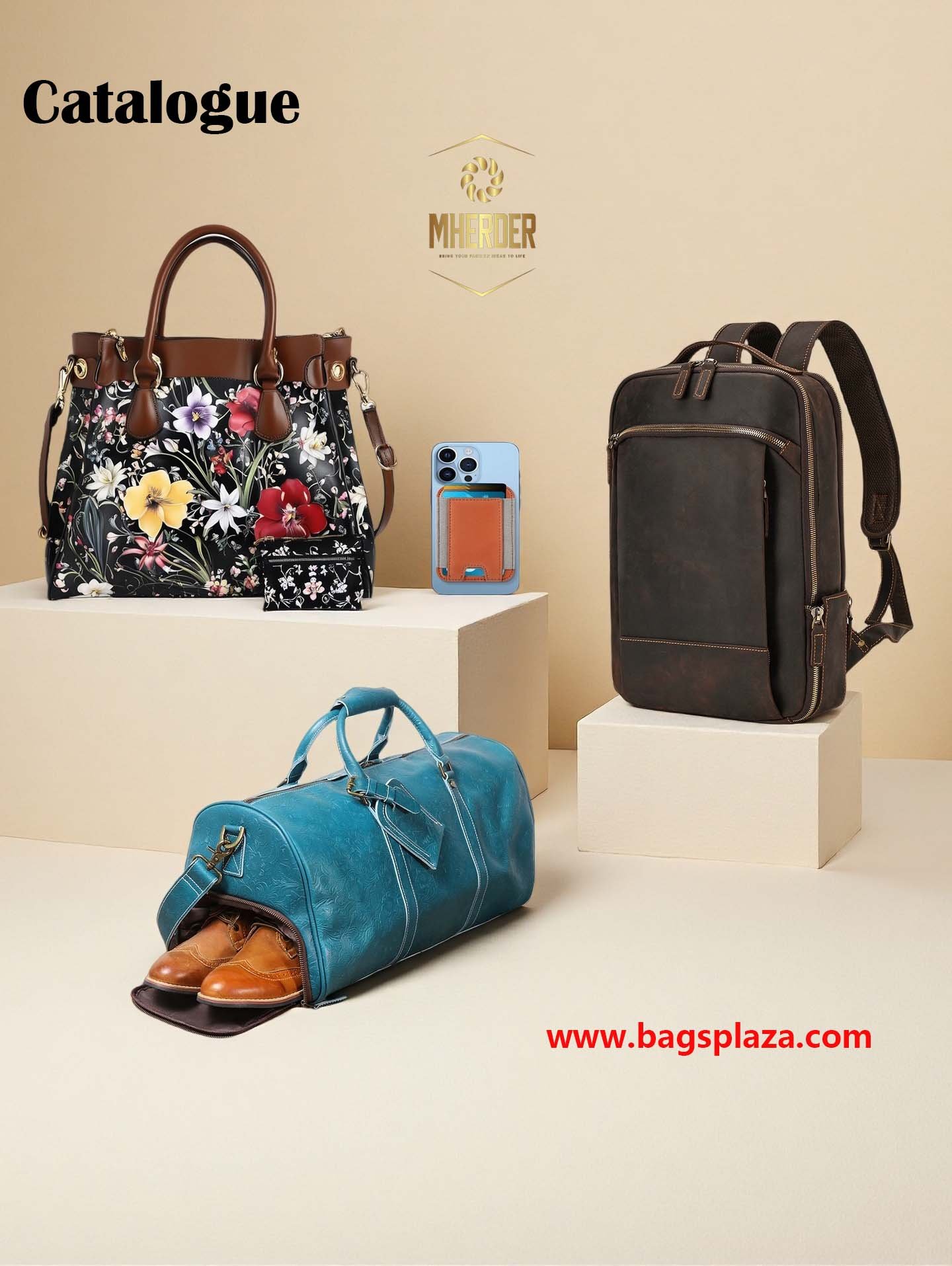
Products: Leather bags (leather handbags, leather backpacks, leather man bags, leather travel bags, and all kinds of leather bags), Leather wallets, and all kinds of small leather goods
Model: Offshore OEM/ODM with European material sourcing
MOQ: 100–200 units | 4–6 weeks
Best for: Brands looking for scaled designs, and wholesalers looking for bulk product sales with European quality criteria
Why: Italy imported leather for European clients, DDP shipping to Europe (UK) by train/truck/sea
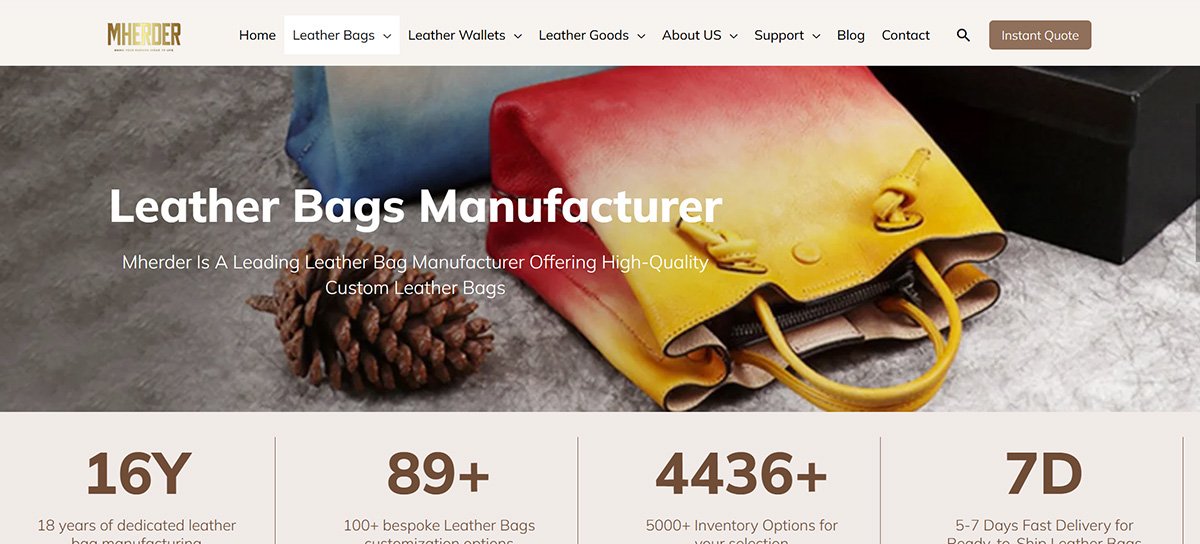
Guangzhou Herder fills the gap between the quality of UK craftsmanship and efficient offshore production. They import only the highest quality Italian leathers for their EU-based customers, ensuring that the quality of the leathers is comparable to those available in the UK but at a fraction of the cost of production. DDP delivery terms for their UK-based customers by train, road, or ship also offer significant benefits. They would be a great fit for those of their customers who are done with design-validation testing of their products with UK manufacturers and are now ready to scale their production without compromising on the quality of leather.
3. Oxford Leathercraft
Products: Belts, wallets, small goods
Model: Hybrid UK and Asia
MOQ: 200–1,000 units | 8–16 weeks
Best for: Retailers and scalable brands
Why: Flexible production location, High availability
They have close to a 50-year track record with major British retailers, making Oxford Leathercraft experienced and adaptable. They have several brands, including Charles Smith and Ibex, which have a wide appeal among consumers. They provide a service that ensures you start local in Asia/UK and expand globally, depending on your increasing volumes.
4. SageBrown
Products: Luxury leather accessories
Model: European workshops
MOQ: 100–300 units | 6–10 weeks
Best for: Retail chains and corporate programs
Why: Quick turnaround for high-end wholesale

SageBrown offers luxury printing at an incredible speed. They have clientele such as Goldman Sachs, HSBC, The Ritz Club, and several other global retailers. This is proof of their ability to produce quality at the fastest possible turnaround.
5. Ettinger
Products: Luxury wallets, belts, cardholders
Model: UK workshop
MOQ: 500–1,000 units | 12–16 weeks
Best for: High-end and heritage brands
Why: Established luxury reputation, Royal Warrant

The company was founded in 1934, and they make handmade luxury products with artisans who have been with the organization for more than 40 years. Their luxury position and British heritage mean they have high MOQs and have the Royal Warrant. They distribute in over 50+ countries.
6. Nobrand Custom
Products: Leather and plant-based bags
Model: European production
MOQ: 50–100 units | 10–14 weeks
Best for: Suitable for Eco-friendly or Sustainable Brands
Why: Strong sustainability positioning
Nobrand Custom focuses on plant-based leathers like Pinatex, Desserto, and Vegea. They’re the most experienced European plant-based leather manufacturer, with a warranty of 10 years to prove their build integrity. Great for brand positioning with sustainable fabrics.
7. Tusting
Products: Handbags, travel goods
Model: UK factory
MOQ: 200–500 units | 10–14 weeks
Best for: Heritage and premium bag brands
Why: Fully UK-made, strong craftsmanship
Founded in 1875, it controls the production process of the final product right back to the hide at its Buckinghamshire factory. The family artisans, over several generations, work with the finest English leathers. Walpole membership shows its classification as a luxury British brand.
8. Swaine London
Products: Briefcases, attaché cases
Model: In-house UK
MOQ: 100–300 units | 12–20 weeks
Best for: Ultra-premium and bespoke programs
Why: Heritage credibility, luxury positioning

Incorporated in 1750, Swaine London has held royal warrants since 1798. Swaine London boasts 270+ years of rich heritage. Their flagship store in Bond Street, as well as their production unit in Sawston, are the essence of the heritage that ultra-premium brands should have.
9. UK Leather Garments Ltd
Products: Leather garments, custom goods
Model: London workshop
MOQ: 25–100 units | 4–8 weeks
Best for: Small brands and test orders
Why: Fast turnaround, handmade output
UK Leather Garments has a conventional workshop in London with over 100 years of staff experience combined. Their 4-8 week turnaround and 25-piece order requirement are ideal for rapid testing and small brand launches.
10. Independent UK Makers
(Bennett Winch, Charles Laurie, Mowbray)
Products: Small leather goods, bespoke items
Model: Artisan workshops
MOQ: 10–50 units | 4–12 weeks
Best for: Pilot launches and limited runs
Why: Very low MOQs, strong brand storytelling
Independent manufacturers will start with the lowest minimum order for concept validation prior to large-scale production by a wide margin. The craft story offers complexity that simply cannot be achieved through mass production.
What UK Leather Manufacturing Brings to Your Business
From a sourcing perspective, UK manufacturers offer:
- Strong craftsmanship signals for brand positioning: “Made in the UK” justifies premium pricing
- Smaller communication loops in development: Same timezone, easier facility visits
- Easier quality control for premium lines: Proximity enables hands-on oversight
Conclusion
UK leather producers are especially strong at low MOQs, higher-positioned products, and quicker development cycles. They’re ideal for prototyping, testing demand, and building heritage-focused product lines. For brands ready to scale proven designs, offshore partners like Mherder Leather offer the volume capacity and cost structure that sustains growth. Mherder pairs European-quality Italian leather with efficient production and simplifies DDP shipping to the UK, supporting a smoother transition from prototype to scaled production for wholesalers and growing brands.
Frequently Asked Questions
- When does UK leather manufacturing make the most commercial sense for brands?
UK manufacturing is best suited for early-stage development, premium positioning, and small to mid-sized production runs where craftsmanship consistency, quality control, and brand origin directly impact retail value. - Is UK manufacturing suitable for new brands or first product launches?
Yes. Many UK manufacturers support lower initial commitments and closer collaboration during sampling and development, making them suitable for startups testing market demand or refining product specifications. - Can UK manufacturers support long-term production, or only small batches?
UK manufacturers can support ongoing production for established product lines, but they are most competitive for limited runs, seasonal collections, and premium lines rather than high-volume, price-driven mass production. - When should brands consider moving from UK production to offshore manufacturing?
Brands often transition once designs are validated, demand is predictable, and cost efficiency becomes a priority. UK manufacturing is commonly used for validation, with offshore partners supporting scale. - Do UK leather manufacturers typically accept NDAs and design ownership agreements?
Yes. Most UK manufacturers working with B2B clients are accustomed to NDAs, IP protection, and clear design ownership terms, especially for private-label and contract manufacturing projects. - Are UK manufacturers suitable for DTC, wholesale, or retail-focused brands?
UK manufacturing works well for all three models, particularly when brand story, product quality, and origin labeling are central to pricing strategy and customer perception. - How does UK leather manufacturing compare with EU production?
UK and EU manufacturers share similar quality standards and craftsmanship depth. UK production often offers stronger “Made in the UK” branding value for certain markets, while EU production may provide broader material or factory network options. - Can UK manufacturers handle complex constructions or custom hardware?
Many UK workshops specialize in complex builds, structured designs, and refined finishing. However, lead times and minimums may increase for highly customized hardware or non-standard components. - Is UK manufacturing compatible with sustainable or vegan material sourcing?
Yes. Several UK and European manufacturers work with plant-based and alternative materials, supporting brands focused on sustainability, ethical sourcing, and lower environmental impact. - What should buyers evaluate beyond MOQ and lead time when choosing a UK manufacturer?
Buyers should assess craftsmanship consistency, communication transparency, development support, quality control processes, and whether the manufacturer’s strengths align with the brand’s current growth stage.