Unlocking the Benefits of Partnering with Leather Handbag Manufacturers in China

Partnering with a leather handbag manufacturer in China can give your brand access to material sourcing, product development, skilled production and private label customization through one supplier. The value depends on how well the factory matches your product, order size and quality requirements. A competitive quotation only becomes useful when the finished bags meet your specifications and arrive at a workable total cost.
For brands, wholesalers and retailers, the strongest partnerships start with clear decisions about leather, construction, quantity and delivery. This guide explains the practical benefits, the conditions behind them and the questions to ask before committing to a sample or bulk order.
When a Chinese Handbag Manufacturer Is a Good Fit
Working with a factory suits brands that need a repeatable collection, have a clear target customer and can commit to the supplier’s minimum quantities. A brand developing its own silhouettes may need OEM support, while a retailer launching an accessories range may prefer to adapt an existing design.
If you are testing demand with a small budget, ready-stock products may be a more practical starting point. Fully custom designs need development time, material purchasing and production setup. A request for several designs in very small quantities can be difficult even when the combined order looks substantial. Evaluate the quantity per style and color before planning a launch.
Browse our leather handbag collection to identify relevant shapes and construction styles before discussing which models suit stock purchasing or custom development.
Six Benefits of Working with Leather Handbag Manufacturers in China
Access to Materials and Coordinated Component Sourcing
An established handbag manufacturer can coordinate leather, lining, zippers, metal fittings, reinforcement and packaging. That coordination helps when a change to one component affects several others. A heavier clasp, for example, may require additional support behind the leather where it is attached.
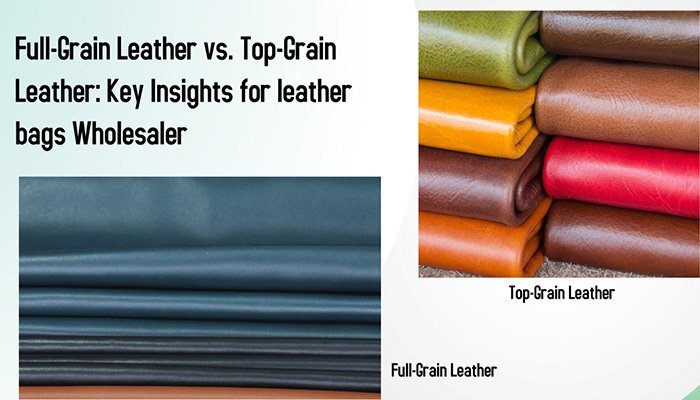
Start with a written material specification. Record animal species, leather construction, finish, thickness range, color and acceptable variation. The description “genuine leather” alone is too broad for comparing quotations. According to Leather Working Group’s leather terminology guide, full-grain leather retains the original grain surface, while corrected-grain leather has undergone mechanical surface correction and finishing. These distinctions help describe a material, but they do not establish its suitability for every bag.
Review our material selection options and request physical swatches. Imported leather, unusual colors, and custom hardware may carry separate minimums and longer lead times, even when the bag factory offers flexible quantities.
More Control over Product Cost
Direct access to the development team allows you to discuss what drives the price. Leather consumption, cutting yield, the number of panels, edge finishing, lining, hardware, and packaging all affect the quotation. A useful supplier should explain which changes reduce cost and what those changes mean for the finished product.
For example, a stock zipper pull may avoid a tooling charge, while a simpler internal pocket can reduce assembly work. Sharing an approved fitting across a collection may also simplify purchasing. Reducing reinforcement or changing leather without evaluating performance can create costs later through repairs, returns or inconsistent products. Request revised specifications alongside any revised price.
OEM and ODM Development for Your Brand
OEM projects generally start with the buyer’s design and technical requirements. ODM projects generally adapt a supplier’s existing design. Because suppliers use these terms differently, confirm exactly what development work is included, who owns the design and whether exclusivity is available.
Customization can include dimensions, compartments, straps, leather, lining, hardware finish, branding and packaging. Our logo customization options include methods such as debossing, foil stamping and metal logos. Test the chosen method on the actual material: a logo that looks sharp on smooth leather may lose definition on a deeply textured surface. Obtain approval for placement, size and color before production.
Craftsmanship Matched to the Product
An experienced factory can help translate a visual concept into workable construction. Evaluate its experience with comparable bags. A soft hobo, a structured top-handle bag and a large tote require different decisions about reinforcement, seams and leather thickness.
Ask to inspect relevant samples closely. Look at stitch consistency, seam alignment, edge coverage, zipper installation and strap attachments. Check the inside as carefully as the outside. Equipment lists and attractive catalog photographs offer limited evidence of how your particular bag will be made; the finished sample and agreed specifications provide a clearer basis for approval.
Production Planning and Repeat Orders
A manufacturer that understands your collection can plan materials and production around launch dates and replenishment needs. Reusing approved patterns and components can reduce development work on later orders, provided the design and materials remain available.
Ask which event starts the quoted production lead time. It may depend on sample approval, deposit receipt and material confirmation. Custom dyeing, hardware development and peak-season demand can affect the schedule. Separate sample development, bulk production and transport in your calendar, and agree a process for checking color and material consistency on repeat orders.
Clearer Communication with the Production Team
Working directly with a factory can shorten the path between a design question and a production decision. This is particularly useful when a sample needs a different gusset, strap attachment or closure position.
Keep that communication in one written record. Give each sample a version number, mark changes on photographs or drawings and ask the supplier to confirm the price and timing impact. Name the person authorized to approve changes on each side. A dated specification and approval record are easier to follow than instructions scattered across messages.
Compare the Total Cost of the Same Product
Before deciding which quotation is better, send each supplier the same specification and quantity breakdown. Ask them to identify exclusions and proposed substitutions. Use the following comparison to avoid treating different products or delivery scopes as equivalent.
| Cost area | What to confirm |
| Leather and construction | Leather type, finish, thickness, panel layout, lining and reinforcement match the approved specification. |
| Hardware and branding | Fitting material, finish, zipper specification, logo method and any tooling charges are identified. |
| Development | Sample charges, included revisions, courier costs and any refund conditions are stated. |
| Production quantity | The price applies to the same quantity per style and color, with any material minimums disclosed. |
| Inspection and packing | Testing, third-party inspection, dust bags, gift boxes, labels and export cartons are included or priced separately. |
| Delivery scope | The quote identifies the trade term, named place, transport scope and any charges payable separately. |
Estimate the cost to your warehouse by adding the product cost, allocated development and tooling, packaging, inspection or testing, transport and applicable import charges. Include only costs not already covered in the quotation. The ICC explanation of Incoterms rules helps clarify how these terms allocate delivery responsibilities, costs and risk between buyer and seller. Confirm the named place and applicable edition in your agreement.
For an illustrative allocation, a one-time USD300 development charge adds USD1.00 per bag across 300 bags, or USD0.30 across 1,000 bags. This is a calculation example, not a Mherder quotation. A larger order spreads the setup cost, but also commits more cash and inventory; choose quantity around realistic demand.
Choose the Right Type of Supply Partner
A direct factory, trading company and sourcing agent can each serve a useful purpose. Compare the work they will actually perform and the accountability they accept.
| Partner | Useful when | Confirm before ordering |
| Direct factory | You need product development and repeat production in a defined category. | Which operations are in-house, what is subcontracted and who handles quality problems. |
| Trading company | You need several categories or consolidation across suppliers. | The production sources, specification control and responsibility for replacements or rework. |
| Sourcing agent | You need local supplier search, coordination or inspection support. | Fees, conflicts of interest, reporting scope and who contracts with the factory. |
Direct sourcing can simplify technical communication, but it does not automatically produce the lowest total cost. Evaluate category expertise, responsiveness and control over the order. An intermediary adds value only when its services are clear and useful to your business.
Approve the Finished Bag as Carefully as the Leather
When a Good Swatch Becomes a Heavy or Stiff Bag
Consider a development scenario: you approve a soft leather swatch for a large tote, but the first completed sample feels rigid and heavy. The swatch did not show the combined effect of lining, base reinforcement, interlining, folded seams, and metal fittings.
Ask the factory to review the complete construction before simply choosing thinner leather. A lighter lining or revised reinforcement may help, while removing support from strap attachments may weaken the bag. For a حقيبة جلدية, inspect the empty weight, shoulder comfort, opening and shape when loaded with representative contents. Agree a target weight and intended carrying load during sampling, then evaluate the revised sample as a complete product.
Set an Inspection Standard That Can Be Repeated
Keep a dated approval sample and a written bill of materials, meaning the agreed list of materials and components. Record dimensions, measurement methods, tolerances, color references and acceptable natural markings. Attach approved photographs and require written approval for substitutions.
- Appearance and assembly: inspect panel alignment, stitching, edge finishing, lining cleanliness and logo placement.
- Function: check zipper movement, closures, strap adjustment, pocket access and the bag’s stability during normal use.
- Strength and wear: agree suitable strap attachment, seam, edge-flexing and color-transfer checks for the intended use.
- Packing: confirm protection for hardware, prevention of pressure marks, carton contents and shipping labels.
Use incoming-material checks, checks during production and a final inspection against the agreed criteria. Define defect categories, the sampling plan, acceptance limits and the response to a failed inspection before the order starts. Sampling reduces uncertainty but cannot guarantee that every unit is defect-free. Our quality control process provides a starting point for discussing the checks needed for your order.
Laboratory testing and visual inspection answer different questions. SGS bag and accessory services cover materials, components and product performance. Ask a qualified laboratory to propose testing relevant to the actual materials, intended use and destination market, and agree who pays before confirming the order.
Ask for Evidence behind Sustainability Claims
Request specific evidence for claims such as recycled content, traceable leather or sourcing from an audited tannery. Identify the supplier, the material covered and the documents linking that material to your order. A general statement that a bag is “eco-friendly” gives buyers little to verify.
Leather Working Group’s claims guidance explains that its certification applies to the facility where leather is produced, not to individual finished products. An audited leather source should therefore not be presented as proof that a completed handbag is LWG-certified. Confirm the scope and validity of supporting documents before using a claim in your own marketing.
Questions to Ask before Paying for a Sample
Ask shortlisted suppliers to answer these questions against the same product brief. Specific answers reveal more than a general promise of good quality.
- Which comparable handbags have you made, and can you show close-up details of the construction?
- Which steps will your own factory carry out, and which will be subcontracted?
- What exactly is the proposed leather, including finish, thickness range and source?
- Does the MOQ apply per style, per color or to the total order, and do materials have separate minimums?
- What does the sample fee include, how are revisions charged and when can the sample be ready?
- Which costs are excluded from the quotation, and what changes could alter the price?
- How will the approved sample and materials be controlled during production, and how are failures handled?
- Who owns the patterns and paid tooling, and what confidentiality or exclusivity terms can be agreed?
Working with Mherder on a Leather Handbag Project
Mherder, Guangzhou Herder Leather Products Co., Ltd., supports OEM, ODM and private label leather goods projects in Guangzhou. Our manufacturing background includes more than 19 years of experience. We work with original designs and can discuss confidentiality requirements before you share detailed development files.
ل custom leather handbags, our standard starting quantity is 100 pieces per style per color. Typical sample charges are USD100-200 per style, with sample development taking approximately 10-15 working days after requirements and materials are confirmed. Custom hardware or additional development can affect these figures. Bulk production typically takes 30-40 days after the required approvals and deposit, with shipping time added separately.
Selected ready-stock styles offer a smaller starting point, generally from 20 pieces per style, subject to availability. Confirm colors and laser-logo suitability for the selected model. Changes to structure, hardware or materials require a separate custom-production assessment.
Our production process moves from specification and material confirmation through sampling, approval, production and inspection. Third-party inspection can be arranged alongside factory QC, with scope, timing and fees agreed in advance. The final quotation should confirm all project-specific quantities, costs and delivery dates.
الأسئلة الشائعة
What is the minimum order for custom leather handbags
There is no single industry-wide MOQ. At Mherder, custom leather handbags generally start at 100 pieces per style per color. Separate leather or hardware minimums may affect a project. Ask for the minimum against your actual design and color breakdown.
Can different styles and colors be combined to reach the MOQ
Do not assume that a combined total qualifies. A custom order of 100 bags split across several designs or colors may fall below the minimum for each. For ready-stock products, mixing options depend on the selected models and available inventory; confirm them before payment.
What information is needed for an accurate quotation
Send design images or a technical pack, dimensions, quantity per style and color, leather preference, lining, hardware, logo artwork and packaging requirements. Include the destination and target delivery date. If a material is undecided, request separately described options so you can compare their cost and effect on the bag.
How long do sampling and production take
At Mherder, sampling typically takes 10-15 working days and bulk production typically takes 30-40 days after approvals and deposit. Sample revisions, custom components and material availability can extend the schedule. Confirm whether the quoted completion date covers factory dispatch or arrival at your destination.
How can I reduce differences between the sample and bulk order
Approve a finished sample together with its material list, measurements, colors and construction details. Require written approval for substitutions and check production before packing. A final inspection should use the agreed criteria, with responsibility for rework and reinspection established in advance.
They can be, when the selected factory has relevant category experience and can demonstrate the required finish. Evaluate leather, edge treatment, lining, hardware and consistency across samples. Premium positioning requires a detailed specification and verified execution; location alone does not establish quality.
Start with a Clear Product Brief
A productive manufacturing partnership begins with a bag the factory can evaluate and a specification both sides can follow. Compare like-for-like quotations, test the finished sample and agree how production will be checked before placing the bulk order.
Send your handbag project to Mherder with style images, dimensions, quantity per style and color, material preferences and the delivery destination. Add your target budget and launch date if available. We can then review feasibility, confirm the appropriate MOQ and outline the next steps for sampling and quotation.