MagSafe Wallets vs Traditional Wallets: Which Is Better for Modern Brands?
محافظ ماج سيف vs Traditional Wallets can feel like a simple product choice, but for brands, it affects positioning, customer fit, pricing, packaging, and return risk. If you choose only by trend or appearance, you may miss what your buyers actually carry every day. The better solution is to match the wallet format to your audience and channel strategy.
محافظ MagSafe are better for tech-forward, minimalist brands that want daily phone exposure and modern convenience. Traditional wallets are better for brands focused on craftsmanship, capacity, gifting, durability, and broad compatibility. Many modern brands should consider a mixed wallet line, using MagSafe wallets as a trend-led SKU and traditional wallets as a stable core product.

We have developed and evaluated many small leather goods at راعي, including card holders, slim wallets, and phone-accessory-style products. The real question is not which wallet looks more modern. The real question is which product supports your customer’s lifestyle, your brand story, and your supply chain.
Why Do MagSafe Wallets vs. Traditional Wallets Matter for Brand Positioning?
Choosing between wallet formats can create confusion because both products may look small, simple, and easy to sell. But the wrong choice can weaken your brand message. A tech-focused brand may feel slow with only classic bifolds, while a heritage leather brand may look shallow with only phone-attached card holders.
The two wallet formats matter because each sends a different brand signal. MagSafe wallets suggest mobility, tech use, minimal carry, and daily phone visibility. Traditional wallets suggest craftsmanship, tactile value, capacity, gifting, and long-term ownership. The stronger choice depends on what your brand wants customers to feel.
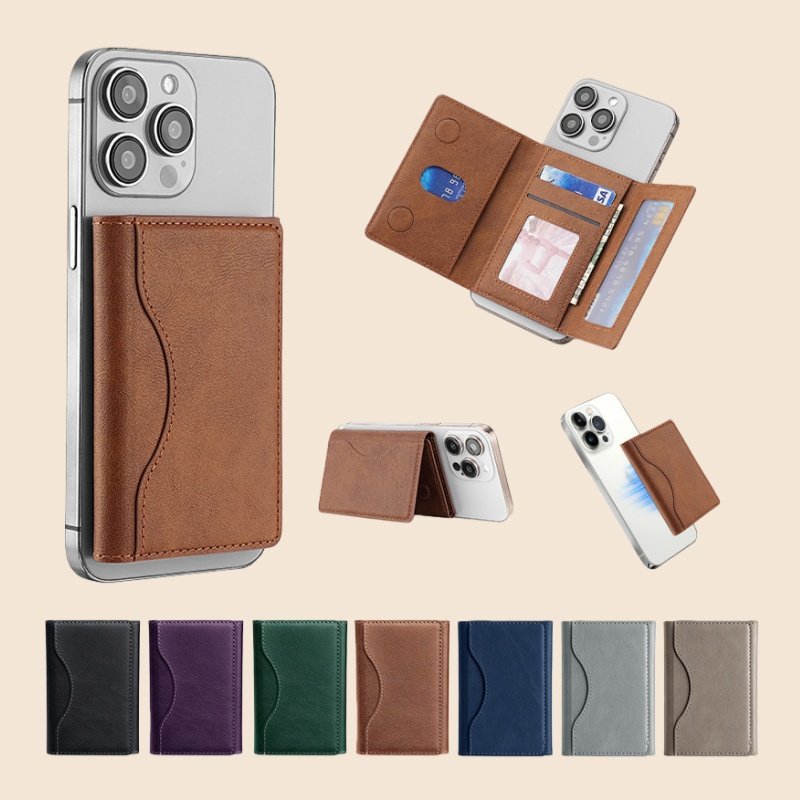
MagSafe wallets act like a lifestyle signal
أ MagSafe-style wallet is not just a place to store cards. It sits on the back of a smartphone, which is one of the most visible objects in a customer’s daily life. This makes it a brand-positioning tool.
For a private label brand, this matters. A logo on a phone-attached wallet may appear in coffee shops, offices, airports, classrooms, gyms, and checkout counters. The product becomes part of the customer’s phone habit.
That makes MagSafe-style wallets especially suitable for brands built around:
- Minimalist everyday carry
- Tech convenience
- Urban commuting
- Younger customers
- Apple or flagship phone accessory culture
- Slim card storage
- High-frequency logo exposure
However, we always advise buyers to verify compatibility during sampling. Magnetic attachment, case thickness, phone model, card capacity, and wireless charging behavior should not be assumed. These points need real testing with target devices and cases.
Traditional wallets still communicate value very well
Traditional wallets are not “old” by default. In many markets, they still feel more valuable because customers can touch the leather, open the structure, inspect the stitching, and feel the interior finishing.
A classic bifold, card holder, zip wallet, or long wallet can support a brand story based on:
- Full-grain or top-grain leather
- الحرفية
- Longevity
- Business use
- Giftability
- Daily capacity
- Premium packaging
- Device-neutral compatibility
For example, a corporate gift buyer may prefer a leather card holder or bifold because it works for every recipient. A MagSafe-style wallet may create compatibility questions if recipients use different phone brands, thick cases, or no compatible case.
A simple positioning comparison
| Brand Direction | Better-Fit Wallet Format | Reason |
| Tech-forward fashion | MagSafe-style wallet | Matches phone habits and minimalist carry |
| Heritage leather goods | Traditional wallet | Shows material quality and craftsmanship |
| Corporate gifting | Traditional wallet | Broader compatibility and easier recipient fit |
| Amazon/Shopify trend SKU | MagSafe-style wallet | Strong visual hook and product differentiation |
| Department store collection | Mixed portfolio | Covers both classic and modern buyers |
| Travel or business line | Traditional wallet | Better capacity and professional use cases |
في راعي, we often see brands make better decisions when they define the buyer before defining the product. A wallet format should support the customer’s real behavior, not only the product photo.
Are MagSafe Wallets vs Traditional Wallets Better for Different Customer Audiences?
A common mistake is asking which wallet is “better” in general. That question creates weak product decisions. A stronger question is who will use it, how they carry cards, what device they own, and what they expect from the brand.
MagSafe and traditional wallets serve different buyer groups. MagSafe wallets fit younger, tech-forward, minimalist users who carry fewer cards and value phone convenience. Traditional wallets fit broader, mature, business, gift-oriented, and device-neutral audiences who value capacity, leather feel, and long-term use.
MagSafe wallet buyers usually want fewer things in their pockets

The typical MagSafe-style wallet customer often wants to carry less. They may use mobile payments, digital IDs where available, and only two or three essential cards. For this customer, convenience matters more than capacity.
This audience may include:
- Young professionals who commute daily
- Students who prefer slim carry
- Tech المتحمسين who like phone accessories
- Minimalist fashion buyers who dislike bulky pockets
- Online shoppers who respond to visual product demos
A MagSafe-style wallet can work well in product videos because the function is easy to show. The customer sees the wallet attach to the phone, hold cards, and detach quickly. This makes it attractive for Shopify, Amazon, TikTok-style content, and short-form ads.
But there is a risk. If buyers expect strong attachment in every situation, every case, and every phone model, returns may increase. We recommend clear product pages that explain: Apple’s official MagSafe guidance also shows that wallet and charging behavior depends on the accessory and supported device setup, so compatibility instructions should be treated as part of the product specification. Apple MagSafe support
- Compatible phone models or case requirements
- Card capacity
- Material thickness
- Whether the wallet is intended to be removed before charging
- Whether the product includes shielding or structural layers
- Care instructions for leather or vegan materials
These details help reduce mismatched expectations.
Traditional wallet buyers often want confidence and flexibility
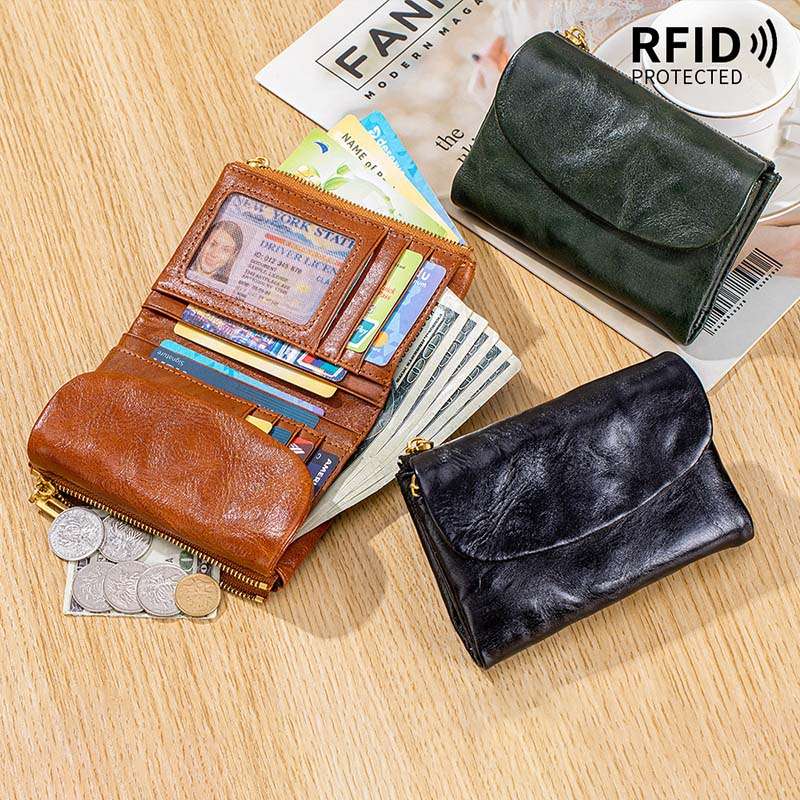
Traditional wallets work for a much broader group because they do not depend on phone compatibility. A bifold, trifold, card holder, zip wallet, or long wallet can serve many age groups and many use cases. Explore: Mherder leather wallet collection
This format often works better for:
- Business customers
- Gift recipients
- المسافرون
- Mature buyers
- Wholesale buyers
- Department store customers
- Corporate gift programs
- Leather goods collectors
- Buyers who carry cash, receipts, coins, or many cards
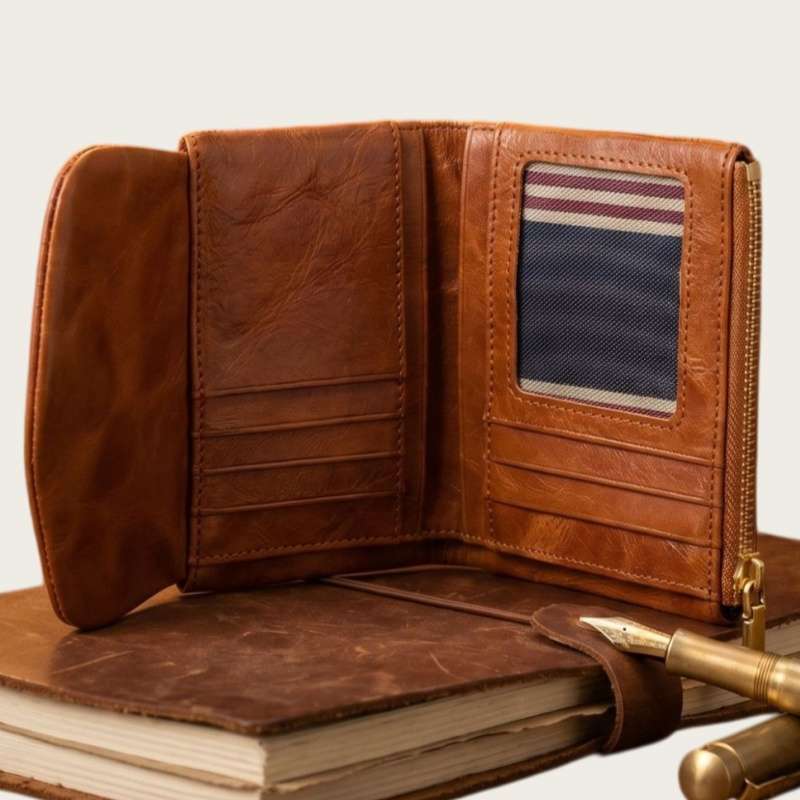
Traditional wallets also support stronger perceived value in many retail settings. A customer can open the wallet, inspect the lining, feel the leather, and understand the craftsmanship. This is important for brands that sell through boutiques, retail chains, or wholesale showrooms.
Audience fit can reduce sourcing risk
A sourcing decision should connect product format to customer behavior. We suggest that brands ask five practical questions before choosing:
| Evaluation Question | If the Answer Is “Yes” | Suggested Direction |
| Do customers use compatible phones and slim cases? | نعم | MagSafe-style wallet may fit |
| Do customers carry only 2–3 cards? | نعم | MagSafe-style wallet may fit |
| Is the product intended as a universal gift? | نعم | Traditional wallet may fit better |
| Does the brand promise leather craftsmanship? | نعم | Traditional wallet may show value better |
| Does the sales channel rely on video demonstrations? | نعم | MagSafe-style wallet may perform well |
في راعي, we have found that brands with clear customer profiles make sampling easier. The sample does not need to satisfy everyone. It only needs to satisfy the intended buyer.
When Are MagSafe Wallets the Better Choice for Modern Brands?
Many brands feel pressure to launch newness. But a new format only helps when it supports the brand’s promise. If your customers already connect your brand with phones, mobility, and fast everyday use, a MagSafe-style product can become a smart extension.
MagSafe wallets are better when your brand targets minimalist, tech-aware customers who carry a few cards and want quick access near their phone. They also work well when your brand needs visible logo exposure, digital marketing content, and a compact accessory with clear lifestyle positioning.

MagSafe-style wallets can strengthen modern positioning
A MagSafe-style wallet can feel fresh because it connects leather goods to the smartphone. For many buyers, the phone is the center of daily activity. The wallet becomes part of that routine.
This is powerful for brands that want to express:
- Speed
- Mobility
- Simplicity
- Tech confidence
- Clean design
- Modern utility
For online-first brands, this format also gives content teams a clear story. A product photo can show the wallet alone, attached to a phone, held in hand, placed in a pocket, or paired with matching packaging. A short video can show attachment and card access within seconds.
Product development points to verify
MagSafe-style wallets look simple, but manufacturing decisions matter. We pay close attention to structure because the wallet must feel slim while still holding cards securely.
Important development details include:
- Material thickness
Leather that feels premium may become too thick when combined with internal layers and magnets. Vegan leather or microfiber may offer a thinner profile, but the hand feel and edge finish must be evaluated.
- Card capacity
Many phone-attached wallets work best with two or three cards. If the pocket is too tight, customers complain. If it is too loose, cards may slide. Sampling should test both new and slightly stretched conditions.
- Magnet integration
The magnetic structure should be evaluated during sampling with actual target phones and cases. Buyers should avoid assuming universal performance.
- Logo placement
Logo visibility is a key advantage. Debossing, embossing, foil stamping, metal logos, woven labels, and printed logos all create different brand effects.
- Edge finishing
Painted edges, folded edges, or stitched edges affect both cost and perceived quality. A slim product exposes small finishing flaws quickly.
- التعبئة والتغليف
Phone-accessory-style wallets often need packaging that explains compatibility and usage. A clean insert card can reduce customer service questions.
Where MagSafe-style wallets fit commercially
MagSafe-style wallets can be a strong option for:
| Channel | Why It Works |
| Shopify stores | Clear product demo and strong lifestyle story |
| Amazon sellers | Differentiated accessory category, but listing clarity matters |
| Fashion brands | Modern add-on SKU with logo visibility |
| Corporate tech gifts | Useful when recipient device compatibility is controlled |
| Promotional products | Strong daily exposure if compatibility is confirmed |
| Travel collections | Slim card carry for quick access |
However, we do not recommend treating MagSafe-style wallets as a guaranteed best-seller. The product should be tested through samples, small production runs, customer feedback, and clear listing copy.
A practical approach is to start with one or two colors, a defined material, and simple packaging. This keeps MOQ and inventory risk under control. Once the product proves demand, the brand can expand into more colors, textures, or matching phone accessories.
When Are Traditional Wallets Still Stronger for Modern Brands?
Some brands avoid traditional wallets because they worry the format feels too familiar. But familiar does not mean weak. In leather goods, familiarity can increase trust, especially when the customer wants durability, capacity, and a product that feels gift-worthy.
Traditional wallets are stronger when your brand focuses on craftsmanship, long-term use, gifting, capacity, and broad customer compatibility. They work especially well for business buyers, mature customers, department stores, wholesalers, corporate gifts, and leather-focused brands that need tactile value.
[Image suggestion: Traditional wallets for modern leather goods brands and gift programs]
Traditional wallets make material quality easier to see
A traditional wallet gives more space to show leather quality. Customers can feel the grain, bend the panels, inspect the stitching, and open the inside. This is useful when the brand story depends on premium materials. See also: What Makes a Good Full-Grain Leather Minimalist Wallet?
في راعي, we work with materials such as:
- جلد محبب بالكامل
- جلد محبب عالي الجودة
- الجلود المعاد تدويرها
- جلد نباتي
- Microfiber leather
- PU materials
Each material behaves differently in a wallet. A full-grain leather bifold may develop a richer patina over time. A microfiber card holder may support a clean, lightweight price point. A vegan leather wallet may fit brands focused on animal-free positioning. The right choice depends on the market and retail price.
Capacity remains important
Not every customer lives with two cards and a phone. Many buyers still carry:
- ID cards
- Bank cards
- Business cards
- Cash
- Receipts
- Transit cards
- Membership cards
- Coins
- Travel documents
A traditional wallet can solve these needs better. A bifold may offer six to eight card slots. A zip wallet may include coin storage. A long wallet may support travel, receipts, and higher perceived value.
This makes traditional wallets useful for brands with broad retail audiences. A department store buyer may prefer products that work for many customers. A corporate gift buyer may want a wallet that does not require checking phone compatibility.
Traditional wallets support stronger gifting
Giftability matters more than many brands expect. A traditional leather wallet is easy to understand as a gift. It can be packaged in a rigid box, wrapped with tissue, personalized with initials, or paired with a card holder.
Common gift-friendly customization options include:
| Custom Option | Best Use |
| Debossed logo | Premium leather branding |
| Foil stamped logo | Fashion or gift packaging |
| Initial embossing | Personalized gifting |
| Gift box | Retail and corporate gifts |
| Dust bag | Premium presentation |
| Custom card insert | Brand story and care instructions |
| أجهزة مخصصة | Higher-end product line |
A traditional wallet also has fewer compatibility questions. This reduces the risk that the recipient cannot use the product.
Traditional does not mean boring
Modern traditional wallets can still feel fresh. Brands can update the format through:
- Slimmer construction
- Cleaner edge paint
- Contrast stitching
- RFID-blocking layers where appropriate
- New color palettes
- Sustainable material stories
- Modular card holder sets
- Gift-ready packaging
- Minimalist logo placement
- Matching bags or travel accessories
The best traditional wallets feel current because the design is refined, not because the format is new. When brands invest in material, structure, and packaging, a classic wallet can still compete strongly in modern channels.
Should Brands Use a Hybrid Strategy Instead of Choosing One?
Many buyers feel they must choose one clear winner. This can create unnecessary pressure. In practice, modern brands often benefit from a portfolio strategy that separates trend-led products from stable core products.
A hybrid strategy can be best when a brand serves both tech-forward and traditional customers. MagSafe-style wallets can function as a modern, differentiated SKU, while traditional wallets provide steady sales, broader compatibility, stronger gifting, and higher perceived craftsmanship.
[Image suggestion: Hybrid MagSafe wallets and traditional wallets portfolio strategy]
A mixed line can reduce risk
A hybrid wallet line allows brands to test modern demand without abandoning proven formats. This is especially helpful for private label brands, Amazon sellers, wholesalers, and growing Shopify stores.
A simple mixed collection may include:
- 1 MagSafe-style card holder
- 1 slim traditional card holder
- 1 bifold wallet
- 1 zip card case
- 1 gift box option
- 2–3 core colors
- 1 seasonal color
This structure gives the brand variety without overloading inventory. The MagSafe-style wallet creates newness. The traditional wallet supports stable demand.
Magnetic card holders can bridge the gap
Some brands do not want a pure phone accessory look. They want the convenience of attachment while keeping a leather-goods identity. In that case, a magnetic card holder can be developed with more attention to leather feel, stitching, edge finishing, and brand texture.
This middle path may work well for brands that want:
- A modern function
- A premium leather hand feel
- A compact structure
- Clear branding
- Gift-ready packaging
- A product that still feels like leather goods
However, we still recommend testing the product carefully. Magnetic integration can change thickness, flexibility, and user experience. The sample should be reviewed with real cards, target phones, common cases, and intended packaging.
Portfolio planning by brand type
| Brand Type | Suggested Wallet Strategy |
| Tech fashion startup | Lead with MagSafe-style wallet, add slim card holder |
| Heritage leather brand | Lead with bifold/card holder, test magnetic SKU carefully |
| Corporate gift supplier | Focus on traditional wallets, offer MagSafe only for controlled programs |
| Amazon seller | Test both, but use clear compatibility copy |
| Shopify brand | Use MagSafe-style wallet for content, traditional wallet for core sales |
| تاجر جملة | Offer mixed assortment for different retailers |
| Travel accessory brand | Use slim traditional wallet plus optional phone-attached SKU |
MOQ and sampling considerations
At Mherder, we often recommend that brands think about MOQ before finalizing a wallet line. A product that looks exciting may become risky if it requires too many colors, too many material types, and too much custom packaging at launch.
A practical first order may focus on:
- One main material
- Two or three colors
- One logo method
- One packaging format
- One confirmed structure
- Clear QC standards
- A realistic delivery schedule
For a mixed wallet line, brands can start with a small number of SKUs and expand after sell-through data is available. This approach protects cash flow and reduces dead stock.
Quality control should match the product type
A traditional wallet and a MagSafe-style wallet need different QC focus areas.
| QC Area | MagSafe-Style Wallet | Traditional Wallet |
| Material inspection | Surface, thickness, bonding behavior | Grain, color consistency, leather defects |
| Structure check | Magnetic layer position, slimness, card fit | Slot alignment, folding, capacity |
| Functional testing | Phone/case attachment checks, card retention | Opening/closing, card access, cash fit |
| مظهر | Logo visibility, edge finish, flatness | Stitching, edge paint, lining |
| التعبئة والتغليف | Compatibility instructions | Gift presentation and care card |
A hybrid strategy works best when each product has its own quality standard. A phone-attached wallet should not be evaluated only like a classic wallet. A traditional wallet should not be judged only by thinness or trend appeal.
How Should Brands Evaluate Suppliers for MagSafe Wallets vs Traditional Wallets?
A wallet concept can fail if the supplier cannot control structure, material, branding, or packaging. This is especially true for small leather goods because every millimeter affects hand feel and usability. Related sourcing guide: Wallet Manufacturers in China
Brands should evaluate wallet suppliers by reviewing sample quality, material options, structure control, logo methods, packaging support, MOQ flexibility, QC process, export experience, and willingness to test application-specific details before bulk production.
[Image suggestion: Supplier evaluation for MagSafe Wallets vs Traditional Wallets manufacturing]
Start with sample development
Samples reveal more than a product catalog. A good supplier should help turn a sketch, tech pack, reference sample, or concept into a workable product.
For wallet development, brands should review:
- Dimensions
- Leather or material thickness
- Card slot tension
- Stitching density
- Edge paint smoothness
- Lining quality
- Logo clarity
- Packaging fit
- Color matching
- Bulk production feasibility
For MagSafe-style wallets, brands should also test phone and case combinations. We recommend treating compatibility and magnetic behavior as sampling checkpoints, not assumptions.
Ask about material and structure options
A qualified leather goods manufacturer should explain the trade-offs between materials. For example, full-grain leather may create stronger tactile value, but it may need careful thickness control. PU material may reduce cost, but the brand should check durability and hand feel. Microfiber leather may provide consistency and clean cutting for slim card holders.
Brands should ask suppliers questions such as:
- What material thickness do you recommend for this structure?
- Can you make folded edges or painted edges?
- Can you control card slot tension after repeated use?
- What logo methods are available for this material?
- Can you develop custom packaging?
- What is the realistic MOQ by color and material?
- What inspections happen before shipment?
- Can you support FOB, CIF, or DDP shipping?
At Mherder, we operate with material inspection, in-process inspection, and final inspection. This is important because wallet defects can be small but visible. A crooked slot, rough edge, weak logo impression, or loose card pocket can reduce customer satisfaction quickly.
Compare suppliers beyond price
The lowest unit price may not produce the lowest total cost. Returns, poor packaging, unclear compatibility, inconsistent materials, and late shipments can damage margin.
A better supplier evaluation table may look like this:
| Evaluation Factor | Why It Matters |
| Small leather goods experience | Wallets require precision and tight tolerances |
| OEM/ODM capability | Helps brands create unique products |
| Material sourcing | Supports leather, vegan, microfiber, PU, or recycled options |
| Sampling ability | Reduces design and usability risk |
| Logo customization | Builds brand recognition |
| Packaging development | Improves retail and gift presentation |
| MOQ flexibility | Helps startups manage inventory risk |
| QC process | Reduces defects and returns |
| Export experience | Supports smoother global delivery |
| Communication quality | Prevents misunderstandings before bulk production |
Certifications and claims should be verified
For procurement teams, documents matter. If a supplier claims specific material compliance, recycled content, vegan material standards, or testing reports, brands should request documentation and verify it when needed. For application-specific decisions, brands should also seek qualified professional evaluation.
This is especially important when selling in regulated markets or major retail channels. Buyers may need testing for restricted substances, labeling, packaging claims, or durability standards. A manufacturer can support development, but the brand should confirm market-specific requirements. For EU-bound leather goods, buyers should also review applicable REACH restrictions and substance requirements rather than relying on a general “compliant” claim. ECHA REACH restriction guidance
Supplier fit depends on the product plan
A brand launching only a classic leather bifold may prioritize leather sourcing, stitching quality, and gift packaging. A brand launching a MagSafe-style wallet may prioritize structure control, magnetic layer integration, compatibility guidance, and clear product instructions.
The right supplier should understand both the commercial goal and the technical details. That combination helps the final product feel intentional, not generic.
الأسئلة الشائعة
Are MagSafe wallets better than traditional wallets?
MagSafe wallets are better for minimalist, tech-forward customers who carry a few cards and want phone-attached convenience. Traditional wallets are better for capacity, gifting, craftsmanship, and broad compatibility. The best choice depends on your audience, sales channel, product positioning, and return-risk tolerance.
Do MagSafe-style wallets work for every phone?
No. MagSafe-style wallets should not be assumed to work with every phone or case. Compatibility depends on phone model, case type, magnetic alignment, product structure, and user expectations. Brands should verify performance during sampling and explain compatibility clearly on packaging and product pages.
Are traditional wallets still good for modern brands?
Yes. Traditional wallets still work very well for modern brands when the brand values leather quality, tactile experience, gifting, business use, and durability. A refined card holder, bifold, or zip wallet can feel current through slim construction, clean branding, premium packaging, and strong materials.
What is the best wallet type for corporate gifts?
Traditional wallets are usually safer for corporate gifts because they are device-neutral and easy for most recipients to use. Card holders, bifolds, and zip wallets also support personalization, gift boxes, and premium branding. MagSafe-style wallets can work when the recipient’s phone compatibility is known.
Should a startup launch MagSafe wallets or traditional wallets first?
A startup should choose based on its target customer and sales channel. A tech-fashion Shopify brand may start with a MagSafe-style wallet. A leather goods brand may start with a card holder or bifold. Many startups can test one modern SKU and one classic SKU to compare demand.
خاتمة
محافظ ماج سيف vs Traditional Wallets is not a question of old versus new. It is a question of brand fit. MagSafe-style wallets can support modernity, phone convenience, minimal carry, and daily logo exposure. Traditional wallets can support craftsmanship, value, gifting, capacity, and broader customer use. A hybrid strategy often gives brands the best balance. If you are developing a wallet line, راعي can help with OEM/ODM design, sampling, materials, custom branding, packaging, MOQ planning, quality control, and global shipping support.