Leather Wallet vs. Synthetic Wallet: Which One Offers Better Value?
Portefeuille en cuir vs. synthetic wallet is not simply a premium-versus-cheap decision. Better value depends on brand positioning, target customer, sales channel, construction, production consistency, material claims, and the risks that can affect reviews, returns, and margins.
Quick answer: Portefeuilles en cuir usually offer stronger value for premium, classic, gift, and long-term product lines when leather grade and workmanship support the price. Synthetic wallets can offer better value for price-sensitive, vegan-positioned, promotional, seasonal, or fast-moving collections when material quality and product claims are controlled carefully.

Leather Wallet vs Synthetic Wallet: Quick Comparison
| Facteur | Portefeuille en cuir | Synthetic Wallet |
| Premium positioning | Fort | Depends on material and execution |
| Typical material cost | Often higher | Often lower; premium synthetics can cost more |
| Natural feel | Strong natural grain and variation | More controlled and uniform |
| Color consistency | Requires leather batch control | Usually easier to standardize |
| Vieillissement | Can develop patina and natural character | May remain uniform or show coating wear |
| Vegan positioning | Non | Possible, depending on material |
| Promotional use | Possible | Strong fit |
| Luxury gifting | Strong fit | Possible with premium construction |
| Bulk consistency | Needs leather and cutting control | Often easier; coating defects still matter |
| Best fit | Premium, classic, heritage, gift | Vegan, entry-level, promotional, trend-driven |
How Should Brands Compare Leather vs Synthetic Wallets for Value?
The wrong question is simply, “Which material is cheaper?” A lower-cost material can become expensive if it creates returns, poor reviews, inconsistent bulk quality, or a mismatch with the brand promise. A wallet material creates value when it supports the product promise with acceptable commercial risk.
- Material cost and cutting yield
- Labor and construction difficulty
- Edge finishing
- Sample-to-bulk consistency
- Defect and return risk
- Packaging and presentation
- Customer review sensitivity
- Brand positioning and claim risk
Start With the Sales Channel
Amazon sellers need review protection and accurate product descriptions. Shopify and DTC brands need a material story that supports brand identity. Retail chains need color and packaging consistency. Corporate gift buyers need predictable cost, logo quality, and delivery timing. Premium fashion brands need hand feel, construction, and long-term credibility.
There is no fixed winner. A synthetic card holder can be a smart promotional product, while a well-made top-grain leather bifold may create stronger value for a premium collection.
When Does a Leather Wallet Offer Better Value?

Leather usually offers better value when the brand targets premium positioning, long-term use expectations, authentic material appeal, giftability, and customers who appreciate natural grain, hand feel, and aging. However, the word “leather” alone does not make a wallet premium.
Common Leather Options
- Cuir pleine fleur
- Cuir pleine fleur
- Corrected-grain leather
- Split leather
- Cuir recyclé
- Leather with different surface finishes
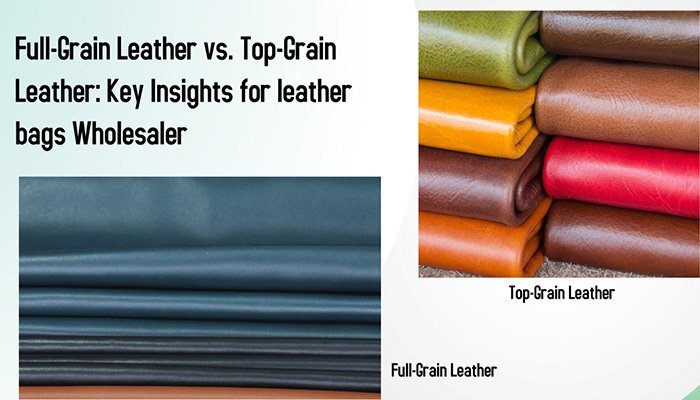
Each option affects cost, cutting yield, texture, surface consistency, and positioning. Full-grain leather may communicate a more natural feel but can show more natural marks. Corrected-grain leather can offer a more uniform appearance for photography and bulk production.
Construction Decides Whether Leather Value Is Real
- Leather thickness: too thick can make card slots bulky; too thin can feel weak.
- Edge paint: cracking, bubbling, sticky edges, or uneven layers reduce perceived value.
- Stitching: density, alignment, tension, and thread quality affect appearance and strength.
- Lining: low-quality lining can undermine a premium exterior.
- Card-slot tension: cards should slide in smoothly but remain secure.
- Logo application must suit the leather surface.
- Odor control matters because strong chemical smell can damage customer perception.
When Is Leather the Smarter Commercial Choice?
- The wallet is a core collection item
- The brand wants premium or classic positioning
- The customer expects natural material
- The retail price needs a stronger material story
- The wallet is sold as a gift
- The brand wants long-term identity rather than short-term trend appeal
When Does a Synthetic Wallet Offer Better Value?

Synthetic material can be commercially smart for price-sensitive lines, vegan-positioned products, promotional gifts, entry-level SKUs, seasonal colors, and collections where visual consistency matters. Synthetic does not mean one material; different options behave differently in hand feel, coating strength, odor, folding, edge finishing, and claim requirements.
Synthetic Wallet Materials Compared
| Matériel | Typical Positioning | Main Advantage | Main Risk to Verify |
| PU | Entry to mid-range | Cost control, color and texture flexibility | Peeling, odor, coating and edge wear |
| Microfiber | Mid to premium synthetic | Refined hand feel and structure | Higher cost; quality varies |
| PVC-based material | Budget/promotional | Surface control and cost efficiency | Hand feel, heat behavior, market perception |
| Recycled-content material | Sustainability-led | Differentiated material story | Documentation and claim accuracy |
| Coated textile/specialty synthetic | Fashion or functional | Texture, color and design flexibility | Coating adhesion and crease behavior |
| Plant-based / vegan-positioned alternatives | Niche/premium non-animal | Brand differentiation | Cost, consistency and claim substantiation |
Where Synthetic Wallets Work Well
- Promotional wallets
- Vegan-positioned collections
- Trend-driven fashion colors
- Entry-level SKUs
- Retail-chain programs
- Gift-with-purchase campaigns
A high-quality microfiber wallet can feel very different from a low-cost PU wallet. Brands should not assume synthetic is always cheaper, greener, or easier to sell.
The Main Quality Risks in Synthetic Wallets
- Surface peeling
- Coating adhesion
- Color transfer
- Odor
- Heat sensitivity
- Embossing clarity
- Edge cracking
- Crease behavior
- Logo adhesion
- Bulk color consistency
Which Lasts Longer: Leather or Synthetic Wallets?
Leather is not automatically more durable, and synthetic is not automatically less durable. Lifespan depends on the exact material, thickness, coating, construction, stitching, edge finishing, usage, humidity, storage, and care.
A well-made full-grain or top-grain leather wallet can deliver excellent long-term use and may develop attractive patina. A poorly constructed leather wallet can fail quickly. Likewise, premium microfiber can outperform low-grade coated synthetic material, while weak PU coating may peel or crack with use.
| Durability Factor | Portefeuille en cuir | Synthetic Wallet |
| Surface behavior | Natural marks, patina, and wear | Coating wear, peeling or creasing varies |
| Moisture sensitivity | Depends on leather finish and care | Depends on coating and backing |
| Edge durability | Depends on edge paint or construction | Depends on coating, heat sealing or edge finish |
| Cohérence | Natural variation is normal | Usually more uniform |
| Best evaluation | Physical sample + intended-use testing | Physical sample + folding/coating checks |
Specific durability claims should be supported by evidence appropriate to the intended use and market.
What Determines Leather vs Synthetic Wallet Cost?
Material price is only one part of wallet cost. Two wallets with similar dimensions can have very different quotations because construction, material yield, finishing, logo, lining, and packaging differ.
Leather Wallet Cost Drivers
- Leather grade and finish
- Hide yield and natural defects
- Thickness and skiving requirements
- Number of card slots and components
- Stitching and edge-paint complexity
- Lining and reinforcement
- Logo method and hardware
- Conditionnement
- Order quantity and color requirements
Synthetic Wallet Cost Drivers
- PU, microfiber, PVC, coated textile, or specialty material grade
- Backing and thickness
- Coating and texture
- Custom color
- Number of components and card slots
- Edge method and stitching
- Logo method
- Conditionnement
- Order quantity
A synthetic wallet is not always cheaper. Premium microfiber or specialty vegan-positioned materials can cost more than some lower-grade leather options.
What Quality Checks Matter Most in Wallet Production?
Wallets have many small details, so defects are easy to notice. The most important checks are material inspection, sample-to-bulk consistency, edge finishing, stitching, lining, card-slot function, logo quality, odor, dimensions, packaging, and final cleanliness.
Inspection des matières premières
| Leather Wallet Checks | Synthetic Wallet Checks |
| Leather type, thickness and finish | Surface coating, thickness and backing |
| Natural marks and acceptable variation | Texture and coating consistency |
| Color consistency | Color consistency |
| Grain matching where needed | Flexibility and crease behavior |
| Odor | Odor |
| Logo-method compatibility | Heat embossing / printing compatibility |
| Cutting yield | Peeling or cracking risk |
Edge Finishing Is a Major Value Signal
| Edge Method | Common Use | Quality Risk |
| Painted edge | Leather and some synthetic wallets | Cracking, bubbling, uneven layers |
| Folded edge | Softer constructions | Bulkiness or loose folding |
| Raw edge | Casual or rustic leather designs | Must look intentional and clean |
| Heat-sealed edge | Some synthetic materials | Melting marks or weak finish |
Stitching, Card Slots, Odor, and Packaging
During sampling, test real cards in every slot. Cards should slide in smoothly without falling out too easily. Check stitch alignment, loose threads, lining, glue marks, edge finish, and logo placement. Odor should also be evaluated because coatings, adhesives, edge paint, packaging, storage, and insufficient airing can affect the unboxing experience.
Final inspection should match the sales channel. E-commerce launches may need tighter cosmetic control because reviews are public and immediate. Corporate gift orders may need extra checking on logo placement and gift-box condition.
How Should Brands Choose the Right Wallet Material?
Step 1: Define the Customer Promise
Write one sentence: “This wallet is for ______ customer, sold at ______ price, through ______ channel, and it promises ______.” This quickly exposes whether the material fits the intended product.
Step 2: Match Material to Price Architecture
| Product Tier | Possible Material Direction | Key Objective |
| Entry level | PU, microfiber, selected synthetic | Accessible price and controlled risk |
| Mid-range | Top-grain leather, microfiber, improved synthetic | Balance hand feel and cost |
| Prime | Full-grain or quality top-grain leather | Strong perceived value |
| Promotional | Synthetic, recycled-content options, split leather where appropriate | Cost, logo and delivery |
| Vegan line | Vegan-positioned synthetic materials | Claim clarity and consistency |
Step 3: Compare Physical Samples
When unsure, compare more than one material direction—for example, top-grain leather, microfiber, and PU. Evaluate hand feel, bending, edge finish, logo result, lining, card-slot function, weight, odor, packaging, estimated bulk cost, and expected defect risk.
Step 4: Confirm Production Reality
- Is this material stable for bulk orders?
- What is the MOQ for this material and color?
- Can bulk production match the approved sample?
- What color tolerance should we expect?
- What defects are common with this material?
- Which logo and edge-finishing methods work best?
- What documents are available for material claims?
Step 5: Lock the Specification
The production specification should define material name and reference, thickness range, approved color, lining, thread, edge paint, hardware finish, logo method and position, stitching requirements, packaging, defect standard, and inspection checklist.
Step 6: Choose Based on Commercial Risk
The final decision should balance margin, customer expectation, quality control, and brand trust. Ask what happens if customers report cheap feel, odor, peeling, inaccurate material claims, or a retail price that feels too high for the material.
Material Claims Need Evidence
Terms such as eco-friendly, sustainable, recycled, responsible, or vegan should be used carefully. Brands should request available supplier declarations or certificates, verify the documents, and make sure marketing wording matches the actual material and applicable market requirements.
For the published article, useful authority references include the FTC Green Guides for environmental marketing claims and Leather Working Group for leather manufacturing and responsible sourcing frameworks.
Mherder Wallet Sourcing Reference
Pour Mherder wallet and small maroquinerie projects, the standard custom MOQ is typically 300 pieces per style. Ready-to-ship products with laser logo can start from 20 pieces per style, depending on stock. Custom sample cost is generally around USD 100–200 per style. Some wallet samples can be completed in approximately 5–7 working days, while more complex custom developments typically take around 10–15 working days. Bulk production is generally around 25–40 days after approval.
Mherder supports OEM, ODM, and private-label development with leather, microfiber, PU, recycled and other material options, plus custom logos, lining, hardware, packaging, and global shipping coordination.
Questions fréquemment posées
Is a leather wallet always better than a synthetic wallet?
No. Leather often fits premium positioning and natural-material expectations, but it only creates better value when grade and workmanship support the promise. Synthetic can be stronger for vegan, promotional, seasonal, or price-sensitive products.
Is a synthetic wallet always cheaper to produce?
No. Cost depends on material grade, backing, coating, thickness, texture, MOQ, construction, logo, and finishing. Premium microfiber and specialty synthetic materials can cost more than some lower-grade leather options.
Which lasts longer: leather or synthetic wallets?
There is no universal answer. High-quality leather can age well for long-term use, while premium microfiber can also perform strongly. Construction, edge finish, coating quality, use, storage, and care matter as much as the material label.
Is microfiber leather better than PU for wallets?
Microfiber is often selected when a brand wants a more refined synthetic hand feel, structure, and performance than basic PU, but specifications and quality vary. Compare physical samples and bulk consistency rather than relying on the material name alone.
Which wallet material is better for Amazon sellers?
Choose the material that protects reviews and matches the listing promise. Leather can suit premium listings; synthetic can suit affordable or vegan listings. Pay close attention to odor, edge finish, stitching, photos, and accurate material wording.
What should brands check before approving a wallet sample?
Check material feel, thickness, stitching, edge finish, lining, logo quality, card-slot function, odor, dimensions, packaging, and whether the sample material can be repeated in bulk.
Can synthetic wallets be positioned as premium?
Yes, when the material, hand feel, design, construction, claims, and customer expectations support that positioning. Premium synthetic should be intentional rather than presented as leather.
Conclusion
Portefeuille en cuir vs synthetic wallet is not a simple contest between premium and cheap. Better value comes from the fit between material, customer expectation, sales channel, price point, construction, and production control. Leather often supports premium positioning when workmanship matches the promise. Synthetic can be the smarter choice for vegan, promotional, seasonal, or entry-level products.
If you are developing a wallet line, send Mherder your target quantity, wallet design or reference, target retail price, preferred material direction, logo artwork, packaging requirements, and destination. We can recommend suitable leather, microfiber, or PU options and prepare samples for comparison before bulk production.