×
今すぐお問い合わせをお送りください
ファイルをアップロード

フルグレインレザーとトップグレインレザー:OEMレザーバッグに最適な選択(完全ガイド)
目次

フルグレインレザーとトップグレインレザー:OEMレザーバッグに最適な選択(完全ガイド)

Premium leather bags often begin with one key sourcing decision. Should the product use full-grain leather or top-grain leather? Both materials are widely used in high-end collections and OEM manufacturing lines, yet brands rarely treat them as interchangeable.

For companies developing a premium bag line, this choice becomes part of the procurement discussion early in the process. A closer look at full grain and top grain leather helps brands understand which option is better suited to premium OEM leather bag manufacturing.

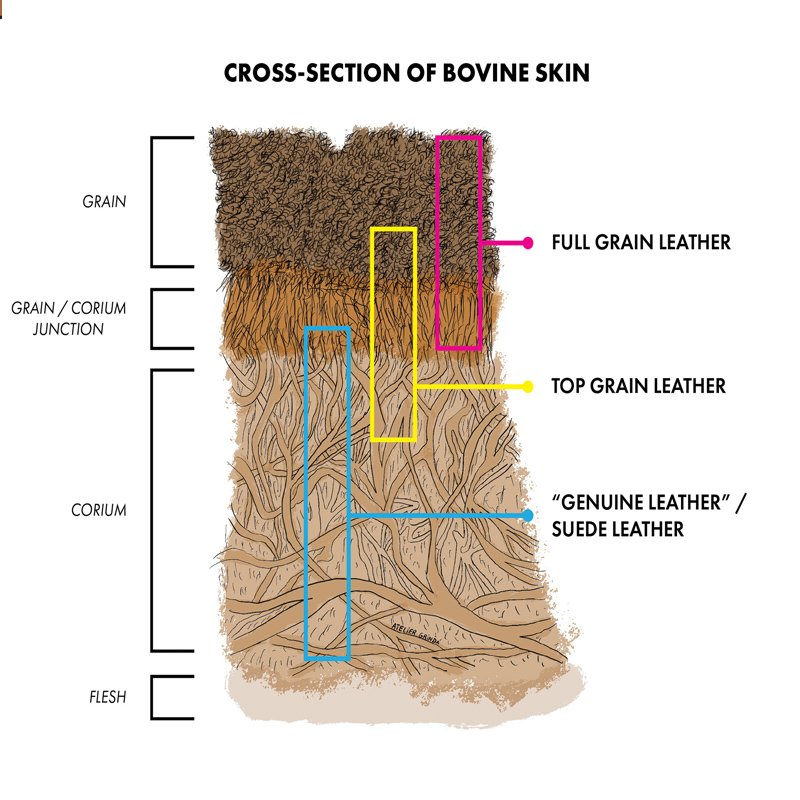
What Are Full Grain and Top Grain Leather in OEM Manufacturing? The major difference between full-grain leather and top-grain leather lies in how the surface of the hide is treated before it enters production. Both materials come from the upper layer of the hide, which is the strongest part used in leather manufacturing. What sets them apart is whether the natural grain remains untouched or is slightly refined.

フルグレインレザー

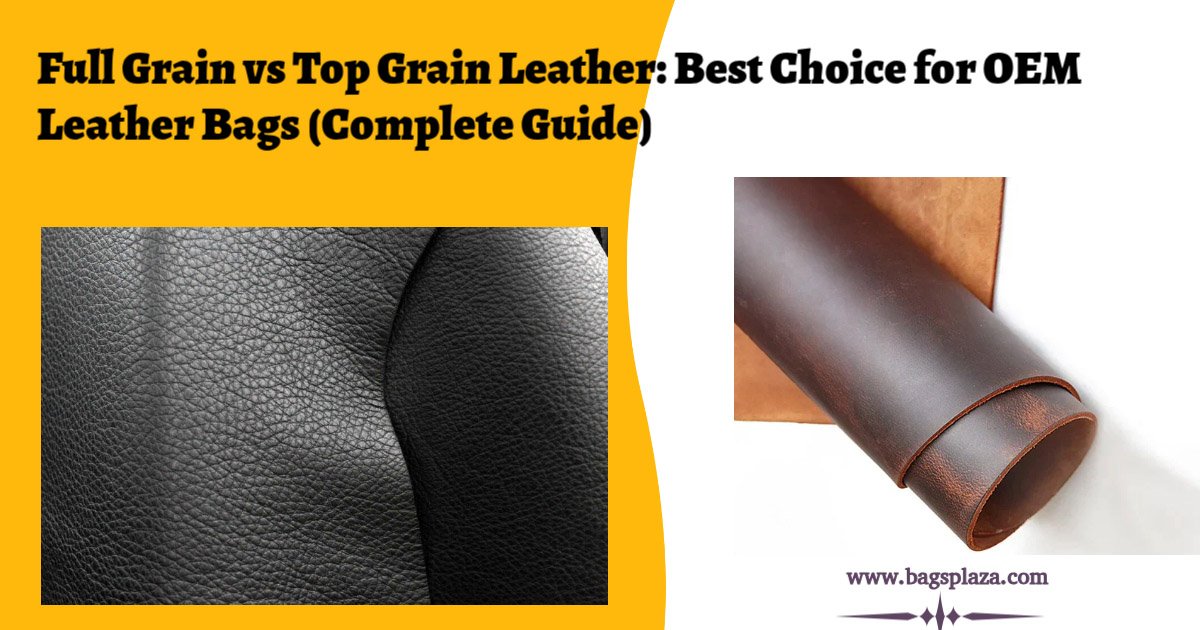
Full-grain leather keeps the original outer surface of the hide intact. The natural grain remains visible, including pores, subtle markings, and slight variations formed during the animal’s life. Because the surface is not sanded or corrected, the leather maintains its original texture and structure throughout production.

トップグレインレザー

Top grain leather also comes from the upper part of the hide, but the surface is lightly sanded to reduce visible imperfections. It is then finished to create a smoother and more uniform appearance. This refinement helps improve visual consistency, which is especially useful in large OEM leather bag production runs.

5 Key Differences Between Full Grain and Top Grain Leather in OEM Bag Manufacturing

Full-grain leather and top-grain leather come from the same general part of the hide, but they behave differently in bag production. For brands sourcing premium OEM leather bags, those differences affect material selection, manufacturing efficiency, customer perception, and long-term product performance.

Fiber Structure and Long-Term Strength

One of the clearest differences between full-grain leather and top-grain leather is the condition of the outer fiber layer. Full-grain leather keeps this layer intact, which helps preserve the dense fiber network near the surface. This structure supports strength, helps resist stretching, and allows the bag to hold its shape more effectively over time. In premium leather bag manufacturing, that advantage is especially relevant for handles, straps, flap areas, and base panels that need to perform well under repeated use.

Top grain leather also performs well in high-quality bag manufacturing, but its surface has been lightly refined before finishing. It still offers good durability, though its final performance depends more on the finishing treatment and the quality of the underlying hide. For many structured and polished bag designs, top-grain leather remains a practical and reliable material.

Surface Appearance and Brand Positioning

The surface appearance of leather has a direct impact on how a finished bag is positioned in the market. Full-grain leather highlights the natural pattern of the hide, with subtle markings and variations that many premium brands consider part of its appeal. These visible characteristics often support a brand story built around authenticity, craftsmanship, and natural material value.

Top grain leather creates a cleaner and more uniform appearance. Because the surface is refined before finishing, the leather panels tend to look smoother and more consistent across the entire collection. For brands that want a polished luxury presentation or stronger visual control across retail programs, top-grain leather often supports that goal more effectively.

Production Yield and Cost Efficiency

Material utilization plays an important role in the cost structure of OEM leather bag manufacturing. With full grain leather, natural scars, wrinkles, and other surface variations remain visible. Since these cannot simply be hidden, cutting teams often need to place patterns more carefully to avoid using noticeable marks on major visible panels. This approach preserves the authenticity of the material, but it can reduce cutting yield and slightly increase material cost.

Top grain leather allows manufacturers to work with a more uniform surface because minor imperfections are reduced before finishing. This makes panel placement easier and can increase the amount of usable material from each hide. For large OEM orders, better utilization helps support more predictable costing, more stable leather sourcing, and smoother production planning.

From a manufacturer’s perspective, full-grain leather often requires more selective cutting and stricter panel placement, especially when working around natural marks, scars, and grain variation. This increases material planning complexity and can reduce overall production efficiency.

In contrast, top grain leather allows for more stable material utilization, easier panel matching, and more predictable batch control. These advantages are particularly important in large OEM leather bag orders, where consistency, efficiency, and cost control must be maintained across the entire production run.

Aging Performance and Customer Experience

The way leather ages affects how customers perceive quality over time. Full-grain leather is known for developing patina as the bag is handled and exposed to light, movement, and natural oils. Rather than staying unchanged, the surface gradually gains depth, softness, and character. For many buyers of premium leather bags, this aging process is part of the product’s value because it makes the bag feel more personal with use.

Top grain leather usually maintains a more stable and controlled appearance during daily wear. The finishing layer helps reduce the visibility of minor scratches, tonal variation, and early surface change. This makes top grain leather attractive for customers who prefer a polished bag that continues to look neat and consistent over time. In practical terms, full-grain leather often appeals to buyers who value character, while top-grain leather often appeals to buyers who value a cleaner look.

Scalability and Batch Consistency

Large OEM leather bag orders require manufacturers to maintain reliable results across multiple production runs. Full-grain leather preserves the natural individuality of each hide, which means grain patterns and surface markings will vary from piece to piece. Many high-end brands accept this variation as part of the product story, especially in smaller premium batches or collections that emphasize natural materials.

Top grain leather is usually easier to standardize across larger orders. Its refined surface allows better consistency in color, texture, and overall appearance, which helps manufacturers maintain a more uniform output across hundreds or thousands of units. For brands launching structured collections in multiple markets, this consistency can make top grain leather more practical for large-scale OEM leather bag manufacturing.

Full Grain vs Top Grain Leather in OEM Quality Control and Defect Risk Management

品質管理 plays a crucial role in maintaining standards during OEM leather bag manufacturing. Both full-grain leather and top-grain leather require inspection before hides move into cutting and assembly. The main difference lies in how factories evaluate natural markings, surface consistency, and panel suitability during production.

In practice, manufacturers typically review hide grading, visible surface condition, thickness consistency, temper, color stability, and panel matching before production starts. For top grain leather, finish adhesion and scratch resistance may also receive closer attention because the final appearance depends partly on the finishing system. For full-grain leather, inspection often focuses more on how natural markings are distributed across the hide and whether those areas are suitable for key visible panels.

Careful inspection at this stage helps reduce defect risk, improve panel selection, and maintain more consistent quality across OEM leather bag production.

Which Leather Is Better for Different Premium Bag Categories?

In many cases, the better leather depends on the product category, design language, and market positioning rather than on a simple quality ranking.

For heritage-style bags and collections that emphasize natural luxury, full-grain leather is often the stronger choice. It suits products where craftsmanship, authenticity, and long-term patina are central to the brand story. Customers in this segment usually appreciate visible grain character and the idea that each bag feels slightly unique.

のために structured handbags そして visually controlled collections, top-grain leather is often more suitable. Its smoother and more consistent surface helps brands maintain a clean, refined look across a larger number of units. This is especially useful in private label leather bag manufacturing, retail programs, and premium collections where presentation consistency matters.

For small-batch premium programs, full-grain leather may offer stronger storytelling value. For large-scale OEM leather bag manufacturing, top-grain leather often supports better efficiency, more stable cost control, and easier batch management.

How Brand Procurement Teams Should Choose Between Full Grain and Top Grain Leather for OEM Leather Bags

The choice between full-grain leather and top-grain leather usually depends on how a brand plans to position its collection and how the product will be manufactured. Rather than asking which leather sounds more premium in theory, procurement teams should ask which material better supports the intended product result.

Brand positioning is often the first consideration. Full-grain leather may be the better fit for collections built around a natural material story, craftsmanship, and aging character. Top grain leather may be more suitable for collections built around polished presentation, controlled surface appearance, and repeatable product consistency.

Production scale also matters. Smaller premium runs can usually accept more natural variation from hide to hide. Larger OEM orders often require tighter control over appearance, yield, and material planning. In those cases, top grain leather may offer more practical advantages.

Customer expectations are equally important. Some buyers associate premium leather with natural grain, individuality, and patina. Others expect a bag to look smooth, clean, and visually consistent throughout daily use. The leather choice should reflect what the end customer values most.

Cost planning and sourcing strategy also play a role. Full-grain leather may require more selective cutting and lower yield, while top-grain leather can support more efficient hide usage and steadier costing. For procurement teams, the right decision usually comes from balancing brand image, manufacturing efficiency, quality control, and long-term product goals.

Questions Brands Should Ask an OEM Leather Bag Manufacturer

When comparing full-grain leather and top-grain leather for a premium bag project, brands should go beyond simple material labels and ask practical sourcing and production questions. A qualified OEM leather bag manufacturer should be able to explain what hide grade is being used, how the leather surface has been treated, what thickness range is available, and how consistent the color and grain will be across different lots.

Brands should also understand how the leather will behave in production. That includes expected cutting yield, panel matching methods, aging performance, and the factory’s quality control process before cutting and assembly. These discussions help procurement teams make decisions based on actual product requirements rather than marketing language alone.

最後に

In premium OEM leather bag manufacturing, the choice between full-grain leather and top-grain leather is not simply about which material sounds more prestigious. It is a decision about how the bag should look, perform, age, and scale in production.

Full-grain leather is often preferred for premium leather bags that emphasize natural grain, authenticity, and patina over time. Top grain leather is often preferred for collections that require a smoother surface, stronger visual consistency, and easier control in large-scale OEM production. Many established brands use both materials across different product lines because each one supports a different product strategy.

For brands developing custom leather bags, private label handbags, or premium OEM leather bag collections, the best choice usually comes from balancing leather aesthetics, customer expectations, production scale, quality control requirements, and sourcing efficiency. A capable OEM leather bag manufacturer should be able to explain these trade-offs clearly and recommend the most suitable leather for the collection, target market, and price positioning.

よくある質問

Is full-grain leather better than top-grain leather for premium OEM leather bags?

Full-grain leather is not automatically better in every case. It is often preferred for premium leather bags that emphasize natural grain, authenticity, and patina over time. Top grain leather is often preferred for OEM leather bag manufacturing that requires a smoother appearance, stronger batch consistency, and easier visual control in large production runs. The better choice depends on the brand’s design direction, price point, and production needs.

What is the difference between full-grain leather and top-grain leather?

The main difference is how the surface of the hide is treated. Full-grain leather keeps the natural outer grain intact, while top-grain leather is lightly sanded or refined to reduce visible imperfections. As a result, full-grain leather usually looks more natural, while top-grain leather usually looks smoother and more uniform.

Is top grain leather real leather?

Yes, top-grain leather is real leather. It comes from the upper layer of the hide, which is one of the strongest parts used in leather manufacturing. The surface is refined to create a cleaner appearance, but it is still genuine leather and is widely used in premium leather bag production.

Is full-grain leather more durable than top-grain leather?

Full-grain leather is often considered more durable because the natural grain layer remains intact, preserving the dense fiber structure near the surface. This can help the leather resist stretching and maintain shape over time. Top grain leather can also perform very well in premium bag manufacturing, especially when the hide quality and finishing process are well controlled.

Why do some premium bag brands choose top grain leather?

Many premium brands choose top-grain leather because it offers a more refined and consistent look. This is especially useful for structured handbags, retail collections, and private label leather bag programs where uniformity across many units is important. Top grain leather can also support smoother panel matching and more stable large-scale OEM production.

Does full-grain leather develop patina?

Yes, full-grain leather is well known for developing patina over time. With regular handling, exposure to light, and contact with natural oils, the surface gradually gains depth, softness, and character. Many buyers consider this one of the main advantages of full-grain leather in premium leather bags.

Which leather is better for large OEM leather bag orders?

Top grain leather is often more practical for large OEM leather bag orders because it supports better batch consistency, easier cutting, and more predictable material utilization. For brands producing high volumes, these advantages can improve production efficiency and help maintain a more uniform appearance across the full order.

Which leather is better for small-batch premium collections?

Full-grain leather is often a strong choice for small-batch premium collections because it highlights natural grain, craftsmanship, and individuality. It works well for brands that want each bag to show more character and reflect the beauty of natural leather rather than strict visual uniformity.

Does full-grain leather cost more than top-grain leather?

In many cases, full-grain leather can result in higher material cost during manufacturing because more careful cutting is required around natural marks and grain variation. This can reduce the usable yield from each hide. Top grain leather usually offers better surface consistency, which may improve cutting efficiency and help control costs in OEM leather bag production.

How does leather choice affect OEM quality control?

Leather choice affects how manufacturers inspect hides, select panels, and control visual consistency during production. Full-grain leather often requires closer review of natural markings and grain variation, while top-grain leather usually requires stricter attention to finish consistency, scratch resistance, and color uniformity. In both cases, quality control is essential for premium leather bag manufacturing.

How should a brand choose between full-grain and top-grain leather?

A brand should choose based on product positioning, customer expectations, design style, and production scale. Full-grain leather is often better for collections focused on natural luxury, authenticity, and patina. Top grain leather is often better for collections that require a cleaner surface, more consistent appearance, and easier large-scale OEM execution.

Can a brand use both full-grain leather and top-grain leather in different bag collections?

Yes, many brands use both materials across different product lines. Full-grain leather may be used for heritage-style or craftsmanship-focused collections, while top-grain leather may be used for structured handbags, private label collections, or larger OEM programs. Using both allows brands to match leather choice to different markets, price levels, and manufacturing goals.

クッキーの設定を更新する
-
待って!見逃さないで!
最新のカタログを今すぐダウンロードしてください。
最新の製品カタログをぜひご入手ください。ビジネスをリードするために必要なものがすべて揃っています。メールアドレスを入力するだけで、すぐにご利用いただけます。
X
上部へスクロール