How to Import Handbags from China
A Step-by-Step Guide for Wholesale and Private Label Buyers

To import 핸드백 from China successfully, define the product before comparing prices, approve a finished sample before production, and confirm the total cost of getting the order into your warehouse. A low factory price is useful only when the bags meet your specifications and leave enough margin after shipping, duties, and selling costs.
This guide covers existing designs, private label orders, and bags developed from your own drawings. It follows the purchasing process from selecting a collection to checking the delivered shipment, with particular attention to genuine leather handbags and custom production.
Quick Summary
- Choose your order route first: finished stock, an existing design with branding, or a fully custom handbag.
- Send the same written specification to each supplier so quotations cover comparable materials and construction.
- Approve the actual finished bag, including weight, lining, hardware, logo and packaging. A leather swatch alone is insufficient.
- Calculate landed cost before paying a deposit, and confirm customs requirements for your destination.
- Agree on production deadlines, inspection criteria and remedies for defects in writing.
- Check the shipment before release, then record quantities and condition when it arrives.
Why Buyers Source Handbags from China
China offers access to bag factories, leather and textile suppliers, hardware producers, packaging vendors and development teams within established supply networks. This makes it possible to coordinate a handbag, its logo hardware, and its retail packaging through one production project.
The commercial advantage depends on the order. A simple bag made from a readily available material may be economical at modest volume. A structured leather handbag with custom fittings, multiple colors, and extensive hand finishing will require a larger development budget. Compare what each quote includes rather than assuming every Chinese factory offers the same cost or quality.
Step 1: Choose Your Collection and Order Route
Start with the customer and selling price. Identify the occasion the bag serves, the items it needs to hold, the desired appearance and the margin needed by your sales channel. A work tote may need comfortable handles and reinforced attachments; a compact evening bag may depend more on its closure, shape and finish.
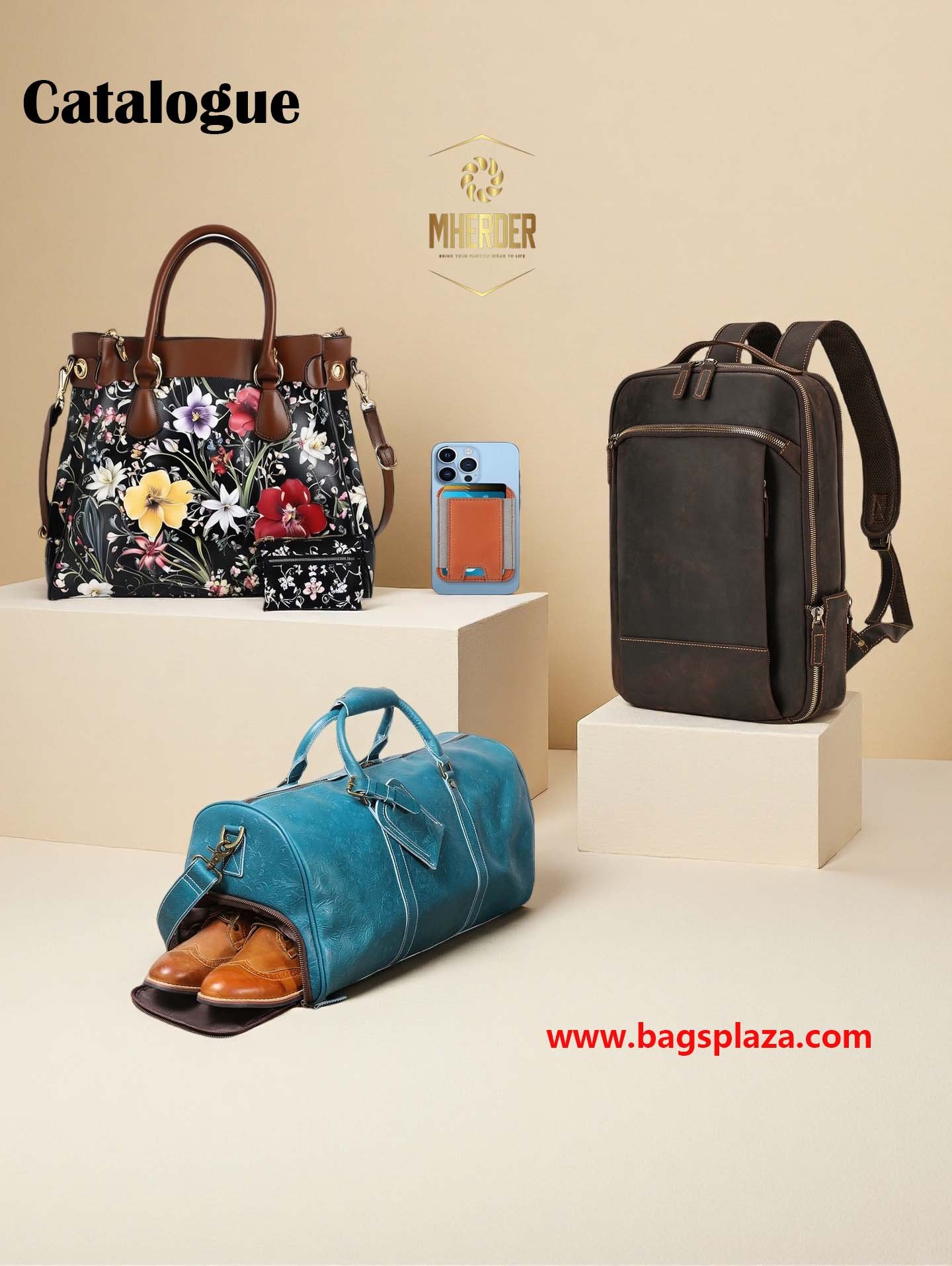
Browse the BagsPlaza leather handbag collection to compare shapes and construction before preparing your brief. For a first order, a focused collection with fewer styles and colors is usually easier to validate and replenish than a broad range with very small quantities per model.
| Order route | What you can change | What to confirm |
| Finished stock | Existing available models and colors | Actual stock, quantity per style and color, replenishment |
| Existing design with branding | Permitted logo application and agreed packaging | Branding method, stock compatibility, separate component MOQs |
| Fully custom production | Pattern, materials, dimensions, lining and fittings | MOQ per style and color, development costs, sample approval |
~에 머더, eligible ready stock starts at 20 pieces per style, with mixed colors and styles available within the stock program and laser logo application where suitable. Confirm the allocation for each model. This is not a 20-piece custom manufacturing service. Custom leather handbags normally start at 100 pieces per style per color. PU bags normally start at 300 pieces per style; selected projects may be considered from 200 pieces, subject to confirmation.
A custom lining, metal logo, or gift box can have its own minimum order even when the handbag quantity is smaller. If you buy extra components for future orders, agree on ownership, storage, wastage allowance and what happens if the design changes.
Step 2: Write a Specification That Suppliers Can Quote

Send photographs or drawings with dimensions and construction notes. State which details are essential and which can be adjusted to reach your budget. Request separate figures for the sample, production, logo tooling, packaging and delivery. Include your destination postal code and intended order quantity.
| Specification | Details to provide |
| Bag construction | Width, height, depth, opening, pockets, strap drop and intended load |
| Body and trim | Material for body, handles and straps; leather grade, thickness and finish |
| Lining and structure | Fiber composition, fabric weight where relevant, backing and reinforcement |
| Hardware and branding | Metal type and finish, zipper specification, logo size, position and method |
| Quality and packaging | Color references, tolerances, target weight, protective packing and carton requirements |
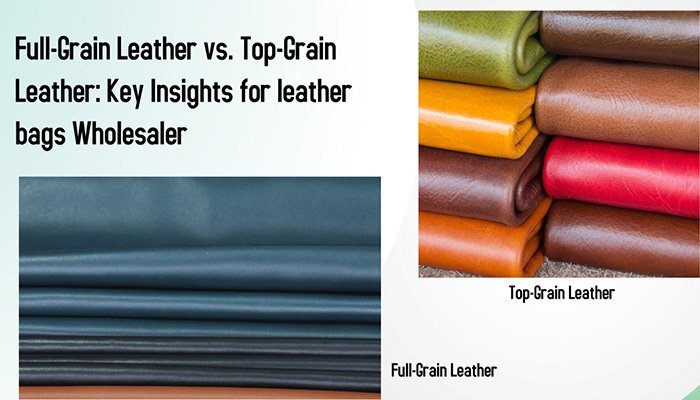
“Genuine leather” does not tell you enough to compare two bags. Ask whether the body, handle and strap use full-grain, corrected-grain or split leather, and whether any part uses PU or bonded material. Specify the finish and thickness as well. The Leather Working Group terminology guide is a useful reference when agreeing on material names.
For PU and other non-animal materials, request the coating and backing composition plus relevant durability evidence. A “vegan” label alone does not establish durability or environmental performance. Avoid publishing recycled-content or sustainability claims without supporting documentation for the material actually used in your order.
Step 3: Find and Verify Suitable Suppliers

Use supplier platforms, referrals, factory visits, and trade fairs to build a shortlist. Guangzhou is a practical starting point for 가죽 핸드백 sourcing because buyers can meet manufacturers and associated material vendors. A wholesale market stall and a production factory serve different purposes; buying from a market does not establish who makes the goods.
If you plan to meet suppliers in person, the BagsPlaza Canton Fair guide for handbag buyers can help you prepare your product brief and questions. Use a meeting to assess relevant products and production capability, then verify the business before placing an order.
Questions to Ask Before Paying for Development
- What is your registered company name, factory address, and role in manufacturing this model?
- Which operations are performed in-house, and which are subcontracted?
- Can you show recent work with similar structure, leather and finishing requirements?
- Who supplies the leather and hardware, and what specifications or test reports can you provide?
- What is the MOQ for each style, color, logo fitting and packaging item?
- Who owns patterns, molds and paid tooling, and can confidentiality be covered by an NDA?
- How are defects handled before shipment and after delivery?
Check the business license against the contracting entity. Confirm the payment beneficiary and obtain a documented explanation for any different recipient. Verify changes to bank details through a previously established contact channel. Platform verification and attractive sample photographs are starting points, not proof that a factory can reproduce your product consistently.
For an unfamiliar supplier or a demanding order, commission an independent factory assessment. Ask the auditor to check the processes that matter for your bags, including cutting, stitching, edge finishing, material storage, and production scheduling.
Step 4: Compare Quotations and Calculate Landed Cost
Normalize each quotation before negotiating. Check that suppliers are quoting the same leather, lining, fittings, logo method and packaging. Confirm the currency, quote validity, production quantity, delivery term, and named location. A price without this scope cannot be compared reliably.
Landed cost per saleable bag equals the total acquisition cost divided by the number of bags you can actually sell. Include product cost, allocated development and tooling, packaging, inspection, freight, insurance, applicable duties, non-recoverable taxes, clearance, and local delivery. Recoverable import VAT may still affect cash flow even when it is not a final expense.
Illustrative Cost Calculation
The following is a budgeting example, not a supplier quotation or a tax estimate. Replace every amount with the figures for your shipment and destination.
| Cost item | Example amount in USD |
| 300 handbags at USD 30 each | 9,000 |
| Development and tooling allocated to this order | 450 |
| Packaging at USD 1.50 each | 450 |
| Independent inspection | 250 |
| Freight and cargo insurance | 900 |
| Duties, non-recoverable taxes and clearance allowance | 1,200 |
| Local delivery | 150 |
| Total acquisition cost | 12,400 |
| Cost per bag if all 300 are saleable | 41.33 |
If only 294 bags are saleable, the same USD 12,400 becomes approximately USD 42.18 per saleable unit before selling expenses. Retail margin must also absorb payment fees, storage, advertising, returns and any retailer or marketplace commission. A factory price of USD 30 therefore does not mean the bag costs USD 30 to sell.
Step 5: Develop and Approve the Finished Sample
Approve the material and construction before committing to bulk production. For custom work, expect a first sample and, where necessary, a revision. At Mherder, custom samples generally cost USD 100–200 per style and take around 10–15 working days after the brief and materials are confirmed. Confirm special hardware, tooling, revisions and courier charges separately.
Test the bag with the items your customer is expected to carry. Weigh it empty and loaded. Check the opening, pocket access, strap adjustment, zipper movement and comfort on the shoulder. Inspect the stitching, edge paint, corners, lining and attachments under normal use.
When the Leather Swatch Feels Right but the Bag Does Not
A soft swatch can produce a heavy or rigid handbag once doubled leather, backing, board, foam, lining and hardware are added. If the finished sample feels too stiff, ask the factory to explain the construction layer by layer. Review the leather thickness and reinforcement together, then approve a revised finished sample. Simply removing reinforcement may reduce weight while weakening the handle attachments or distorting the shape.
Retain an approved reference sample and its specification revision. Photograph the logo position, colors, lining and hardware. Written approval should identify the sample version, material codes and packaging. Any later substitution needs approval before use in production.
Step 6: Confirm the Contract and Production Schedule
Use a purchase order or contract supported by a specification sheet and pro forma invoice. Record the style and color quantities, approved sample, unit price, payment milestones, production deadline, inspection process, shipping term and agreed remedies for nonconforming goods. Include whether quantities may vary and who pays for rework or a repeat inspection.
Mherder’s standard payment terms are 30% deposit and 70% balance before shipment. Bank transfer is normally used for orders of USD 200 or more, while PayPal may be used for amounts below USD 200. These are supplier-specific terms, not a rule for all factories. Agree on the inspection and shipment-release sequence before paying.
Custom bulk production commonly takes around 25–40 days after the approved sample, deposit and required materials are in place. Ready stock may dispatch in around 3–7 days after confirmation and any agreed logo work. Material shortages, special hardware and revisions can change the schedule, so request a project-specific timeline.
Work backward from your warehouse deadline. Allow separate time for sampling, revisions, material purchasing, manufacturing, inspection, possible rework, freight and customs clearance. Ask about holiday closures and capacity before promising a launch date to your customers.
Step 7: Inspect Production Before Shipment

Quality control should begin with incoming materials and continue through manufacturing. Early checks can identify a wrong leather color, unsuitable backing or inconsistent fittings before the entire order is assembled. A final inspection is an additional gate, not a substitute for these checks.
Give the inspector the approved sample, specification sheet and defect criteria. Agree on the sampling plan and acceptance limits before production. Describe critical, major and minor defects in terms that apply to the bag; “premium quality” alone is not a measurable instruction.
- Confirm style and color quantities, dimensions and the specified materials.
- Inspect stitching, edge paint, lining, visible surfaces and hardware finishes.
- Check zipper and closure operation, strap fittings and reinforcement at stress points.
- Check logo placement, packaging, carton marks and retail labels where applicable.
- Record test methods and limits for agreed load, rubbing, flexing or other performance checks.
Ask for a report with photographs and defect counts. If the batch fails, document the corrective action, deadline and reinspection before authorizing shipment. An inspection pass does not establish compliance with every destination requirement; discuss any required laboratory tests for the actual materials with an appropriate testing provider.
Step 8: Select Freight and Define Delivery Responsibilities

Choose transport based on shipment volume, urgency, and the cost of missing your selling season. Obtain a quotation using the packed carton count, dimensions and gross weight. Handbags can be bulky relative to their weight, so ask how chargeable weight or cargo volume is calculated.
| Method | Common use | What to check |
| Express courier | Samples and small urgent shipments | Door-to-door scope, chargeable weight and clearance charges |
| Air freight | Time-sensitive commercial orders | Airport versus door delivery, handling and local trucking |
| Sea freight | Larger orders with flexible deadlines | LCL or FCL, destination charges, sailing and delivery schedule |
Mherder’s planning ranges are approximately 5–7 days for courier, 8–15 days for air DDP and 30–45 days for sea DDP where those services are available. These are estimates after dispatch, not guaranteed arrival dates. Confirm the route, service scope and customs allowance for your address. See BagsPlaza shipping options when discussing the delivery quotation.
Understand the Delivery Term Before Comparing Prices
그만큼 ICC Incoterms rules define delivery obligations, costs and risk transfer. They do not replace your agreement on quality, payment or remedies. State the rule, its edition and the named place in the contract.
| 용어 | Practical purchasing implication |
| EXW | Buyer arranges collection and generally handles export and import formalities; confirm feasibility with the forwarder. |
| FCA | Seller hands goods to the nominated carrier at the named place and handles export clearance. |
| FOB | Sea or inland waterway transport only; seller delivers on board at the named shipment port. |
| DAP | Seller delivers to the named destination ready for unloading; buyer handles import clearance and duties. |
| DDP | Seller handles import clearance and applicable duties and taxes to the named destination, subject to local feasibility. |
For container cargo handed to a carrier before loading on the vessel, consider FCA rather than automatically using FOB. Under DAP and DDP, unloading at destination is generally the buyer’s responsibility. For a DDP quote, identify the importer of record, confirm lawful clearance and obtain an itemized scope. A “tax included” label does not answer these questions.
Arrange cargo insurance where appropriate and confirm who handles claims. Specify stuffing or shape supports, surface protection and moisture precautions suitable for the route. Excessive packaging can increase freight costs, but inadequate protection can make otherwise acceptable bags unsaleable.
Step 9: Prepare Customs Documents Before Dispatch
Give your customs broker the product description, outer material, intended use, country of origin, value and destination before booking freight. Handbags commonly fall within HS heading 4202, but the exact national classification depends on the product and its outer surface. Confirm the code and current duties with the destination broker or customs authority rather than copying a code from another shipment.
Typical paperwork includes a commercial invoice, packing list and transport document such as a bill of lading or air waybill. A certificate of origin, product evidence or additional documents may be required for the destination and transaction. The International Trade Administration’s guidance on commercial invoices 그리고 packing lists explains the role of these documents.
Make the descriptions, quantities, values and carton details consistent across the paperwork. The commercial invoice should reflect the actual transaction. Confirm importer registration, labeling, material restrictions and any product testing requirements for your sales market before production, so compliance changes do not delay the completed goods.
Step 10: Check Arrival and Plan Reorders
At delivery, record carton count and external damage before unpacking. Photograph affected packaging and products, keep the shipping labels, and report shortages or damage within the agreed supplier and carrier claim periods. Follow the relevant insurance process where applicable.
Check a representative portion of the delivered bags against the approved sample. Keep questionable units separate and send a clear defect record with style codes, quantities and photographs. Store accepted leather bags in a clean, dry, ventilated environment with suitable shape support.
Track sell-through and returns by style and color. Reorder the models that perform well instead of adding too many designs at once. Keep the approved materials, sample revision and packaging specifications with the reorder record; request confirmation before any component changes.
Common Mistakes That Make a First Order More Expensive
- Comparing unit prices without matching leather, hardware, packaging and delivery terms.
- Approving only a photograph or swatch without testing the finished bag.
- Dividing a small order across too many styles and custom colors.
- Leaving inspection criteria and defect remedies until production is complete.
- Treating a freight estimate as a guaranteed warehouse arrival date.
- Paying a changed bank account without independently verifying the instruction.
자주 묻는 질문
Can I import just 20 handbags with my own logo?
For eligible Mherder ready-stock models, 20 pieces per style may be available with a suitable laser logo. Available colors and the allocation across models must be confirmed. Fully custom designs, lining and hardware are a separate production route with higher MOQs.
What is the MOQ for custom leather handbags?
Mherder’s normal MOQ is 100 pieces per style per color for custom leather handbags. Other suppliers set their own minimums. Custom fittings, lining and packaging may require additional component quantities.
Can a factory make a handbag from my drawing?
Yes, a suitable OEM factory can develop a pattern and sample from your design. Provide dimensions, material preferences, construction details, branding and target quantity. Confirm development costs, intellectual property rights and tooling ownership before work begins.
How much does a custom sample cost?
Mherder custom samples generally cost USD 100–200 per style, with a typical lead time of 10–15 working days after confirmation. Special tooling, complex construction, revisions and sample delivery should be quoted separately.
How can I confirm the leather quality?
Request the leather grade, thickness, finish, supplier information and material specifications for the body and trim. Review a swatch, then test the finished bag for weight, flexibility, appearance and intended use. Use agreed testing where performance or destination requirements call for it.
Do all handbag imports have the same duty rate?
No. Classification, outer material, origin, destination and applicable trade measures can affect the rate. Have your broker confirm the current national tariff classification and taxes for the actual product before finalizing landed cost.
Is DDP shipping always the best option?
DDP can simplify delivery when the seller can lawfully arrange destination clearance. Confirm the importer of record, taxes, documents, insurance and delivery scope. Compare the full cost with a forwarder-managed alternative before choosing.
What if the finished order does not match the approved sample?
Use the written specification and approved sample to document the differences. Before shipment, require an agreed corrective action and reinspection. After arrival, preserve evidence and follow the contract’s notification and remedy process.
Discuss Your Handbag Import Project with Mherder
Mherder supports wholesale and OEM/ODM handbag projects from Guangzhou. If you are testing a collection, ask which existing designs fit the ready-stock program. If you need a proprietary design, start with a development brief and a finished sample.
Send your style images or drawings, dimensions, quantities by style and color, material preferences, logo requirements and destination postal code through the BagsPlaza contact page. Include your target delivery date and budget so the team can assess MOQ, sample requirements and a practical production route.