Canton Fair in China for Handbag Buyers
A Practical Sourcing Guide

The Canton Fair brings handbag buyers and suppliers together in Guangzhou. For brands, boutiques and importers, it offers a useful opportunity to compare products in person, discuss private label development and arrange factory visits. A productive trip should leave you with a shortlist of suppliers, clear specifications, and a sampling plan—not just a suitcase full of catalogs.
This guide explains which phase to attend, how to prepare, what to inspect at the booth, and how to move from an initial quotation to a properly documented order.
Quick Summary
- Handbag buyers should focus on Phase 3 and check the official Cases and Bags exhibition map before booking travel.
- Register through the official Canton Fair channels and confirm the current badge and entry requirements.
- Bring a buying brief covering styles, materials, quantities by color, target price, and delivery requirements.
- Compare finished bags, supplier capabilities, and quotations on the same specifications.
- Confirm the sample, contract, quality requirements, and shipping responsibilities before approving bulk production.
Which Canton Fair Phase Should Handbag Buyers Attend
The Canton Fair, also known as the China Import and Export Fair, takes place in Guangzhou in spring and autumn. Its phases cover different product groups. For handbag sourcing, Phase 3 is the relevant starting point.
| Phase | General focus | Relevance to handbag buyers |
| 1단계 | Electronics, machinery and related industrial products | Usually outside the core handbag sourcing brief |
| 2단계 | Household goods, gifts and home furnishings | May be useful for a separate gift or packaging brief |
| Phase 3 | Fashion, textiles and consumer categories including Cases and Bags | Main phase for handbag and luggage supplier meetings |
The official Phase 3 map currently lists Cases and Bags in Area D. Hall allocations can change, so use the official exhibition map to locate the section for your visit. Do not rely on an older guide that lists only Areas A, B and C. Confirm session dates on the Canton Fair website before making travel commitments.

Prepare a Buying Brief Before You Travel
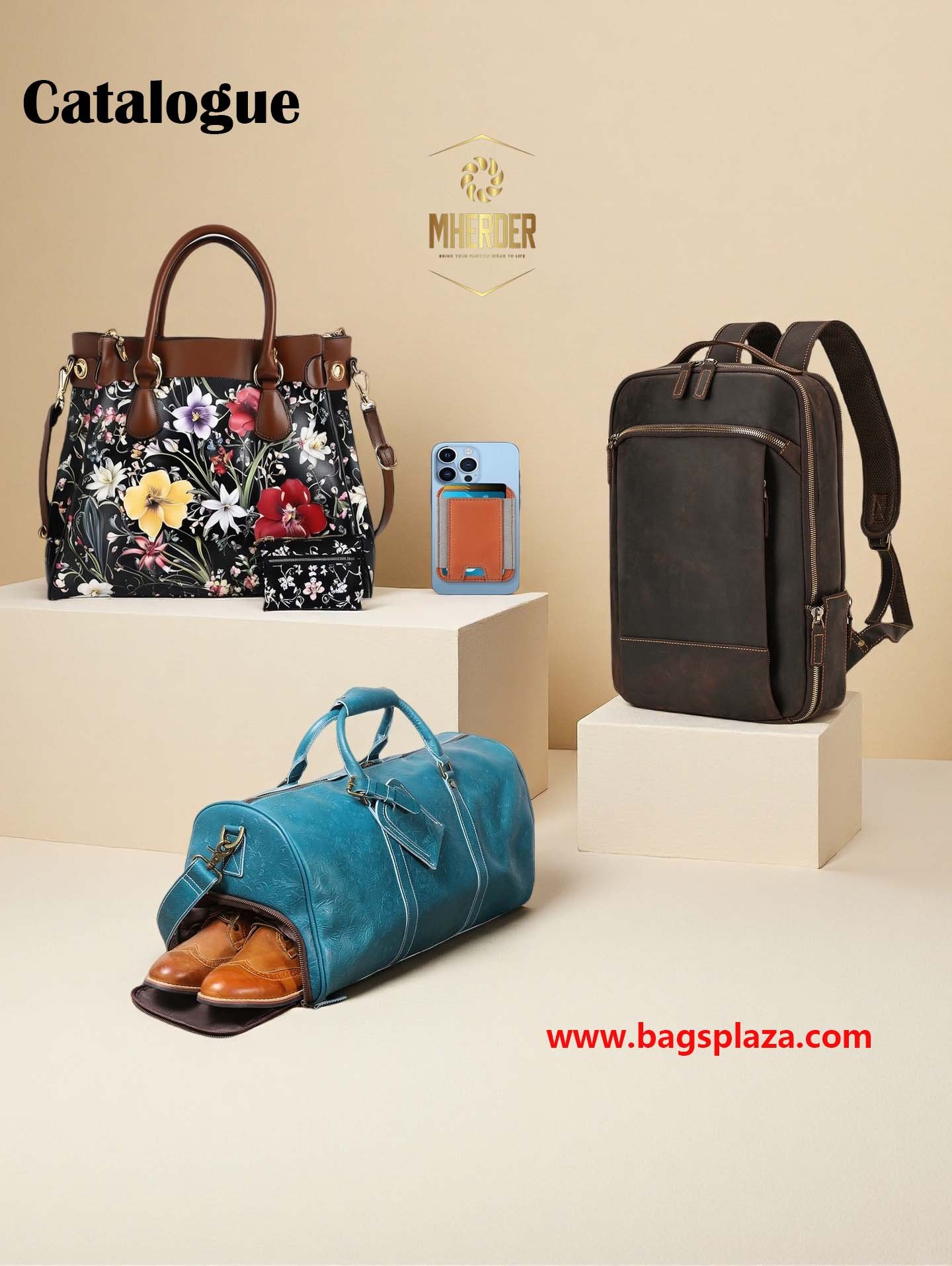
Start with the collection you intend to sell. A supplier making lightweight promotional totes may not be the right fit for a structured leather handbag collection. Review product ranges in advance; for example, the Mherder leather handbag collection can help you identify silhouettes to discuss.
Your brief should include reference images or original drawings, dimensions, intended use, preferred leather, lining, hardware finish, branding and packaging. State quantities by style and color, a target purchasing price with a named trade term, and your required delivery date. Identify which details are essential and which can change to meet your budget.
For a laptop handbag, specify the actual device dimensions and desired clearance. For a premium tote, define the empty weight and whether it should stand upright or soften with use. These details make quotations more comparable and reduce sample revisions.
Registration Travel and Arrival
Use the official buyer registration service linked from the Canton Fair website. Prepare the identity and business information requested for your buyer category, and complete advance registration where available. An invitation letter and a buyer badge serve different purposes: the invitation can support relevant travel formalities, while the badge is used for exhibition access.
그만큼 official overseas buyer badge guide states that new applications, replacements, and renewals are free. Check that guide for documents, badge validity and collection arrangements. Registration locations and operating hours should be verified for the session you attend.
Confirm entry requirements for your nationality and itinerary through the Chinese embassy or consulate serving your location. Allow time for any required application. Do not assume a fair invitation guarantees entry or that the same procedure applies to every buyer.
Choose accommodation by actual journey time to the Canton Fair Complex. Confirm any hotel shuttle directly, including departure times and return services. Compare the full cost of flights, accommodation, local transport, meals, interpreting and sample freight. Fixed airfare or hotel estimates are rarely useful without an origin, travel dates and length of stay.
Leave room in your schedule for factory visits. Save supplier contacts, booth numbers and meeting times in one place. Comfortable shoes, a portable charger, digital reference files and an agreed communication channel will make the visit easier.
How to Evaluate Handbags at the Booth
Use a quick first conversation to identify suitable suppliers, then spend more time with those that match your brief. Ask permission before photographing products and label each photograph with the supplier and model number. An unlabeled photo is difficult to use when requesting quotations later.
| Check | What to inspect or ask |
| Leather and components | Specify leather type and finish separately for the body, flap, handle and strap. Identify any PU, split leather or bonded material. |
| Weight and structure | Weigh the empty bag. Check reinforcement, padding and whether the finished structure suits the intended use. |
| Stitching and stress points | Look for consistent seams, secure strap attachments and reinforcement around handles and hardware. |
| Edges and corners | Inspect edge coating, exposed cuts, corner finishing and areas likely to flex during use. |
| Hardware and zippers | Operate closures repeatedly. Ask about metal composition, plating, zipper specifications and relevant test evidence. |
| Lining and interior | Check lining composition, pocket construction, seam finishing, access and usable capacity. |
| Branding and packaging | Confirm logo method, placement, tooling requirements, dust bag and gift box specifications. |
Leather Feel Does Not Predict the Finished Bag
A soft leather swatch can become a stiff handbag once backing, reinforcement boards, lining, and edge construction are added. A large bag can also become heavier than expected because of leather thickness, lining, and metal hardware. Approving a swatch alone leaves these issues unresolved.
Ask the supplier to develop the sample with the intended construction and record its empty weight. If it is too rigid or heavy, discuss reinforcement placement, leather thickness, and hardware choices together. Simply using thinner leather may weaken strap attachment areas. Review material selection options alongside the construction plan.
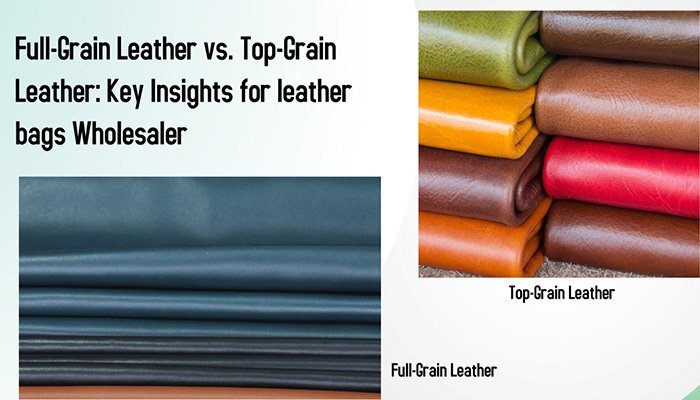
For terminology, the Leather Working Group industry terms guide is a useful reference. A material name alone does not establish suitability: finish, thickness, feel and the finished construction still need approval.
Questions to Ask Each Shortlisted Supplier
- Are you the manufacturer, a trading company or a business using both models? Which operations take place in your own facility, and which are subcontracted?
- Can you show products with construction and finishing similar to our brief? Can we visit the facility responsible for our order?
- What is the MOQ per style and per color? Do leather, lining, custom hardware or packaging have separate minimums?
- What does the quotation include? List materials, logo work, tooling, packaging and the named delivery term separately.
- What are the sample charge, development time and revision arrangements? How will we approve the sample for bulk production?
- When can materials be secured and production begin? What assumptions determine the quoted delivery date?
- What quality checks and relevant tests can you provide? How will defects or deviations from the approved sample be handled?
- Who will own paid molds and tooling? How will original designs, confidentiality and repeat orders be managed?
A trading company can offer useful coordination or product coverage; a factory can provide direct production access. Judge each business by verified capabilities, communication and responsibility for the order. Exhibition participation is an introduction, not proof of production quality.
Compare Quotations Without Losing Quality
Request written quotations using the same specification. A lower price may reflect a different leather, lighter lining, simpler hardware or less packaging. Record those differences before negotiating. Ask suppliers to explain practical cost reductions rather than accepting an undefined promise to deliver the same quality for less.
Separate ready-stock branding from full custom development. Adding a laser logo to an existing bag does not require the same work as developing a new shape with custom lining and metal hardware. Minimum quantities can also come from component suppliers, so a lower bag MOQ may not solve every branding requirement.
For Mherder projects, selected ready-stock styles can start from 20 pieces with laser logo options, subject to availability and assortment confirmation. Custom leather handbags generally start at 100 pieces per style per color. A 20-piece ready-stock order should not be treated as a 20-piece fully custom handbag service. Confirm the specification and applicable minimums before paying for development.
Approve Samples and Verify the Factory
Agree whether a booth sample is for sale, loan or inspection only. Suppliers may retain display pieces, and a custom development sample normally involves a fee and production time. The useful test is whether the supplier provides a clear, workable sampling process.
Review the finished sample for dimensions, capacity, weight, leather finish, lining, stitching, edge work, hardware, logo placement, and packaging. Record changes in writing and approve the revised sample before bulk production. Keep a reference sample and a specification sheet that identify approved components and agreed tolerances.
During a factory visit, follow the operations relevant to your product, such as cutting, skiving, stitching, edge finishing, and final inspection. Ask how material lots and subcontracted work are controlled. A visit offers useful evidence, but it does not replace order-specific quality checks. Mherder’s quality control overview provides a starting point for discussing inspection arrangements.
Confirm the Order and Calculate Landed Cost
The purchase order or contract should name the legal parties and include specifications, quantities by color, price, payment milestones, production timing, packaging, inspection arrangements, and remedies for nonconforming goods. Specify how changes must be approved. Verify payment instructions through a trusted contact before transferring funds.
Use a named place or port with the agreed Incoterms rule. These rules allocate delivery obligations, costs, and risk; they do not replace the rest of the sales contract. The ICC Incoterms checklist helps explain the choice.
| 용어 | Practical point for buyers |
| EXW | Goods are made available at the named place. The buyer generally handles collection and export arrangements; assess whether this is practical for your shipment. |
| FCA | The seller delivers to the nominated carrier at the named place and handles export clearance. Often useful for container or multimodal shipments. |
| FOB | Free On Board applies to sea or inland waterway transport. Risk passes when goods are onboard the buyer-nominated vessel at the named shipment port. |
Landed cost should include the goods, tooling where applicable, packaging, freight, insurance, customs brokerage, destination duties and taxes, and local delivery. Ask your freight forwarder or customs broker to confirm classification and destination requirements for the actual bag materials and construction. Do not assume one generic handbag code or duty rate covers every product.
For a delivered quotation, clarify the exact destination and whether customs clearance, duties, and taxes are included. Confirm carton dimensions and gross weight before comparing transport options; bulky gift boxes can change freight costs substantially.
Follow Up With a Clear Sampling Plan
After the fair, organize notes by supplier and model. Send each shortlisted business the same buying brief, confirm unresolved questions, and request a complete quotation. Keep the shortlist manageable so you can review evidence and sample performance carefully.
Agree who will provide the next information, when the sample should be ready, and which decisions remain open. Place the production order only after material, construction, commercial, and delivery details are documented. The value of the trip comes from this follow-through.
자주 묻는 질문
Which Canton Fair phase is relevant to 핸드백
Phase 3 includes Cases and Bags. Check the official exhibition map for the current section and hall allocation before planning meetings.
Is the overseas buyer badge free?
The current official guide states that new applications, replacements, and renewals are free. Confirm eligibility, documents and collection arrangements through the official buyer service.
You can meet suppliers and examine their products, but assess premium quality through materials, construction, finishing and a properly developed sample. A booth display alone cannot confirm repeat production quality.
Can a startup order only 20 handbags?
Small orders may be possible from existing stock. Full custom development usually has higher minimums, especially by style and color. Ask separately about bag, hardware, lining and packaging minimums.
Are samples always free?
No. Display samples may be unavailable to take away, and custom samples usually require payment. Agree the sample fee, development time, revisions and delivery cost in advance.
Should I place an order at the booth?
You can discuss commercial terms there, but avoid committing to production before the specification, approved sample, quality requirements and contract are clear.
How can I check whether the supplier is a factory?
Ask for the legal company details, production address, operations performed in-house and subcontracting arrangements. Arrange a visit or suitable independent verification where needed.
Can I combine the fair with a factory visit?
Yes, if the supplier confirms the appointment, location and responsible contact. Allow travel time and verify that the facility is involved in the product you intend to order.
Plan Your Handbag Project With Mherder
Mherder, Guangzhou Herder Leather Products Co., Ltd., supports OEM, ODM and private label leather handbag projects in Guangzhou. If you are planning a sourcing trip, contact our team to discuss suitable products and arrange a factory or showroom appointment, subject to confirmation.
Send your original design or reference images, dimensions, quantities by style and color, material preferences, branding needs and delivery destination. We can review the brief and explain the applicable MOQ, sampling steps and quotation requirements before your visit.