Affordable Leather Tote Bags: Features, Materials, and Trends

Affordable leather tote bags can look simple from the outside, but buyers often discover hidden cost problems after sampling begins. A low quoted price can become expensive if the material feels wrong, the structure collapses, or bulk quality varies. The better solution is to control cost through smart material, feature, and production choices.
입수 가능한 가죽 토트백 are tote bags designed to balance cost, durability, hand feel, brand positioning, and production consistency. They are not simply the cheapest bags available. Buyers should evaluate leather type, thickness, lining, hardware, construction, MOQ, packaging, and supplier quality control before choosing a final design.
We see many brands focus first on the target unit price. That is understandable. Still, the best sourcing decisions usually start with a clearer question: Which parts of the bag must feel premium, and which parts can be simplified without hurting the customer experience?
What Price Range Makes a Leather Tote Bag “Affordable”?
For B2B buyers, “affordable” should be defined backward from the target retail price, required gross margin, channel costs, freight, duties, packaging, and returns—not from a single factory quotation. A tote intended to retail at USD 60–100 needs a different material and construction strategy from one positioned at USD 150–250.
| 포지셔닝 | Typical Product Strategy | Cost-Control Focus |
| Entry-level | Simple silhouette; split leather, coated leather, PU, or suitable synthetic materials | Standard hardware, simple lining, efficient packaging |
| Mid-market | Top-grain, corrected-grain, or selected split leather | Balance hand feel, structure, useful pockets, and repeatable QC |
| Affordable premium | Better top-grain leather, refined finishing, stronger hardware and packaging | Protect visible touchpoints; simplify hidden complexity |
| 프리미엄 | Full-grain or specialty leather, custom details, higher finishing standards | Value and craftsmanship take priority over lowest unit cost |
These are positioning examples, not universal pricing rules. Actual factory cost depends on bag size, leather consumption, leather grade, hardware, lining, labor, order quantity, packaging, and destination.
Why Are Affordable Leather Tote Bags Not Just Cheap Tote Bags?
Many buyers want affordable 가죽 토트백, but the word “affordable” can create confusion. If affordability only means the lowest cost, the final product may feel weak, generic, or misaligned with the brand. A better approach is to treat affordability as controlled value engineering.
Affordable leather tote bags are not cheap tote bags. They are cost-optimized products where material grade, structure, lining, hardware, stitching, packaging, and MOQ are selected to fit a realistic retail position. The goal is to protect perceived value while avoiding unnecessary production cost.

What Buyers Often Overlook
In production discussions, we often see buyers compare two tote bag quotations only by unit price. That comparison can be misleading because two bags with the same general size may have very different cost drivers.
For example, a tote with a soft unlined body, simple magnetic closure, and standard handles is not the same product as a structured tote with lining, zipper closure, reinforced base, inner compartments, metal feet, and customized hardware. Both may be called “leather tote bags,” but the manufacturing time and material consumption are different.
Affordable leather tote bags should be evaluated through the full cost structure:
| Cost Factor | Why It Matters | Common Buyer Mistake |
| Main material | Controls hand feel, durability, and positioning | Choosing material only by price |
| Thickness | Affects structure and weight | Making leather too thin to save cost |
| Lining | Changes appearance and function | Adding premium lining without purpose |
| 하드웨어 | Influences perceived quality | Using heavy custom hardware too early |
| Construction | Determines labor time | Overcomplicating the first collection |
| 포장 | Affects landed cost | Choosing bulky boxes for low-margin items |
| 최소주문수량 | Impacts unit price | Expecting sample-level flexibility in bulk |
| QC standard | Protects consistency | Not defining defects before production |
Affordable Means Strategic, Not Low-End
We prefer to define affordable as a product that meets the buyer’s target market without waste. That market may be an Amazon store, a Shopify DTC brand, a wholesale collection, or a private-label line for retailers. Each channel has different expectations.
에이 tote bag for a corporate gift program may need clean branding, reliable color consistency, and practical packaging. A DTC fashion tote may need stronger visual identity, better touch, and a more emotional unboxing experience. A wholesale importer may care most about repeatable quality across cartons and batches.
The important question is not, “How cheap can this bag be?” The better question is:
“Which specifications help the customer believe this bag is worth the selling price?”
Practical Ways to Control Cost
For many private-label buyers, cost can be controlled without damaging the product. Common choices include:
- Using top-grain or corrected-grain leather instead of full-grain leather
- Selecting microfiber or recycled leather when positioning supports it
- Reducing unnecessary inner compartments
- Choosing standard hardware molds instead of custom molds
- Using a clean unlined or partially lined construction
- Keeping the silhouette simple for efficient cutting and stitching
- Using flat-packed packaging when suitable
- Planning MOQ around material availability
These decisions should be made early. Once sampling begins, major changes can add cost and delay. We usually recommend that buyers define the target retail range, customer profile, and must-have features before finalizing the tech pack.
For a deeper explanation of quotation differences, see Why Two Chinese Leather Bag Factories Quote Different Prices for the Same Design.
Which Materials Work Best for Affordable Leather Tote Bags?
Material selection is the biggest decision for affordable leather tote bags because it affects price, texture, durability, weight, and brand perception. A beautiful design can still fail if the material does not match the target retail position or customer expectation.
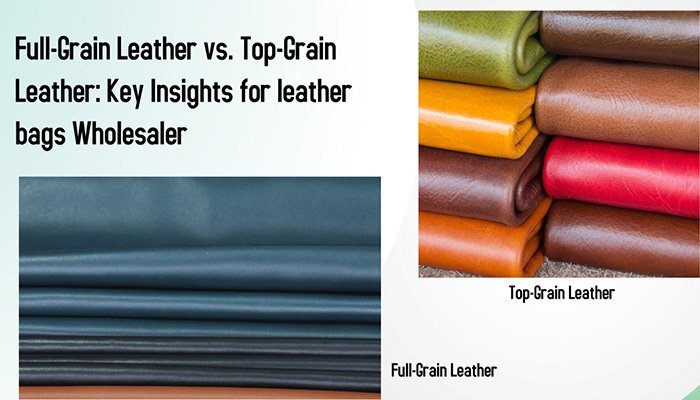
The best material for affordable leather tote bags depends on the target price, brand message, order size, and use case. Full-grain leather feels premium but costs more. Top-grain leather offers balance. Recycled leather, microfiber, vegan leather, and PU can support lower price points when positioned honestly.
Comparing Common Tote Bag Materials
No material is universally best. Each option has trade-offs. We usually guide buyers to match the material to the product’s intended promise.
| 재료 | Typical Strength | Watch-Out Point | 최적의 선택 |
| 풀그레인 가죽 | Natural grain, premium feel, strong positioning | Higher cost and natural variation | Premium or bridge collections |
| 최상급 가죽 | Balanced appearance and cost | Less natural than full-grain | Mid-range private label totes |
| Corrected-grain leather | More consistent surface | May feel less premium | Clean commercial designs |
| 재활용 가죽 | Sustainability story and cost control | Must verify composition and durability | Eco-positioned affordable lines |
| Microfiber leather | Consistent, smooth, lightweight | May not satisfy “real leather” buyers | Vegan or performance-focused totes |
| 비건 가죽 | Animal-free positioning | Quality varies widely | DTC and lifestyle brands |
| PU material | Lower cost and wide color options | Can look too synthetic if poorly chosen | Entry-level fashion totes |
| Split leather | Real leather at a lower cost | Surface coating, hand feel, and durability vary by specification | Affordable genuine-leather totes |
The Wrong Middle Ground Risk
One of the biggest risks we see is choosing a material that sits in the wrong middle ground. This happens when a buyer selects a material that is not premium enough to feel like leather, but not low-cost enough to compete with PU alternatives.
That creates a positioning problem. Customers may not understand why the tote costs more than a synthetic bag. At the same time, they may not feel the softness, smell, grain, or aging character expected from leather. The product becomes difficult to explain.
This is especially important for affordable leather tote bags sold online. Customers cannot touch the product before buying. Product photos, descriptions, reviews, and price must work together. If the material promise is unclear, returns and negative feedback may increase.
How We Evaluate Material in Development
When we review tote bag materials with buyers, we usually look at several practical points:
- Hand feel
The material should feel appropriate for the selling price. Softness, firmness, surface texture, and flexibility all matter.
- Thickness
Tote bag leather often needs enough body to hold shape. However, excessive thickness increases weight and cost.
- Color consistency
Bulk production requires stable color. Natural leather can have variation, while synthetic materials may offer more consistency.
- Cutting yield
Material waste affects cost. Irregular hides may create more waste than roll materials.
- Edge treatment
Some leathers support painted edges well. Others may need folded edges or binding.
- Durability expectations
Work totes need stronger handles and stress points than light lifestyle totes.
- Brand claim accuracy
If a buyer markets the tote as leather, vegan, recycled, or sustainable, supporting documentation should be reviewed.
For U.S. marketing and labeling, buyers can review the FTC Leather Guides, which address misrepresentations about leather and imitation-leather composition and characteristics.
Material Choice Is a Positioning Decision
A full-grain tote can support a higher-end story, but it may not match a brand’s first launch budget. A top-grain leather tote can feel polished and commercial. A microfiber tote can be consistent and practical for vegan positioning. PU can work for trend-driven, price-sensitive collections.
The key is alignment. Affordable 가죽 토트백 should not pretend to be something they are not. Buyers should decide whether the product is meant to feel premium, practical, eco-conscious, fashion-driven, or promotional. Then the material choice becomes much clearer.
What Features Should Buyers Prioritize in Affordable Leather Tote Bags?
Features can improve affordable 가죽 토트백, but too many features can also increase cost, weight, and production complexity. Buyers need to separate customer-facing value from hidden complexity that does not help sales.
Buyers should prioritize features that improve daily use and perceived quality: comfortable handles, reinforced stress points, secure closure, useful pockets, stable base, clean stitching, and suitable lining. Custom hardware, complex compartments, and luxury packaging should be added only when they support the target retail position.
The Feature Hierarchy
Not every feature deserves equal attention. We usually separate tote bag features into three levels.
| Feature Level | 예시 | Recommendation |
| 필수적인 | Handle strength, stitching, base support, closure | Prioritize first |
| Value-Adding | Inner pocket, laptop sleeve, zipper, logo hardware | Add if the customer expects it |
| Optional | Metal feet, complex dividers, custom pullers, gift box | Use only when margin allows |
Handles Deserve Special Attention
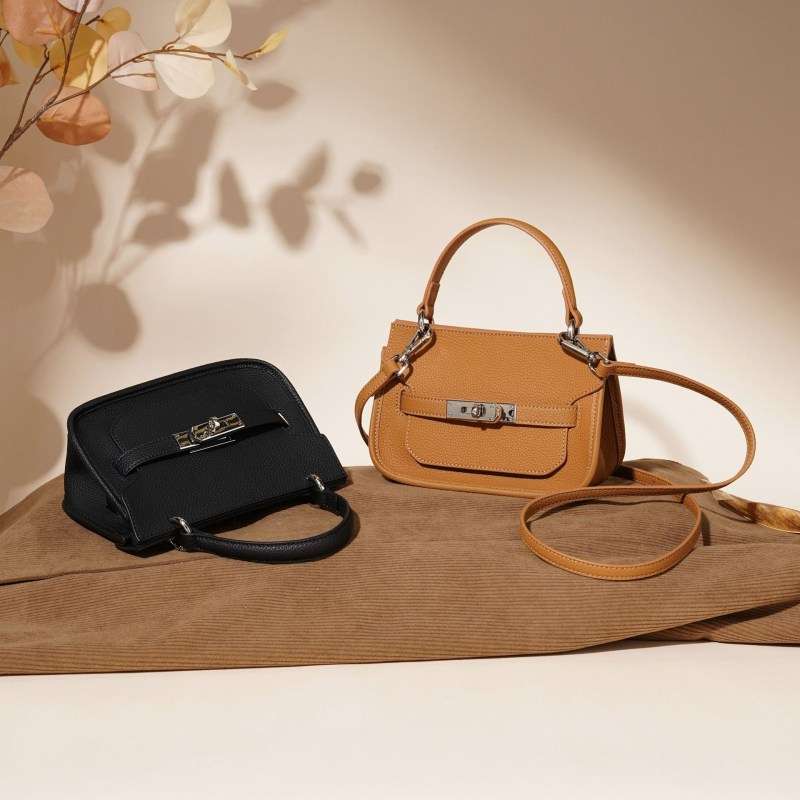
The handle is one of the most important parts of any tote bag. Customers carry weight through the handles. If the handle feels weak, the entire bag feels cheap.
For affordable leather tote bags, we usually recommend checking:
- Handle drop length
- Handle thickness
- Reinforcement method
- Stitch density
- Attachment shape
- Edge finishing
- Comfort on shoulder
A small saving on handle construction can create a large quality problem. For example, a work tote may carry a laptop, notebook, water bottle, wallet, cosmetics pouch, and charger. That weight creates stress at the handle base. Reinforcement patches or hidden backing can be worth the cost.
Lining: Useful or Unnecessary?
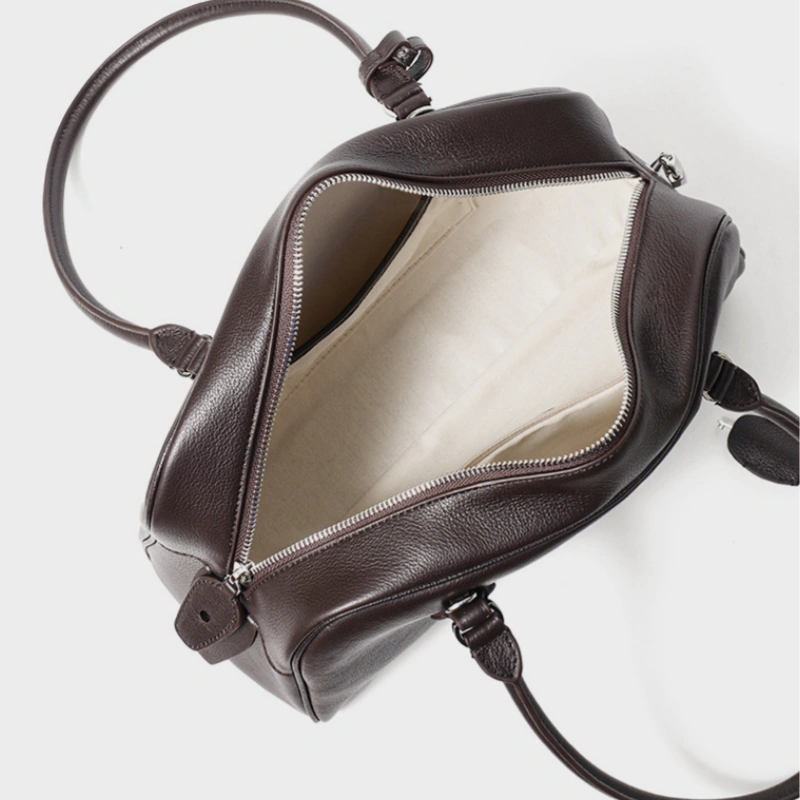
Lining is another area where buyers can control cost. A lined tote can feel more finished and protect the interior. However, lining also adds material cost, labor, and inspection points.
A few practical options include:
- Unlined leather interior for a simple premium look when the reverse side is clean
- Cotton lining for a natural feel and moderate cost
- Polyester lining for durability and color consistency
- Microfiber lining for a softer touch
- Partial lining when only pockets or key areas need coverage
For many affordable leather tote bags, a clean unlined construction can work well if the material’s back side is acceptable. However, for work totes or bags with inner pockets, lining often improves function and perceived quality.
Closures and Security
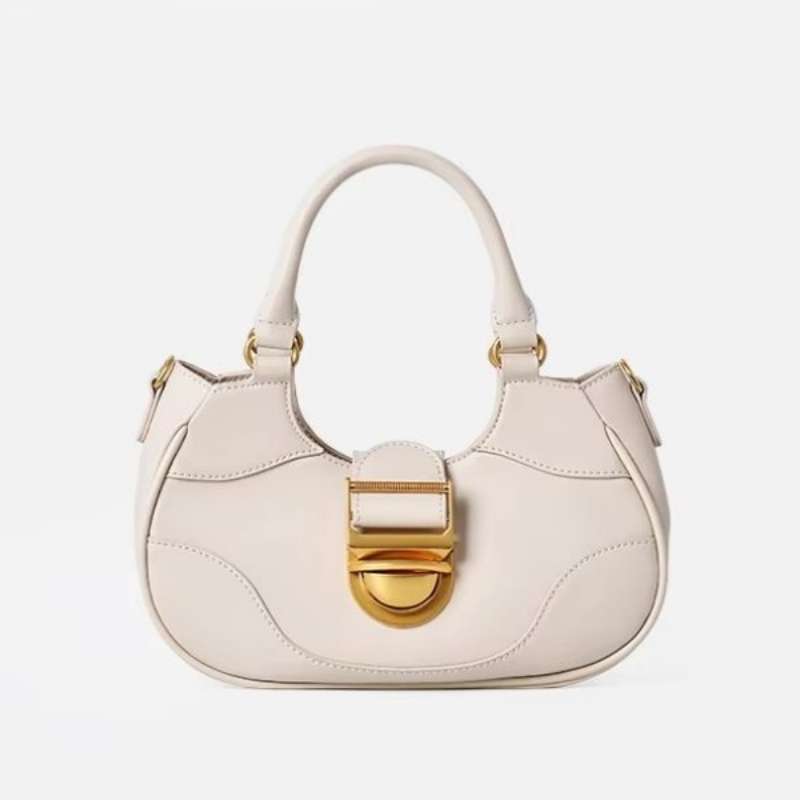
Open-top totes are simple and cost-efficient, but some markets prefer security. A magnetic snap, zipper, or hook closure can change both cost and usability.
| Closure Type | Benefit | Limitation |
| Open top | Simple, easy access, lower cost | Less secure |
| Magnetic snap | Clean and affordable | Limited protection |
| Zipper top | Better security | More labor and structure needed |
| Hook closure | Minimal and stylish | Not fully secure |
For DTC and Amazon sellers, customer reviews often mention closure, pockets, and handle comfort. We suggest reviewing competitor feedback before finalizing features. That feedback can reveal which features matter enough to justify extra cost.
Logo and Branding Choices
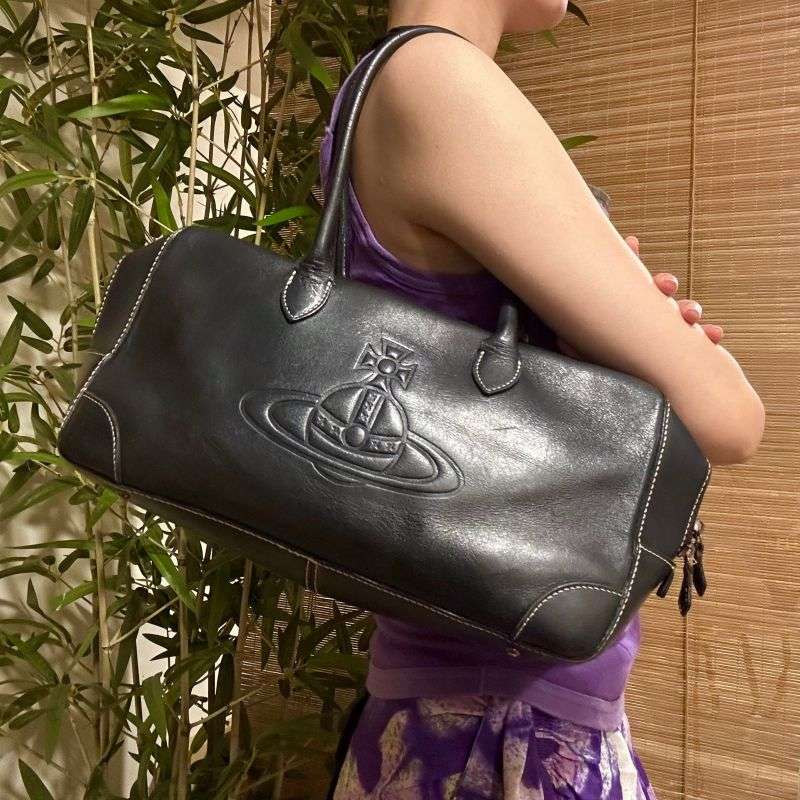
Branding can be subtle or bold. Affordable does not mean unbranded. It means branding should match the product level.
Common branding methods include:
- Debossed logo
- Embossed logo
- Foil stamping
- Metal logo plate
- Woven label
- Printed logo
- Custom zipper puller
- Branded dust bag
For first production runs, we often suggest simple branding. A debossed or foil-stamped logo can look refined without requiring expensive hardware molds. Once the product proves demand, buyers can upgrade hardware and packaging in later batches.
How Do Production Choices Affect Affordable Leather Tote Bags?
Affordable leather tote bags depend on production planning as much as design. A strong concept can become inconsistent in bulk if the buyer does not define materials, tolerances, workmanship standards, and inspection points clearly before production.
Production choices affect affordable leather tote bags through MOQ, material sourcing, cutting yield, stitching complexity, hardware availability, QC standards, packaging, and shipping method. Buyers should confirm samples, specifications, and acceptance criteria before bulk orders to reduce rework, delays, and quality disputes.
Sampling Is Where Cost Reality Appears
A sketch or reference photo can make a tote look easy. Sampling reveals the real cost. During sample development, the factory tests material behavior, pattern structure, handle strength, edge treatment, lining construction, and hardware fit.
At Mherder, we often see the first sample become a discussion tool rather than a final answer. That is normal. Buyers may discover that the material is too soft, the base needs reinforcement, or the opening is too narrow. These changes are easier during sampling than during mass production.
A typical development path may include:
- Concept or tech pack review
- Material recommendation
- Initial quotation
- Sample making
- Fit and function review
- Cost adjustment
- Pre-production sample approval
- Bulk production
- Inspection and shipment
MOQ and Material Availability
MOQ affects unit cost. Smaller orders often have higher material purchasing costs, less efficient production setup, and limited customization options. Larger orders usually allow better material planning and more stable batch control.
At Mherder, our standard MOQ for custom genuine leather bags starts at 100 pieces per style per color. PU projects typically require higher quantities because material production and color minimums can differ. Exact MOQ should be confirmed by design, material, color, hardware, and packaging.
For more detail, see What Really Determines MOQ for Custom Leather Bags in China.
However, buyers should not order more only to reduce the unit price. Inventory risk matters. A startup may benefit from a flexible MOQ, while an importer with confirmed retail demand may prioritize price efficiency.
Material availability also matters. Some leather colors or textures may require minimum hide quantities. Custom synthetic materials may require roll MOQ. Hardware in custom colors may need plating MOQ. These details should be checked before promising launch timelines.
Quality Control Points
입수 가능한 가죽 토트백 still need clear QC standards. Cost control should not remove basic inspection. We recommend buyers define acceptable and unacceptable issues before production.
Important inspection points include:
- Material surface defects
- Color deviation
- 가죽 두께
- Cutting accuracy
- Stitching straightness
- Thread color
- Edge paint smoothness
- Handle attachment strength
- Hardware function
- Lining cleanliness
- Logo placement
- Carton packing
- Barcode or label accuracy
A professional inspection process may include material inspection, in-process inspection, and final inspection. For application-specific performance, such as heavy laptop carrying or strict retail compliance, buyers should arrange qualified testing or third-party evaluation when needed.
For a broader quality-management reference, ISO 9001 quality management requirements provide an internationally recognized framework for consistent processes and continual improvement.
Packaging and Landed Cost
Packaging is often underestimated. A gift box may look attractive, but it increases carton size, shipping weight, and storage cost. A dust bag and protective stuffing may be enough for many online and wholesale channels.
Packaging options include:
| Packaging Type | Benefit | Cost Impact |
| Polybag | Basic protection | 낮은 |
| Non-woven dust bag | Better presentation | 보통의 |
| Cotton dust bag | More premium feel | 더 높은 |
| Gift box | Strong unboxing experience | Higher shipping volume |
| Custom carton | Retail or warehouse efficiency | Depends on size and print |
For many affordable leather tote bags, packaging should protect the shape and surface without making the landed cost too high. Buyers should compare FOB, CIF, and DDP costs when planning the final retail margin.
Which Commercial Trends Matter for Affordable Leather Tote Bags?
The following are practical sourcing directions we commonly see in brand and buyer discussions. They should be treated as commercial product-development trends rather than universal fashion forecasts.
Trends can help affordable leather tote bags sell, but not every trend works well in production. A style may look attractive in a photo, yet become expensive, inconsistent, or hard to scale when translated into bulk manufacturing.
The most useful trends for affordable leather tote bags are minimalist shapes, work-ready designs, soft structures, sustainable-looking materials, neutral colors, and practical organization. Buyers should filter every trend through sampling, pricing, material availability, and repeatability before committing to bulk production.
Commercial Trend 1: Minimalist Shapes
Minimalist totes remain practical because they reduce unnecessary components. A clean rectangular or trapezoid tote can suit work, travel, shopping, and daily use. It also tends to be easier to produce consistently than a highly sculptural design.
Minimalism does not mean boring. Buyers can create distinction through:
- Material texture
- Handle proportion
- Edge color
- Logo placement
- Contrast stitching
- Interior color
- Hardware finish
For affordable leather tote bags, minimalism often supports cost control because it reduces pattern complexity and labor time.
Commercial Trend 2: Work Totes and Laptop-Friendly Designs
Many customers want a tote that works for commuting. A laptop-friendly tote needs more than a large opening. It needs proper structure, reinforced handles, and thoughtful inner space.
Possible features include:
- Padded laptop sleeve
- Zipper top
- Water bottle pocket
- Key leash
- Reinforced base
- Trolley sleeve
- Longer shoulder drop
However, every feature adds cost. We suggest buyers decide whether the tote is truly a work bag or simply work-inspired. A real laptop tote needs stronger construction. A lifestyle tote can use lighter organization.
Commercial Trend 3: Sustainable-Looking Materials
Many brands ask about recycled leather, vegan leather, water-based PU, and other lower-impact material stories. These materials can support brand positioning, but claims should be verified with supplier documents and, when needed, independent testing.
Buyers should ask for:
- Material composition documents
- Recycled content information
- Compliance documents where relevant
- Color fastness or abrasion test options
- Care instructions
- Batch consistency details
We avoid saying one material is automatically sustainable. Sustainability depends on sourcing, chemistry, durability, use life, and end-of-life considerations. For commercial sourcing, the safest approach is to make only claims that can be supported.
For EU-bound products, buyers can review ECHA guidance on substances in articles under REACH and confirm project-specific obligations with qualified compliance professionals.
Commercial Trend 4: Soft Structure
Soft totes are popular because they feel relaxed and modern. They can also reduce the need for heavy reinforcement. Still, soft structure must be controlled. If the material is too limp, the bag may look collapsed in product photos or warehouse storage.
A soft tote may need:
- Slightly thicker material
- Strategic base support
- Hidden reinforcement at handles
- Good stuffing for photography
- Careful carton packing
Soft structure works best when the buyer accepts natural drape. It works less well when the listing photos promise a crisp shape but the bulk goods arrive folded and relaxed.
Commercial Trend 5: Neutral and Commercial Colors
Neutral colors often support broader sales. Black, brown, tan, beige, cream, taupe, and grey are common for wholesale and DTC lines. Seasonal colors can work, but they increase inventory risk.
For bulk orders, buyers should verify color standards. A small lab dip or material swatch may not fully represent bulk production. Color variation is especially important for leather because hides can vary. Synthetic roll materials may offer more uniformity, but still require batch checks.
How Should Buyers Choose a Supplier for Affordable Leather Tote Bags?
Affordable leather tote bags require a supplier that understands cost control, not just sewing. If the supplier cannot explain material trade-offs, sampling limits, MOQ impact, and inspection standards, the buyer may face problems after the order is placed.
Buyers should choose a supplier for affordable leather tote bags by reviewing product experience, material options, sampling process, MOQ flexibility, QC systems, communication quality, export experience, and documentation support. Certifications and claims should be verified, and application-specific requirements should be reviewed by qualified professionals.
Supplier Evaluation Checklist
A good supplier should help buyers make trade-offs. The cheapest quotation is not always the best sourcing decision. We suggest reviewing suppliers through practical questions.
| Evaluation Area | Questions to Ask |
| Product experience | Has the supplier made similar tote bags before? |
| Material range | Can the supplier explain leather, microfiber, vegan leather, and PU options? |
| Sampling ability | Can the supplier develop from sketches, tech packs, or reference samples? |
| MOQ flexibility | Can the supplier support startup and growth-stage orders? |
| QC process | Are material, in-process, and final inspections used? |
| 브랜딩 | Can the supplier handle logo, packaging, and hardware customization? |
| Export support | Can the supplier ship under FOB, CIF, or DDP terms? |
| Communication | Does the supplier explain risks before production? |
Communication Reveals Manufacturing Skill
Good communication often reveals whether a supplier understands production. A useful supplier should ask questions such as:
- What is the target retail price?
- Which market will the bag sell in?
- Is real leather required, or is vegan positioning acceptable?
- What is the expected order quantity?
- Does the tote need to carry a laptop?
- Should the bag stand upright?
- What packaging does the sales channel require?
- Are there compliance documents needed for import?
These questions are not delays. They help prevent wrong assumptions.
Why Bulk Consistency Matters
A sample can be beautiful, but bulk consistency is the real test. Buyers should ask how the supplier controls variation across materials, stitching, logo placement, edge paint, and packing.
For leather goods, some natural variation is normal. The important point is whether the variation fits the buyer’s brand standard. A premium brand may accept natural grain variation but reject uneven stitching. A wholesale buyer may accept minor shade variation but require consistent carton labeling.
Affordable leather tote bags must be repeatable. If a design can only be made well in one sample, it may not be a good bulk product.
Where Mherder Fits
At Mherder, we work with brands, wholesalers, importers, Amazon sellers, Shopify sellers, and private-label teams on leather tote bag development and production. Our experience includes material selection, sampling, logo customization, packaging decisions, and bulk quality control.
Buyers comparing factories can also use our sourcing guide: Top Leather Tote Bag Manufacturers in China.
We do not believe every buyer needs the most expensive material. We also do not believe the lowest price is always the best choice. We prefer to help buyers define a realistic product position first, then match materials and construction to that goal.
자주 묻는 질문
Are affordable leather tote bags made from real leather?
Some affordable leather tote bags are made from real leather, such as top-grain, corrected-grain, or split leather. Others may use recycled leather, microfiber, vegan leather, or PU. Buyers should confirm material composition, labeling requirements, and supplier documentation before placing bulk orders.
What is the best leather thickness for a tote bag?
There is no universal best thickness. A tote bag needs enough body for structure but not so much that it becomes heavy or costly. The right thickness depends on bag size, lining, reinforcement, handle design, and whether the tote must carry heavy items.
Can affordable leather tote bags still look premium?
Yes. Affordable leather tote bags can look premium when the material, shape, stitching, edge finishing, hardware, and branding are aligned. A simple design with good proportions often looks better than a complicated design made with unsuitable materials.
Should startups choose leather, vegan leather, or PU for tote bags?
Startups should choose based on target price, customer values, and brand positioning. Leather can support a more premium story. Vegan leather can support animal-free positioning. PU can work for entry-level fashion products. Buyers should test samples before deciding.
How can buyers reduce tote bag costs without hurting quality?
Buyers can reduce costs by simplifying the structure, using standard hardware, choosing suitable lining, optimizing packaging, selecting realistic materials, and planning MOQ carefully. They should avoid cutting costs on handle strength, stitching quality, and key stress points.
What is the MOQ for custom affordable leather tote bags?
At Mherder, the standard MOQ for custom genuine leather tote bags starts at 100 pieces per style per color. PU and other synthetic-material projects may require higher quantities depending on material, color, and customization. For stock styles with simple laser-logo branding, lower quantities may be possible.
결론
Affordable leather tote bags work best when buyers treat affordability as smart cost control, not cheapness. Material, structure, hardware, lining, packaging, MOQ, and quality control all shape the final value. If you are developing an affordable leather tote bag collection, send 머더 your reference design, target material, quantity, and target price. We can help evaluate the material, construction, MOQ, sampling plan, and production cost before bulk production.