Personalized Messenger Bags: Customization, Materials & Buying Guide for Brands

Personalized messenger bags can look simple from the outside, but many brand projects fail when customization is treated as “just add a logo.” That creates unclear pricing, slow sampling, and quality mismatches. We prefer to start with use case, material, structure, branding method, and target market, then turn those choices into manufacturable specifications.
Personalized messenger bags are custom shoulder bags developed around a brand’s market, price tier, function, materials, and branding requirements. For brands, real personalization includes size, pockets, laptop protection, flap shape, strap design, hardware, lining, logo method, packaging, and quality standards—not only color selection or logo placement.
In our daily OEM/ODM work at 백스플라자, we see one pattern often: buyers ask for a price before the bag is defined. A clearer product brief helps suppliers quote accurately, sample faster, and avoid misunderstandings before bulk production begins.
What Makes Personalized Messenger Bags Truly Custom for Brands?
Many brands begin with an attractive reference photo and a logo file. That is a useful start, but it is not enough for production. If the use case, dimensions, structure, and material are unclear, the final product may miss the target market.
Personalized messenger bags become truly custom when the brand defines both appearance and function. A supplier needs clear instructions for bag size, flap style, compartment layout, strap width, closure type, logo process, lining, packaging, and quality expectations before accurate sampling or pricing can begin.
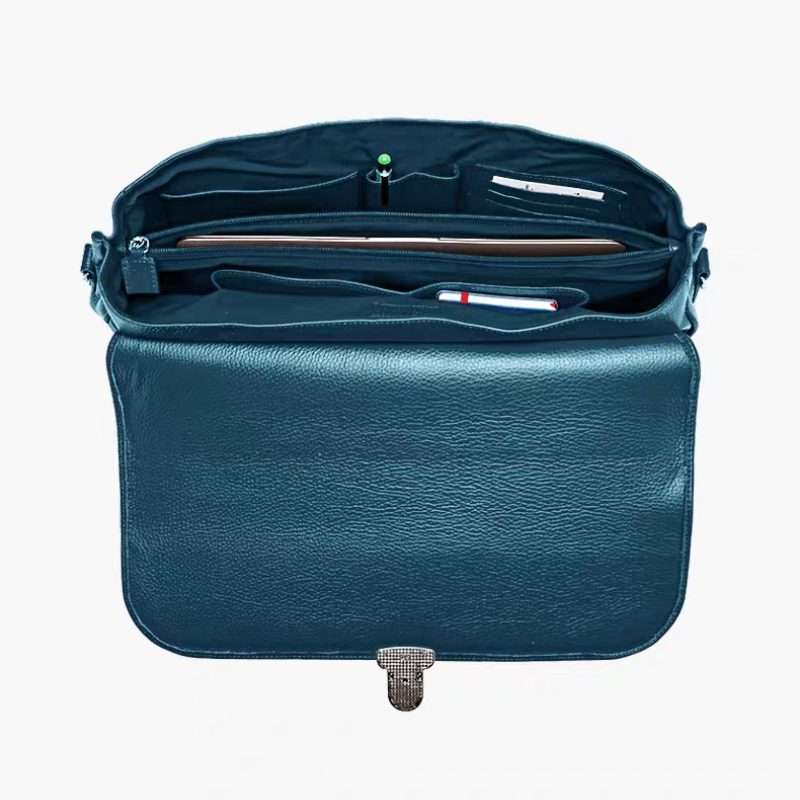
Customization Is Built in Layers
In manufacturing, we usually explain customization in layers. A brand does not need to customize every detail, but each layer affects cost, sampling time, tooling needs, and production risk.
| Customization Layer | 예시 | Why It Matters |
|---|---|---|
| Basic appearance | Color, logo, contrast stitching | Creates brand identity quickly |
| 재료 선택 | Leather, canvas, nylon, microfiber leather, PU | Impacts cost, texture, weight, durability |
| 구조 | Flap shape, gusset, base, laptop sleeve | Controls function and user experience |
| 하드웨어 | Buckles, zippers, magnetic snaps, D-rings | Affects durability and perceived value |
| 인테리어 디자인 | Pockets, lining, organizers, padding | Supports daily use and target customer needs |
| Branding details | Woven label, debossing, metal logo, hangtag | Builds private label presentation |
| 포장 | Polybag, dust bag, gift box, carton marks | Supports retail, e-commerce, or gifting channels |
When brands skip these layers, suppliers must guess. Guessing creates risk. For example, a “13-inch laptop messenger bag” can mean several things. Some buyers want a padded laptop compartment. Some only need a sleeve. Some want the bag to fit a 13-inch laptop tightly, while others want room for documents, a charger, and a water bottle.
A Brand-Side Brief Should Start With the User
Before we discuss material or logo method, we usually ask one simple question: Who will use the bag, and where will it be sold?
The answer changes almost every design choice.
- Corporate gift suppliers may need a practical bag with a clean logo, stable cost, and gift-ready packaging.
- Fashion brands may care more about silhouette, leather texture, hardware color, and seasonal colorways.
- Amazon and Shopify sellers often need clear product differentiation, functional pockets, and shipping-friendly packaging.
- Wholesalers and distributors may prefer designs that work across multiple markets and avoid overly niche details.
- Retail chains may need consistent sizing, barcode labels, carton marks, and stricter inspection requirements.
This is why we avoid saying that one type of personalized messenger bag is “best.” A premium full-grain leather style may work for a boutique collection, but it may not suit a high-volume corporate gifting program. A lightweight nylon style may be ideal for utility positioning, but it may not communicate the premium texture a fashion brand wants.
Important Questions Before Sampling
A strong custom messenger bag brief should answer these questions:
- What is the target retail price or wholesale price range?
- Who is the end user?
- What size devices or documents must fit inside?
- Will the bag be used daily, for travel, for work, or for promotion?
- Which market will receive the goods?
- Which branding method does the brand prefer?
- What packaging is required for the sales channel?
- What quality checks must the supplier follow?
** In our experience, the fastest projects are not always the simplest designs. They are the projects with the clearest specifications.
For brands, personalized messenger bags should be treated as product development projects, not decoration projects. Once that mindset is clear, the next step is material selection.
Which Materials Work Best for Personalized Messenger Bags?
Material choice can make or break a messenger bag project. A beautiful design may become too heavy, too expensive, or too casual if the material does not match the brand position. The problem grows when buyers ask for “high quality” without defining what that means.
The best material for personalized messenger bags depends on use case, target price, brand positioning, and durability expectations. Leather supports premium positioning, canvas and nylon suit lightweight utility, and vegan leather, microfiber leather, or PU can offer flexible cost, texture, and branding options.

Common Material Options for Brand Projects
~에 백스플라자, we work with several material categories for bags and leather goods. For messenger bag development, we normally compare materials by appearance, hand feel, cost structure, weight, durability, and maintenance needs.
| 재료 | Typical Positioning | Strengths | Points to Check |
|---|---|---|---|
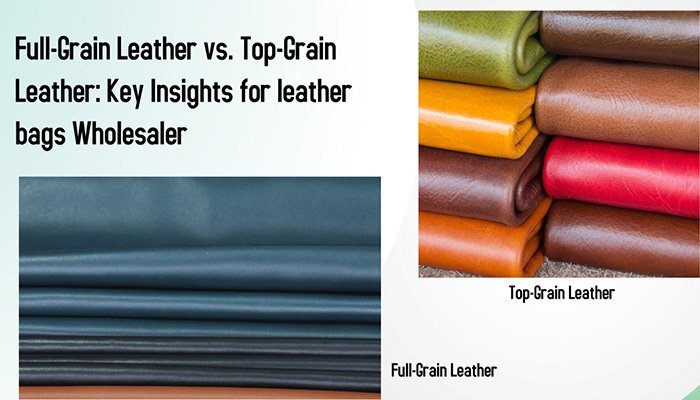
| 풀그레인 가죽 | Premium collections | Natural grain, long-term character, strong texture | Higher cost, natural variation, weight |
| 최상급 가죽 | Premium to mid-premium | Smoother finish, refined appearance | Finish consistency, thickness, color matching |
| 재활용 가죽 | Value-conscious branding | Uses leather fiber content, stable surface | Composition details, performance expectations |
| Vegan leather / PU | Fashion, gifting, cost-flexible lines | Many colors and textures, logo-friendly | Surface durability, peeling resistance, compliance needs |
| Microfiber leather | Mid to premium alternative | Stronger structure than many PU options, smooth finish | Thickness, backing quality, surface testing |
| 캔버스 | Casual, utility, outdoor-inspired | Lightweight, durable, washable appearance | Fabric weight, coating, colorfastness |
| Nylon / polyester | Travel, tech, corporate utility | Lightweight, water-resistant options | Denier, coating, zipper compatibility |
No material is universally best. Each one serves a different market. A corporate buyer may prefer a black microfiber leather messenger bag with a subtle debossed logo because it looks professional and stays within budget. A fashion brand may prefer top-grain leather with custom hardware and cotton lining because the final retail story depends on texture and detail.
For leather supply-chain due diligence, the Leather Working Group Leather Manufacturer Standard provides a reference framework covering areas such as traceability, chemical management, restricted substances, and environmental performance. Facility certification should not be presented as certification of the finished messenger bag.
Leather Choices Need Clear Specifications
When buyers say “genuine leather,” the term is too broad for serious procurement. A supplier needs more detail. We usually ask for:
- Leather type: full-grain, top-grain, split leather, recycled leather
- Thickness: for example, 1.2 mm, 1.4 mm, or project-specific thickness
- Finish: aniline, semi-aniline, corrected grain, embossed, waxed, pebbled
- Color standard: Pantone reference, physical swatch, or supplier color card
- Backing and lining requirements
- Testing expectations: colorfastness, abrasion, tear strength, or other required checks
For application-specific testing, brands should confirm requirements with qualified testing labs or compliance professionals. A manufacturer can support material documents and inspection, but importers should verify standards for their own market and product category.
For standardized leather testing methods, brands can also refer to ASTM International Leather Standards when defining relevant material performance requirements.
Canvas, Nylon, and Synthetic Materials Need Different Checks
Canvas and nylon are often chosen for lighter messenger bags. They can be strong choices for daily work, school, travel, promotional products, or e-commerce lines. However, buyers should not only ask whether the material is “waterproof.” That word can be misleading.
A better conversation includes:
- Fabric weight: such as 12 oz canvas or fabric denier for nylon
- Coating: PU coating, PVC coating, water-resistant finish
- Colorfastness: especially for dark colors and light clothing contact
- Shrinkage: relevant for cotton canvas
- Abrasion resistance: important for daily-use bags
- Odor control: especially for coated materials
- Storage conditions: some synthetic materials are sensitive to heat and humidity
How Material Affects Brand Perception
Personalized messenger bags carry a strong visual message. A structured leather messenger bag suggests professional or premium positioning. A washed canvas version feels casual and practical. A nylon version may feel more technical or travel-ready. A microfiber leather version can help brands balance cost, appearance, and consistency.
We once handled an inquiry where the buyer wanted a “luxury messenger bag” but also wanted a very low target cost, a large laptop compartment, metal hardware, and gift box packaging. The first conversation was not about saying yes or no. It was about showing which specifications drove cost. After reviewing material grades and structure options, the buyer adjusted the design to fit the target tier more realistically.
That is the real value of early supplier communication. It helps brands avoid overdesigning a product that cannot meet the price target.
How Should Personalized Messenger Bags Be Structured for Daily Use?
A messenger bag can look good in photos but fail in daily use. The flap may be too short, the strap may dig into the shoulder, or the laptop sleeve may not protect the device. These small decisions affect reviews, returns, and repeat orders.
Personalized messenger bags should be structured around carrying needs first. Brands should confirm device size, pocket layout, strap width, padding, closure type, handle options, and weight balance. A good structure supports the target user while keeping the design manufacturable and consistent in production.
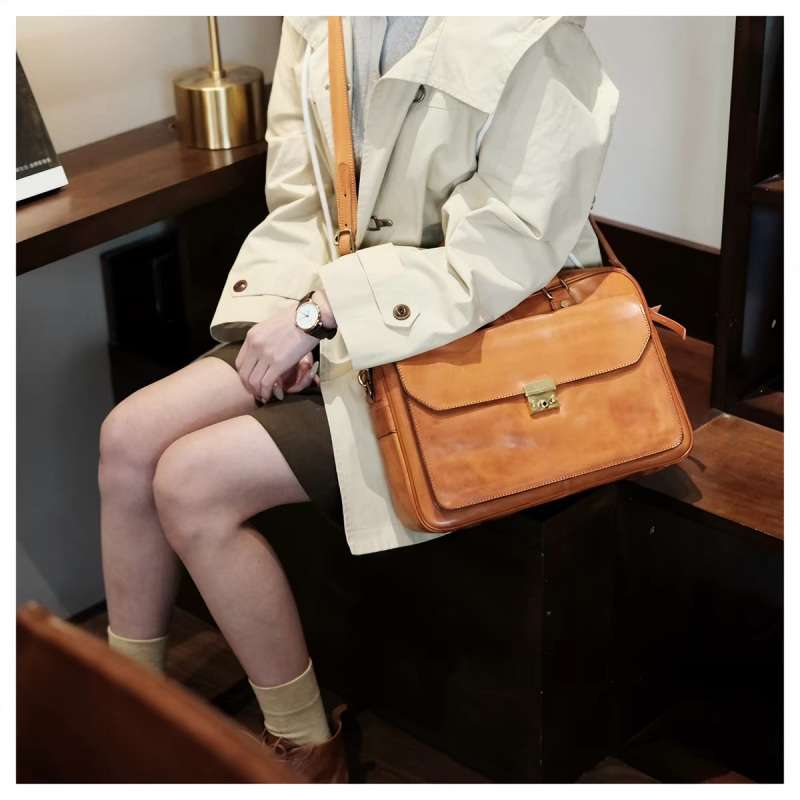
Core Structural Elements to Define
Before a factory can make a reliable sample, the bag structure must be clear. We recommend that brands define these areas in the tech pack or product brief:
Overall dimensions
- Length, height, depth
- Measurement tolerance
- Whether dimensions are internal or external
Main compartment
- Open storage, padded compartment, or divided layout
- Laptop or tablet compatibility
- Document storage needs
Flap design
- Full flap, short flap, curved flap, angled flap
- Magnetic snap, buckle, zipper, or hidden closure
- Decorative or functional straps
Pocket layout
- Front pocket
- Back zipper pocket
- Interior slip pockets
- Pen slots
- Phone pocket
- Card pocket
- Bottle pocket if required
Strap system
- Fixed or detachable shoulder strap
- Adjustable length
- Strap width
- Shoulder pad
- Webbing, leather, or mixed material
Carrying options
- Shoulder carry only
- Top handle
- Luggage sleeve
- Backpack conversion, if the design requires it
Laptop Compartments Need Real Measurements
Many messenger bag projects include laptop storage. This part needs special attention because laptop sizes are not only measured by screen inches. Thickness, case shape, and protective sleeve use also matter.
A 15.6-inch laptop compartment may require different internal dimensions depending on the market and user habit. Some users carry only the laptop. Others carry the laptop inside an extra sleeve. Some brands want foam padding on all sides. Others only want a simple divider.
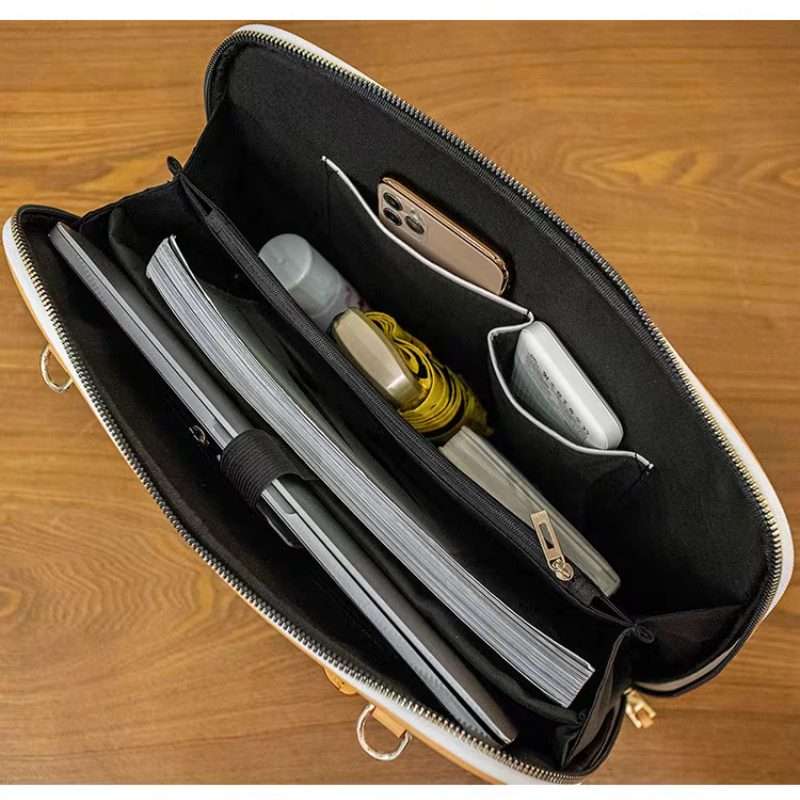
A practical laptop section may include:
- Foam padding on front and back
- Elastic security strap
- Velcro closure
- Raised bottom padding
- Soft-touch lining
- Separate tablet sleeve
- Charger pocket
However, every feature adds material, labor, and sometimes bulk. Brands should choose functions based on the product position. A slim fashion messenger bag may not need a heavy padded compartment. A work or travel messenger bag may need more protection.
Hardware and Closures Should Match Use Case
Hardware is one of the most visible details on personalized messenger bags. It also affects performance. A beautiful buckle may slow down daily access. A magnetic snap may look clean but may not provide the security some users expect. A zipper under the flap can improve protection but adds cost and production steps.
Common hardware choices include:
| Hardware or Closure | Good For | 고려 사항 |
|---|---|---|
| Magnetic snap | Clean fashion designs | Pull strength and placement matter |
| Metal buckle | Vintage or premium look | Slower access, higher weight |
| Plastic buckle | Lightweight utility bags | Must match brand image |
| Zipper closure | Security and travel use | Zipper quality is important |
| D-rings and swivel hooks | Detachable straps | Load-bearing strength matters |
| Rivets | Reinforcement and decoration | Placement must avoid stress damage |
We prefer to review hardware samples before bulk production, especially when the finish is custom. Gunmetal, light gold, antique brass, matte black, and nickel can vary between suppliers. A physical sample or approved reference reduces the chance of mismatch.
Weight Balance Is Often Overlooked
Brands sometimes add thick leather, heavy hardware, full padding, multiple pockets, and gift packaging into one project. The bag may look premium on paper, but the final weight may be too high for daily use. Messenger bags hang from one shoulder, so weight matters more than it does in some backpack designs.
A balanced product brief should define:
- Empty bag weight target, if important
- Maximum laptop size
- Strap width and shoulder pad
- Hardware material
- Leather or fabric thickness
- Reinforcement areas
- Whether the bag must stand upright
When structure supports real use, personalized messenger bags become easier to sell and easier to reorder. When structure is vague, sampling turns into trial and error.
What Branding Options Work for Personalized Messenger Bags?
Branding is often the first thing buyers mention, but it should not be the only customization detail. The logo method must match the material, order purpose, visual style, and durability expectations. Otherwise, the logo may look good on a mockup but weak on the real bag.
Branding options for personalized messenger bags include debossing, embossing, screen printing, heat transfer, embroidery, metal logos, woven labels, leather patches, zipper pullers, hangtags, and custom packaging. The right choice depends on material surface, budget, brand position, and production quantity.
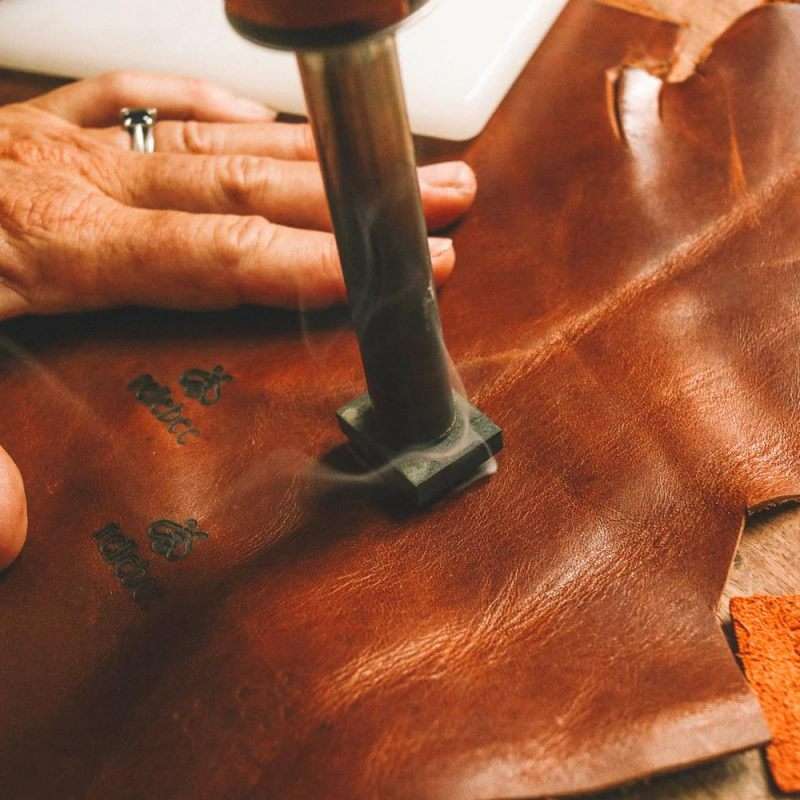
Logo Methods and Their Best Uses
Different logo processes create different effects. We do not recommend choosing only by cost. We recommend choosing by material compatibility and brand message.
| Branding Method | Common Use | 최적의 선택 | 노트 |
|---|---|---|---|
| Debossed logo | Pressed into surface | Leather, microfiber leather, PU | Subtle and premium |
| Embossed logo | Raised effect | Selected leather or synthetic materials | Tooling may be needed |
| 스크린 인쇄 | Flat printed logo | Canvas, fabric, some synthetic surfaces | Good for clear graphics |
| Heat transfer | Applied graphic | Fabric and synthetic materials | Needs adhesion testing |
| 자수 | Stitched logo | Canvas, nylon, patches | Adds texture, may affect back side |
| Metal logo plate | Premium visible branding | Leather and structured bags | Requires hardware mold or plate setup |
| Woven label | Private label identity | Interior or exterior | Useful for apparel-style branding |
| Leather patch | Heritage or casual look | Canvas and fabric bags | Patch material can be customized |
| Custom zipper puller | Detail branding | Mid to premium lines | Small detail with strong effect |
| Hangtag and packaging | Retail presentation | All materials | Supports shelf and unboxing experience |
Logo Placement Should Be Decided Early
Logo position affects pattern making and production. If the logo is debossed on the flap, the factory may need to press the panel before assembly. If the logo is embroidered on a fabric panel, it may also need to happen before the bag is sewn. If the logo is a metal plate, reinforcement may be needed behind the panel.
Common logo positions include:
- Center of front flap
- Lower corner of flap
- Front pocket
- Interior label
- Back panel
- Shoulder strap
- Zipper puller
- Dust bag
- Gift box
- Carton shipping mark
A discreet logo may suit premium retail. A larger logo may suit corporate gifts or promotional campaigns. Neither is automatically better. The correct choice depends on the buyer’s channel and brand positioning.
Private Label Details Go Beyond the Main Logo
For many of our private label projects, the brand identity is built through small details. The end customer may notice the overall quality before noticing the logo. This is why we encourage buyers to think beyond the front mark.
Private label options may include:
- Branded woven lining
- Custom zipper pullers
- Logo-engraved buckles
- Branded dust bags
- Custom hangtags
- Care cards
- Barcode stickers
- Retail labels
- E-commerce polybags
- Master carton marks
- Instruction cards for corporate gift programs
These details help personalized messenger bags feel like finished brand products rather than generic bags with a logo attached.
Packaging Depends on the Sales Channel
Packaging is part of customization. It also affects shipping cost, carton size, product protection, and customer experience.
A Shopify seller may need individual polybags, barcode labels, and protective stuffing. A corporate gift supplier may need gift boxes or custom cards. A wholesale buyer may prefer efficient bulk cartons. A premium fashion brand may request dust bags and tissue paper.
Before quoting, we usually ask:
- Does each bag need an individual polybag?
- Is a dust bag required?
- Does the product need a gift box?
- Are barcode labels or SKU labels required?
- Are carton marks required?
- Is drop testing or special export packaging required?
- Which shipping term is expected: FOB, CIF, DDP, or another arrangement?
At BagsPlaza, we support custom branding, packaging, and hardware solutions, but every detail must be confirmed before production. This keeps expectations clear and helps both sides manage cost and quality.
What Should Buyers Confirm Before Ordering Personalized Messenger Bags?
Many sourcing problems begin with an incomplete quotation request. A buyer sends a photo and asks, “How much?” The supplier cannot answer accurately because material, size, structure, logo process, packaging, and quality expectations are still unknown.
Before ordering personalized messenger bags, buyers should confirm dimensions, material grade, lining, hardware finish, logo method, pocket layout, laptop compartment, packaging, sample requirements, MOQ, inspection standards, and shipping terms. A complete checklist helps suppliers quote accurately and reduces sampling revisions.
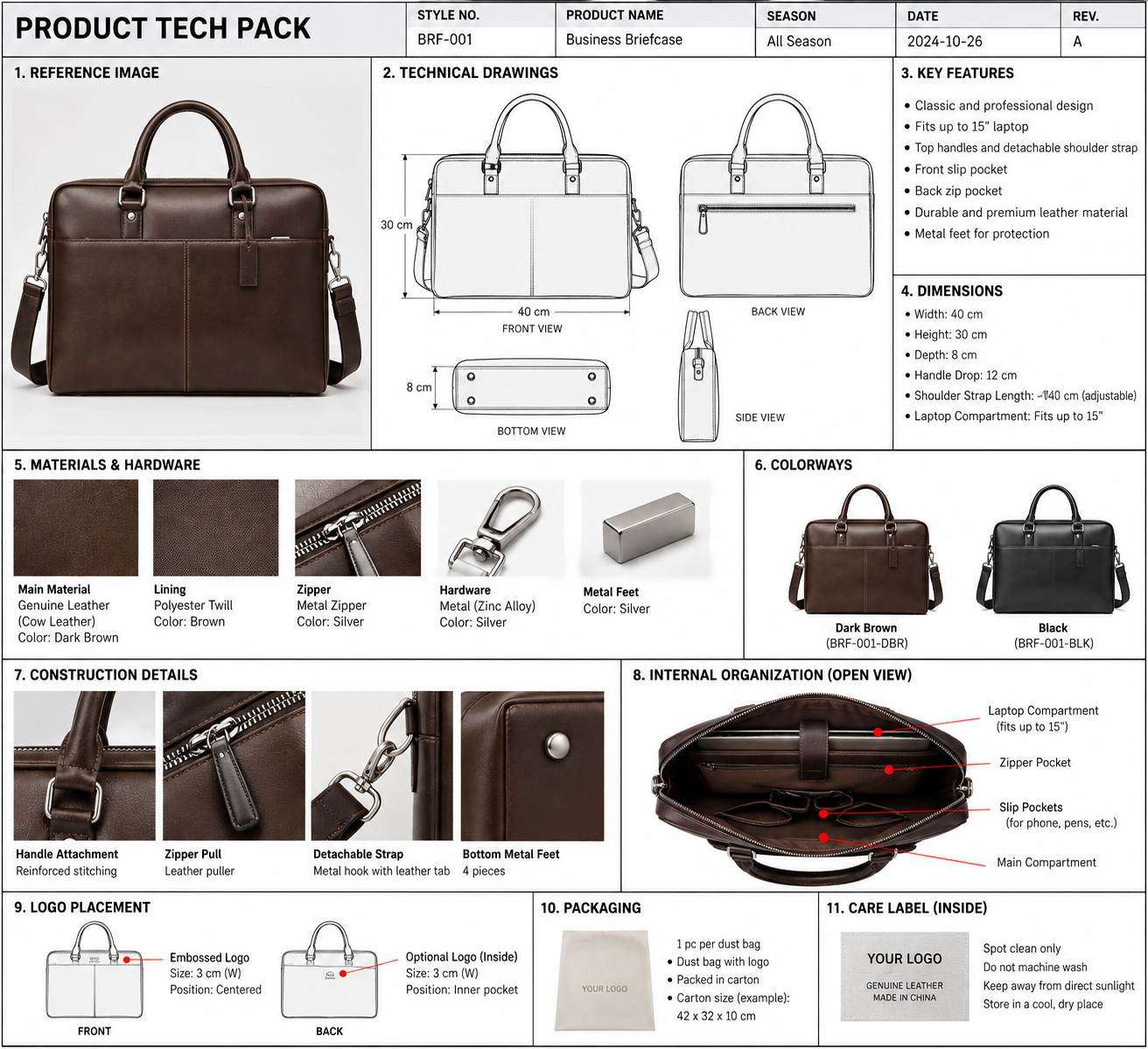
Supplier Communication Checklist
We recommend preparing a simple but complete brief before requesting a quote. It does not need to be perfect, but it should reduce guesswork.
| Item to Confirm | What to Specify |
|---|---|
| Product type | Messenger bag, laptop messenger bag, crossbody messenger bag |
| Dimensions | Length, height, depth, tolerance |
| 재료 | Leather type, fabric weight, PU grade, microfiber leather, nylon denier |
| 색상 | Pantone, swatch, supplier color card |
| Lining | Polyester, cotton, suede-like, branded lining |
| 구조 | Flap, zipper, gusset, laptop sleeve, padding |
| Pockets | Front, back, inner, phone, pen, card, bottle |
| 하드웨어 | Buckle, zipper, D-ring, snap, finish color |
| Logo method | Debossing, printing, embroidery, metal logo, woven label |
| 포장 | Polybag, dust bag, gift box, carton marks |
| Sample needs | Prototype, pre-production sample, approval sample |
| Quantity | Target order quantity and forecast if available |
| Quality expectations | Inspection criteria, testing needs, defect limits |
| 해운 | FOB, CIF, DDP, destination, timeline target |
Why Pricing Depends on Specifications
A personalized messenger bag price is not based only on size. It is affected by many variables:
- Material type and thickness
- Leather yield and cutting loss
- Number of pockets
- Lining quality
- Padding requirements
- Hardware grade
- Logo tooling
- Packaging complexity
- Labor steps
- Order quantity
- Inspection requirements
- Shipping method
For example, two bags with the same external size can have very different production costs. One may use simple canvas, webbing strap, screen-printed logo, and standard polybag packaging. Another may use top-grain leather, metal buckles, padded laptop sleeve, custom lining, debossed logo, dust bag, and gift box. The second bag requires more material cost, more labor, more sampling checks, and more packaging volume.
This is why we prefer to clarify specifications first. A fast quote based on assumptions can look attractive, but it may create problems later when the sample does not match the buyer’s expectations.
Sample Approval Is a Procurement Step, Not a Formality
Sampling is where the design becomes real. For OEM/ODM messenger bag production, we suggest that buyers treat the sample as a quality control checkpoint.
A sample review should include:
Dimension check
- Confirm length, height, depth, strap length, and pocket size.
Material check
- Compare leather or fabric to approved swatches.
Function check
- Test laptop fit, pocket access, strap comfort, flap closure, and zipper smoothness.
Logo check
- Review position, size, color, depth, and alignment.
Workmanship check
- Inspect stitching, edge paint, binding, lining, hardware attachment, and symmetry.
Packaging check
- Confirm labels, bag protection, barcode, dust bag, or gift box.
Revision record
- Document all changes clearly before the next sample or bulk production.
At our factory, quality control includes material inspection, in-process inspection, and final product inspection. Buyers should still define their own acceptance criteria. If the product requires market-specific compliance, lab testing, or certification review, buyers should verify documents with qualified professionals or approved third-party organizations. For acceptance sampling by attributes, buyers can refer to the ISO 2859 series. The exact sampling plan, defect categories, and acceptance criteria should still be agreed for each order.
MOQ and Lead Time Depend on the Project
We avoid giving fixed promises about MOQ or lead time without seeing the full project details. Flexible MOQ options may be possible, especially for startups and growing brands, but the final arrangement depends on material sourcing, logo tooling, hardware customization, packaging, and production schedule.
A simple design using available material may move faster. A fully custom design with new molds, special leather colors, custom metal hardware, and gift packaging will need more coordination. Buyers should share target launch dates early, especially if the product is for a seasonal collection, retail promotion, trade show, or corporate event.
공급업체 선정 기준
When choosing a supplier for personalized messenger bags, we recommend evaluating more than price.
Look for:
- Relevant messenger bag or leather goods manufacturing experience
- OEM/ODM development ability
- Material sourcing support
- Sampling communication
- Clear quotation structure
- Quality control process
- Export experience
- Packaging and shipping support
- Willingness to explain trade-offs
- Ability to document revisions
Guangzhou Herder Leather Products Co., Ltd. has over 19 years of experience in leather goods manufacturing, including handbags, tote bags, crossbody bags, backpacks, briefcases, wallets, travel bags, and small leather accessories. From our manufacturing-side view, the best projects are built through clear communication, not guesswork.
자주 묻는 질문
What is the difference between custom and personalized messenger bags?
Custom and personalized messenger bags often overlap. Personalization may include logo, color, and packaging. Full customization goes deeper and can include material, dimensions, structure, pocket layout, hardware, lining, strap design, and private label details.
What material should I choose for a branded messenger bag?
The right material depends on your target market and price tier. Leather suits premium positioning, canvas and nylon work well for lightweight utility, and microfiber leather or PU can support flexible cost and texture options. You should match material to use case, not choose by trend alone.
Can I ask a supplier for pricing with only a reference photo?
You can ask, but the quote will be rough. A supplier needs size, material, structure, logo method, hardware, lining, packaging, quantity, and quality expectations to quote accurately. A reference photo is helpful, but it is not a complete production specification.
Which logo method is best for personalized messenger bags?
No single logo method is best for every project. Debossing works well on many leather and synthetic leather surfaces. Embroidery suits canvas or fabric panels. Metal logos create a premium effect. Screen printing can be efficient for simple graphics. The material and brand position should guide the choice.
Should I approve a sample before bulk production?
Yes. A sample helps confirm size, material, structure, workmanship, logo placement, and packaging. It also gives both buyer and supplier a clear approval reference before mass production. For stricter requirements, buyers should define inspection criteria and consider qualified third-party testing.
결론
Personalized messenger bags are not only logo products. They are brand products that require clear decisions about user needs, material, structure, branding, packaging, quality control, and supplier communication. When specifications are complete, sampling becomes faster and production risk becomes lower. If you are sourcing personalized messenger bags for private label, wholesale, retail, e-commerce, or corporate gifting, 백스플라자 can support material selection, structural development, sampling, custom branding, packaging, OEM/ODM production, and quality inspection. Send us your reference image, tech pack, target material, logo, quantity, and destination market for a project assessment.