Pleated Bags Buying Guide: Styles, Materials & Customization Options

Pleated bags can look simple in product photos, but sourcing becomes more complex when material, drape, pleat memory, cost, care expectations, and bulk consistency do not match. For B2B buyers, the most reliable approach is to define the construction logic first and then select style, material, structure, branding, and packaging around it.
A strong pleated bag specification starts with material behavior and process, not shape alone. Soft leather creates natural gathering through seams, drawstrings, panel shaping, and controlled fullness, while nylon and technical fabrics can support engineered, stitched, pressed, or heat-set pleating. Each direction affects appearance, weight, durability, care, MOQ, sampling cost, packaging, and repeatability.
What Are Pleated Bags, and Why Does Construction Matter?
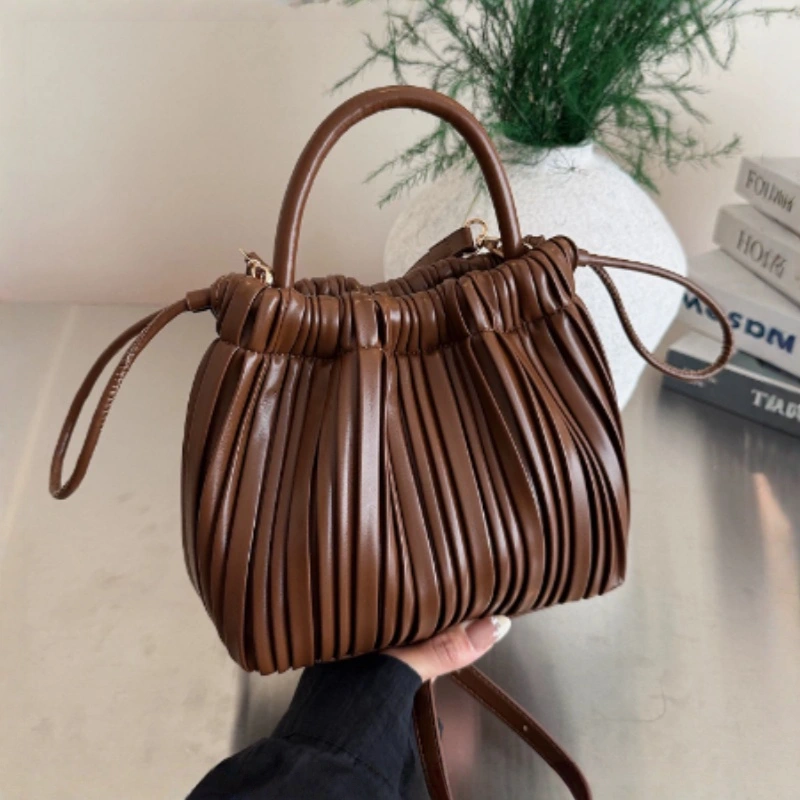
Pleated bags include several visually related constructions, but not every fold is produced in the same way. Buyers should separate soft natural gathering from engineered pleating before requesting a quotation or material substitution.
Natural Gathering vs. Engineered Pleating
Natural gathering relies on material softness, thickness, temper, recovery, panel shape, seam placement, and drawstring or opening construction. The folds are intentionally organic rather than perfectly identical.
- Leather dumpling bags
- Cloud bags
- Ruched shoulder bags
- Drawstring pouches
- Soft gathered clutches
- Slouchy hobo styles
Engineered pleating relies more on fabric density, coating, heat response, fold geometry, stitching, pressure, pleat depth, and recovery. This direction is common in lightweight technical and sculptural styles.
- Nylon pleated totes
- Technical-fabric crossbody bags
- Lightweight travel bags
- Sporty sculptural handbags
- Architectural pleated pouches
- Heat-set or press-formed fabric styles
| Buying Factor | Natural Leather Gathering | Engineered Fabric Pleating |
| Main appeal | Premium drape and tactile softness | Lightweight structure and graphic shape |
| Typical materials | Cowhide, lambskin, microfiber, soft PU | Nylon, polyester, technical fabrics |
| Shape consistency | Organic variation is expected | More repeatable when process is stable |
| Main production risk | Leather softness and panel control | Pleat memory and fabric response |
| Weight | Medium to high | Light to medium |
| Best fit | Fashion, premium daily bags | Sporty, travel, casual, functional bags |
Before sampling, brands should define the intended pleat feeling: soft and natural, crisp and sculptural, lightweight and sporty, premium and tactile, or cost-controlled and non-animal. This helps the factory select appropriate material, machinery, sewing methods, lining support, hardware weight, and finishing.
Which Pleated Bag Styles Fit Different Use Cases?
1. Soft Cloud and Dumpling Bags
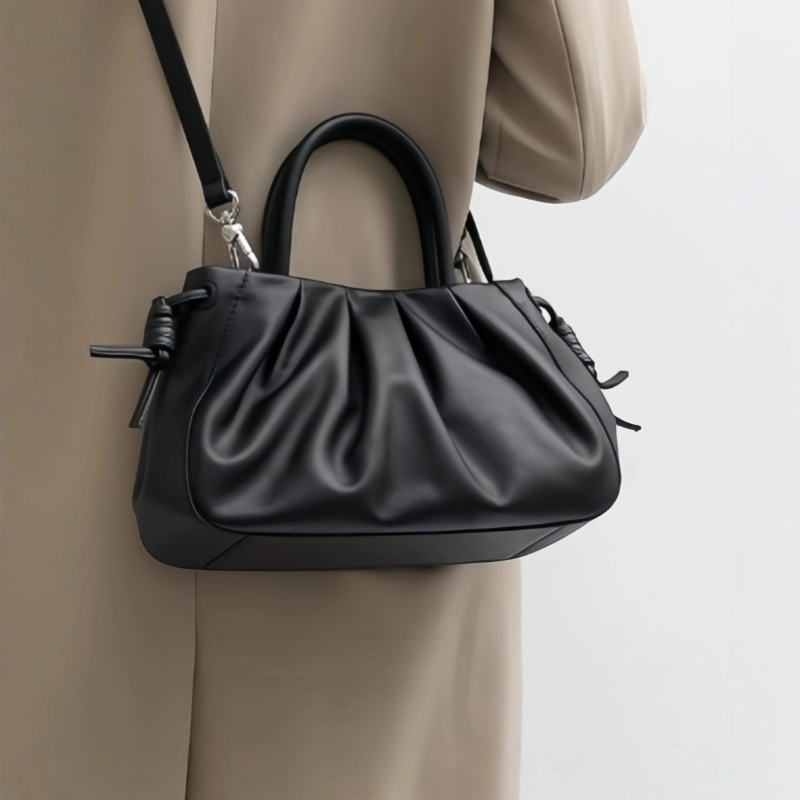
Soft cloud and dumpling styles typically use gathered panels, flexible openings, magnetic closures, drawstrings, or soft handles. They suit everyday-luxury fashion, boutique collections, premium gifting, and seasonal capsules. Soft cowhide provides rich folds, lambskin creates a delicate luxury feel, and microfiber or carefully selected PU can provide greater surface consistency.
2. Sporty Technical Pleated Bags
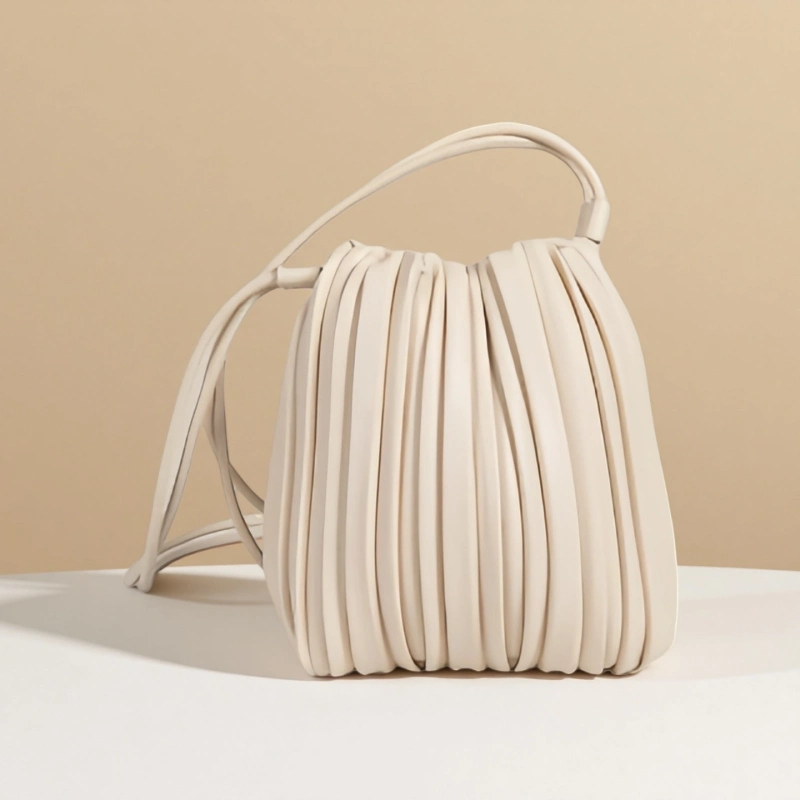
Technical pleated styles emphasize low weight, volume, and visual impact. Nylon, polyester, ripstop, and related woven fabrics can suit travel accessories, commuter bags, foldable totes, crossbody bags, and e-commerce launches. Buyers should verify fabric density, coating, pleat recovery, sewing behavior, and performance claims using supplier documentation and physical samples.
3. Decorative Statement Pleated Bags
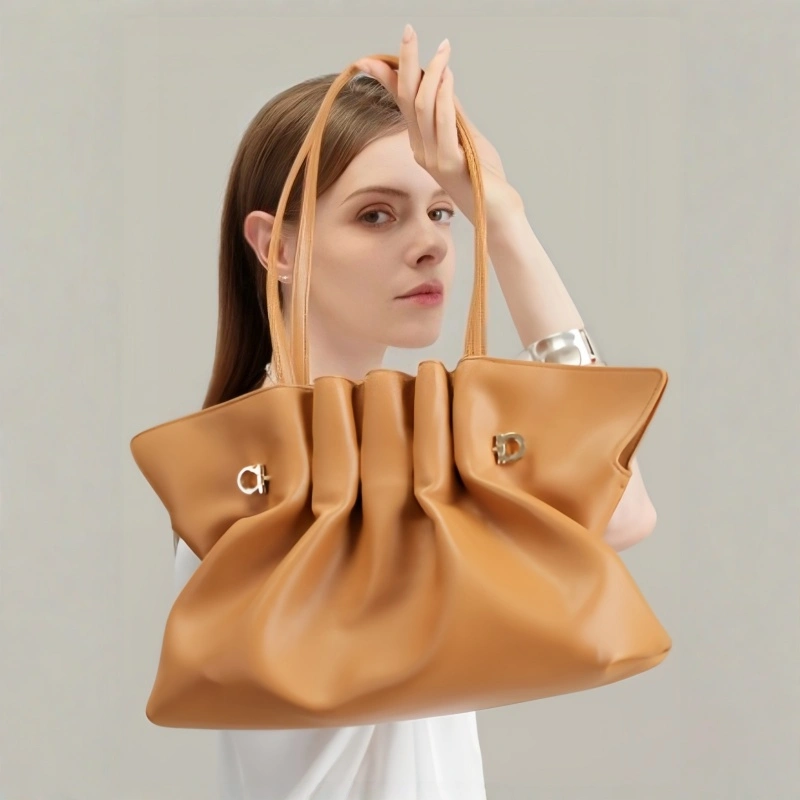
Statement styles may use wide folds, bows, knots, padding, oversized gathers, or dramatic handles. They can create strong visual merchandising but may increase material consumption, shipping volume, QC complexity, storage difficulty, and unit-to-unit variation.
| Style Type | Material Direction | Typical Use | Main Risk |
| Cloud bag | Soft cowhide, lambskin, microfiber, soft PU | Casual fashion, light commuting | Scratches, stains, shape variation |
| Dumpling bag | Soft leather or flexible non-animal material | Daily fashion, boutique retail | Opening structure and fold balance |
| Nylon pleated tote | Nylon, polyester, technical fabric | Travel, commuting, sporty fashion | Pleat recovery and fabric quality |
| Pleated crossbody | Fabric, microfiber, PU, soft leather | Hands-free daily use | Strap balance and opening access |
| Statement clutch | Leather, satin, PU, fabric | Events and fashion drops | Storage, cleaning, consistency |
What Materials Work Best for Pleated Bags?
Material is the central sourcing decision because the wrong temper, coating, density, or thickness can make the finished bag look flat, stiff, bulky, unstable, or inconsistent. Material should be approved together with the pleat construction rather than as a separate choice.
Soft Cowhide
Soft cowhide can balance durability, hand feel, and natural drape for mid-to-premium gathered bags. Buyers should define thickness, temper, finish, scratch resistance, color tolerance, odor expectations, and fold behavior after sewing.
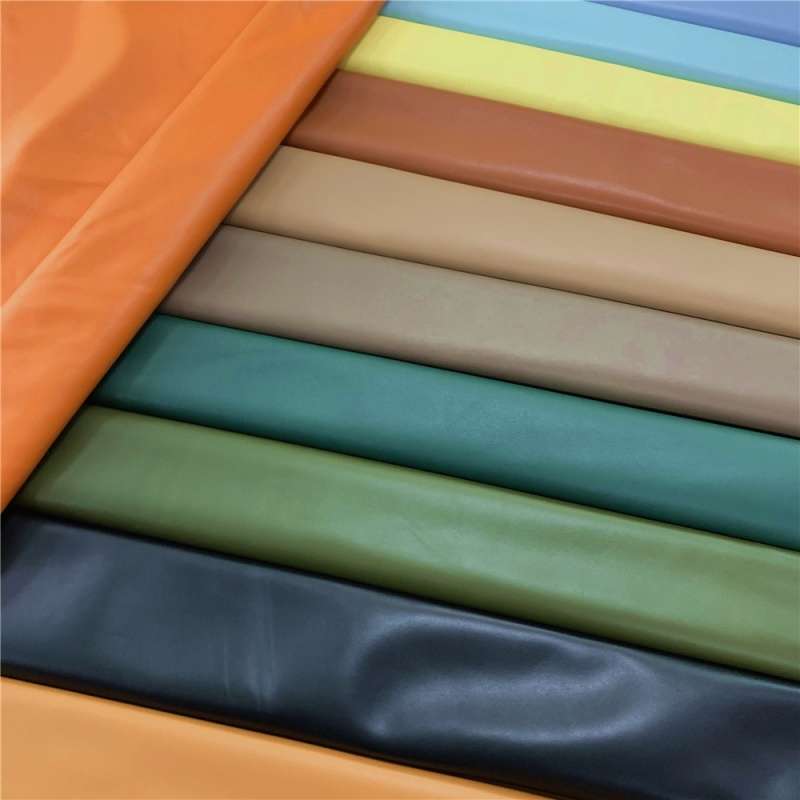
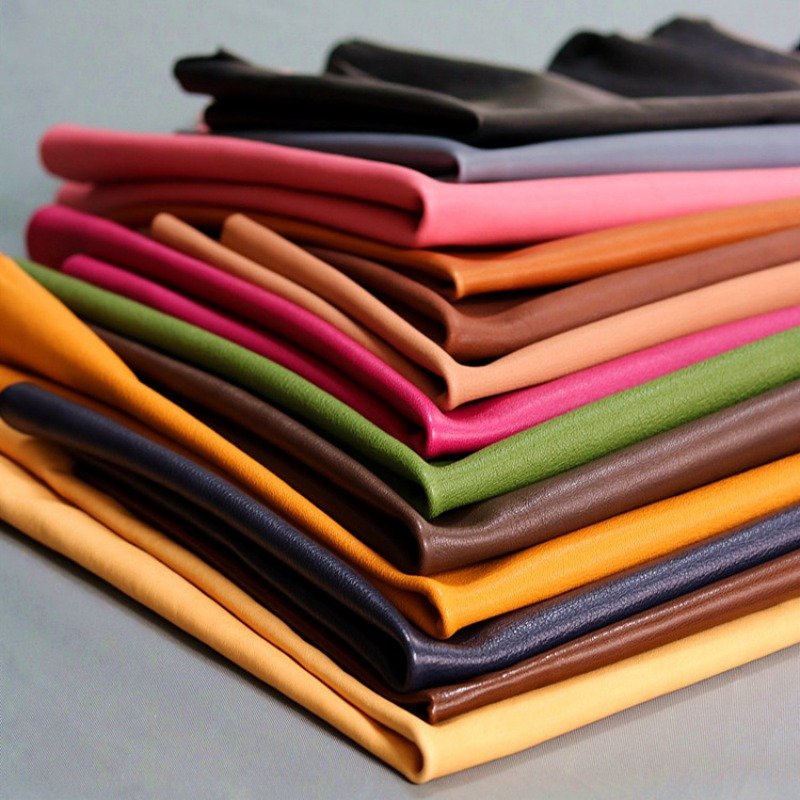
Овчина
Lambskin creates soft, luxurious folds and works well for high-end cloud bags and clutches. It is generally more sensitive to scratches, stains, and moisture, so care expectations and QC standards should match the retail promise.
Микрофибровая кожа
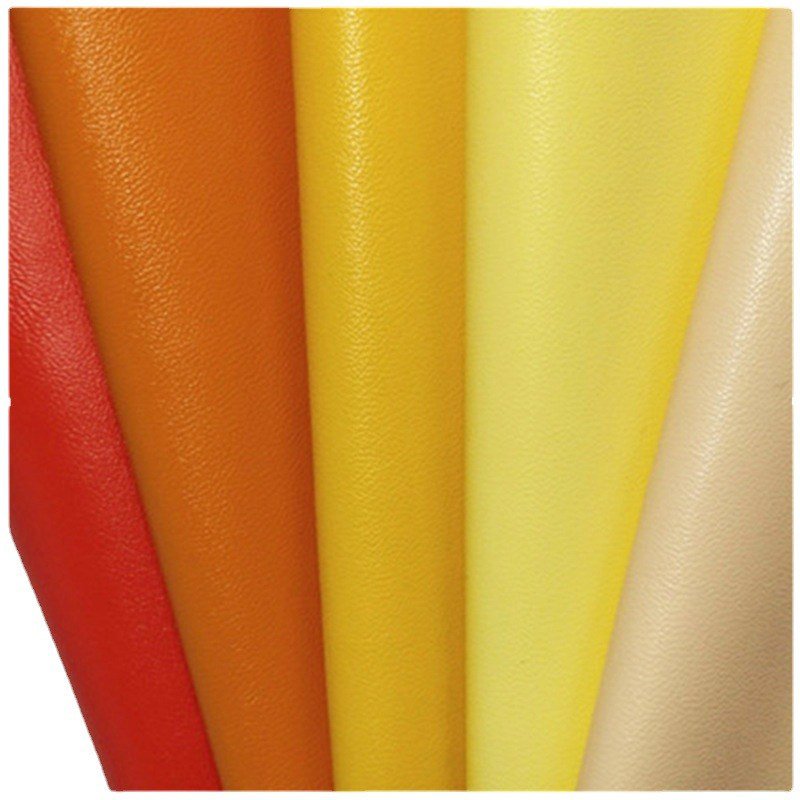
Microfiber can be useful when buyers want a non-animal material with relatively consistent surface quality. The selected grade still needs checks for softness, backing, recovery, thickness, abrasion behavior, and bulk consistency.
PU and Vegan Leather
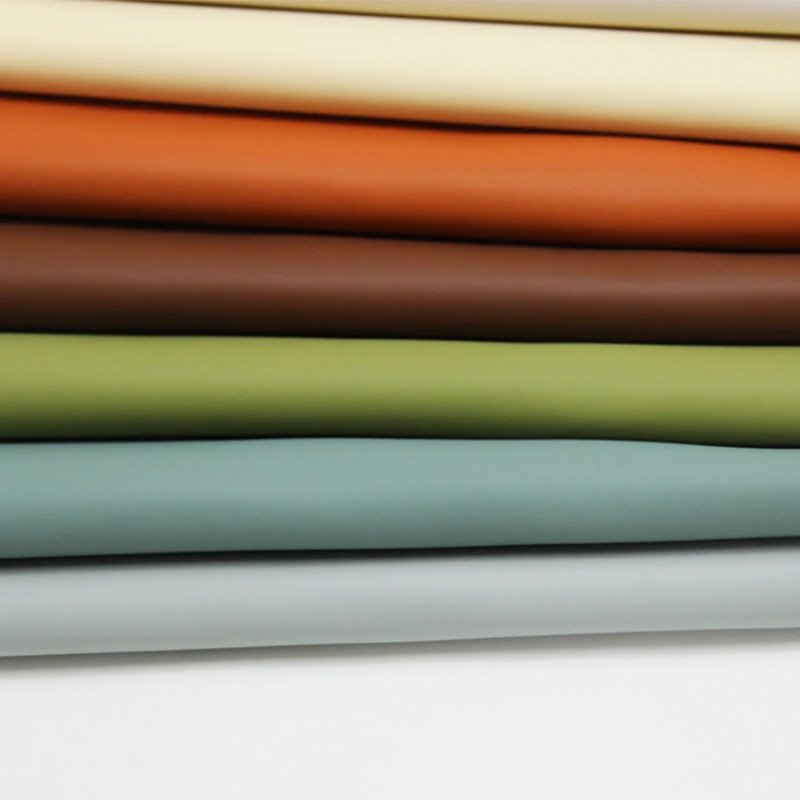
PU and other non-animal materials can support trend-driven and cost-controlled collections, but quality varies widely. Buyers should evaluate coating adhesion, fold stress, cracking, peeling, odor, color transfer, and temperature-related performance.
Nylon and Technical Fabrics
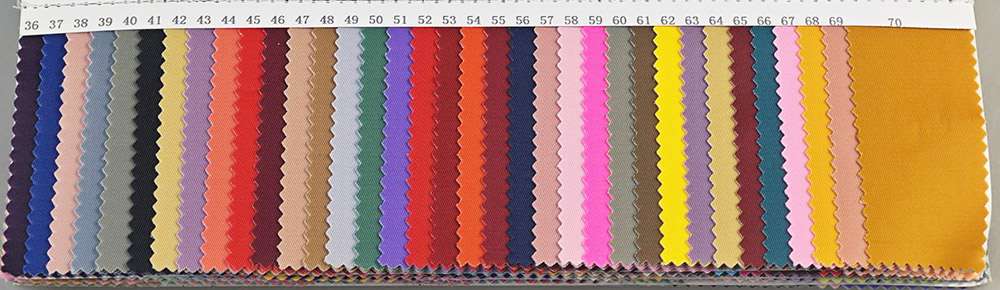
Nylon and technical fabrics work well for lightweight engineered pleating. Denier, coating, abrasion resistance, tear strength, water repellency, hand feel, and pleat recovery should be defined rather than relying on a generic technical-fabric description.
If a project specifies CORDURA® branded fabric, buyers should verify the actual fabric source and authorization rather than using the brand name generically. CORDURA describes its Classic fabric as high-tenacity nylon 6,6 offered in multiple denier weights and designed for abrasion resistance, tear strength, and water repellency.
| Материал | Look and Feel | Strengths | Watch Points |
| Soft cowhide | Premium, natural, relaxed | Good drape and durable hand feel | Care needs and higher weight |
| Овчина | Very soft, luxury | Beautiful gathers and premium touch | Scratch and stain sensitivity |
| Microfiber leather | Smooth, consistent | Non-animal option and stable surface | Quality varies by supplier |
| PU / vegan leather | Trend-friendly, cost-flexible | Wide colors and branding options | Coating cracking or peeling risk |
| Нейлон | Sporty, light | Good for technical pleats and travel | Pleat recovery and density |
| Polyester technical fabric | Functional, structured | Versatile and cost-effective | Coating and hand feel vary |
For leather projects, ASTM publishes leather standards covering physical and chemical properties including abrasion, thickness, tear strength, flexibility, water response, and colorfastness.
How Should Brands Evaluate Pleated Bag Quality Before Ordering?
Pleated constructions can hide defects inside folds, compressed areas, gathered seams, and lining transitions. Buyers should review the sample in real-use positions: carry it by the strap, open it, load it, compress the folds gently, and inspect recovery after handling and packing.
Sample Review Checklist
- Material hand feel and recovery
- Pleat or gather balance, depth, and symmetry
- Seam reinforcement and stitch tension
- Opening access and closure security
- Lining support and pocket placement
- Hardware weight and strap balance
- Recovery after carton packing
| Quality Area | Leather Gathering Risk | Fabric Pleating Risk |
| Fold appearance | Natural variation may look uneven | Pleats may flatten after use |
| Surface durability | Scratches, stains, water marks | Coating wear, abrasion, delamination |
| Sewing | Thick folded layers may become bulky | Slippery fabric may shift |
| Shape recovery | Depends on leather temper | Depends on fabric memory and process |
| QC standard | Define acceptable organic variation | Define pleat alignment and recovery tolerance |
Control Bulk Consistency
One approved sample does not guarantee that every bulk unit will look identical. Leather varies by hide and lot, while fabric pleating depends on roll consistency, pleating settings, heat or pressure, sewing tension, and handling. The buyer and factory should agree on acceptable variation before bulk production.
- Pre-production sample approval
- Material swatch approval
- Color lab dip or strike-off where needed
- Hardware sample confirmation
- Logo placement confirmation
- Packaging method review
- Inline inspection records
- Final random inspection before shipment
For statistical acceptance sampling, buyers can refer to the ISO 2859 family of standards for inspection by attributes and agree the actual sampling plan and defect limits with the supplier or inspection company.
What Customization Options Matter Most for Pleated Bags?
Customization should follow material and pleat-process approval. Once those foundations are confirmed, brands can define size, capacity, opening, lining, strap, hardware, logo, packaging, MOQ, and target cost without forcing a decorative idea onto an unsuitable construction.
Size, Capacity, and Opening
- Exterior dimensions and usable capacity
- Phone, wallet, laptop, or tablet fit
- Daily commuting load and target bag weight
- Magnetic snap, zipper, drawstring, frame, flap, or hidden closure
A larger gathered tote may need stronger lining or base reinforcement, while a small clutch can use more dramatic folds. Closure choice also changes the silhouette: a zipper can add security but restrict gathering, while a drawstring can enhance a dumpling shape but may slow access.
Lining and Internal Structure
| Lining Type | Лучше всего подходит для | Watch Point |
| Полиэстер | Most commercial bags | Select suitable thickness and hand feel |
| Хлопок | Casual or natural-style bags | May stain more easily |
| Microfiber | Premium handbags | Higher cost |
| Нейлон | Travel and sporty bags | Check noise and hand feel |
| Suede-like lining | Luxury presentation | Higher care requirement |
Strap, Hardware, and Logo
- Debossed or embossed logo
- Metal logo plate
- Woven, leather, or rubber label
- Custom zipper puller
- Custom buckle or ring
- Adjustable or detachable strap
- Chain, leather, or webbing strap
Pleated surfaces can make direct logo placement difficult. A flat patch, reinforced panel, lining label, or carefully positioned metal logo may reproduce branding more consistently than stamping across gathered folds. Hardware weight should also be tested because heavy chains can pull a soft body out of shape.
Packaging and Shipping
Pleated bags may need shape-specific packaging. Soft leather styles can require tissue stuffing and dust bags; technical pleated styles may require controlled folding or carton protection. Packaging should be approved during sampling because compression can change product appearance.
- Dust bag and tissue specification
- Shape support or controlled folding
- Individual polybag
- Hangtag position
- Carton quantity and compression risk
- FOB, CIF, DDP or other agreed shipping term
- Marketplace packaging requirements where applicable
How Can Buyers Request an Accurate Quotation for Pleated Bags?
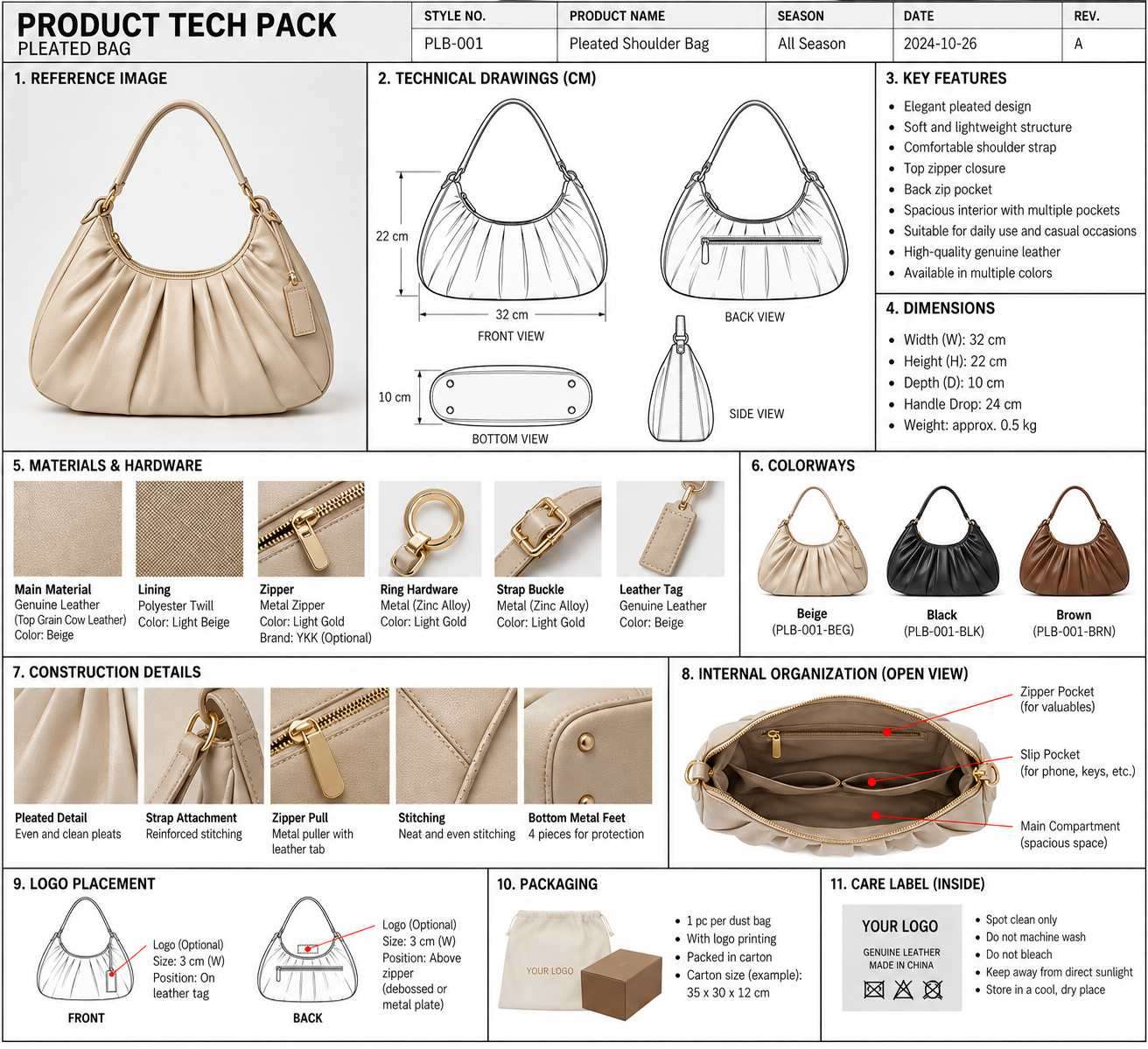
A reference photo alone is not a complete quotation basis. Buyers should provide product details, commercial details, and quality expectations so suppliers can compare the same assumptions.
Product Details
- Reference image, sketch, or tech pack
- Finished dimensions
- Material preference and performance level
- Natural gathering or engineered pleating direction
- Lining and closure
- Strap type and length
- Hardware finish
- Logo method
- Interior pockets
- Упаковка
Commercial Details
- Ориентировочное количество заказа
- Target FOB or retail price
- Sales channel and target customer
- Destination market
- Launch timeline
- Required documents or testing
- Shipping term
Quality Expectations
- Acceptable leather variation
- Pleat alignment and recovery tolerance
- Color tolerance
- Hardware plating standard
- Stitching and edge-finishing standard
- Packaging standard
- Inspection method
- Care instruction requirements
| Quotation Item | Why It Matters |
| Material type | Drives drape, cost, durability and care |
| Pleat construction | Determines process, labor and repeatability |
| Размер | Affects material usage and function |
| Lining | Affects structure and perceived quality |
| Аппаратное обеспечение | Changes cost, weight and appearance |
| Logo method | May require tooling or special process |
| минимальный объем заказа | Influences unit cost and material sourcing |
| Упаковка | Protects shape and affects freight volume |
| Shipping term | Changes landed-cost comparison |
Pleated Bags B2B Buying Checklist
| Check | What to Confirm |
| Pleat type | Natural gathering or engineered pleating |
| Материал | Cowhide, lambskin, microfiber, PU, nylon or technical fabric |
| Drape/structure | Soft, relaxed, crisp or sculptural target |
| Recovery | Appearance after compression, carrying and packing |
| Размер | Finished dimensions and usable capacity |
| Lining | Material, thickness and support level |
| Closure | Zipper, magnetic snap, drawstring, flap or other |
| Ремень | Leather, chain, webbing; width and attachment |
| Аппаратное обеспечение | Weight, finish, plating and attachment |
| Logo | Method and placement on flat or pleated areas |
| Sample | Golden sample and bulk-material pre-production sample if needed |
| QC | Pleat tolerance, workmanship, color and defect criteria |
| Упаковка | Stuffing, dust bag, controlled folding and carton protection |
| минимальный объем заказа | By style, color, material and custom component |
| Lead time | Sampling, material sourcing, bulk production and shipping |
Leather Supply-Chain Documentation
When leather sourcing or sustainability claims matter to the brand, buyers should verify the exact facility and certificate rather than treating a material or finished bag as automatically certified. Рабочая группа по коже states that its audit standards assess leather supply-chain operations and that certification applies to the certified facility, not to individual finished products.
Часто задаваемые вопросы
Are pleated bags suitable for daily use?
Yes, when the material, strap, lining, closure, and recovery match the customer’s habits. Soft leather styles generally need more care, while nylon or technical-fabric styles may be easier for commuting or travel.
Is leather or nylon better for pleated bags?
Neither is universally better. Leather is well suited to premium natural gathering and soft drape, while nylon is well suited to lightweight engineered pleating and sporty function.
Can PU or vegan leather be used for custom pleated bags?
Yes. Buyers should test softness, coating durability, fold stress, odor, color transfer, and cracking risk on the actual selected material before bulk approval.
Do pleated bags require special packaging?
Many do. Soft leather bags may need tissue stuffing and dust bags, while technical pleated bags may need controlled folding or carton protection to preserve the intended shape.
What should I send to a manufacturer for a quotation?
Send reference images or a tech pack, dimensions, material preference, pleat direction, lining, closure, strap, hardware, logo method, quantity, packaging, target price, destination market, and shipping terms.
Заключение
Pleated bags are a material-and-process decision before they are a trend silhouette. Soft leather supports natural gathering and premium drape, while nylon and technical fabrics can support lightweight engineered pleating. PU, microfiber, lambskin, and other materials can also work when their behavior and limitations are understood.
If you are sourcing custom pleated bags for retail, private label, e-commerce, or wholesale, BagsPlaza can support material selection, pleat-construction development, sampling, custom branding, packaging, OEM/ODM production, and quality inspection. Send us your reference image, preferred material, size, estimated quantity, target market, and target price for a project assessment.