Top 10 Leather Shoulder Bag Manufacturers in China (OEM & Private Label Guide)
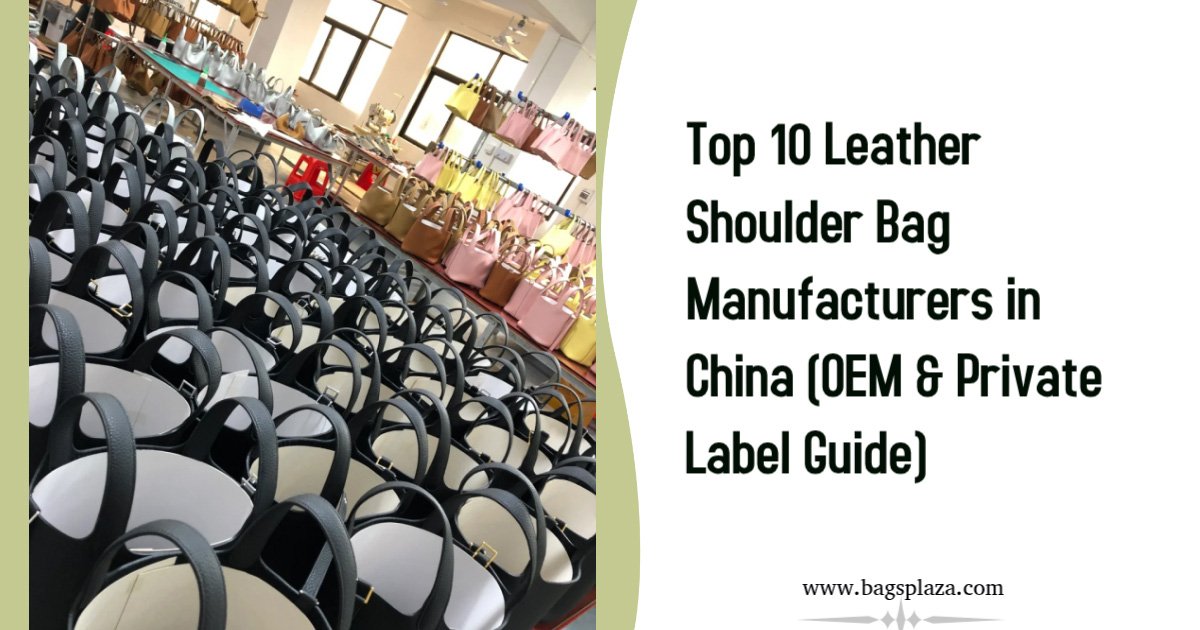
China remains the global center of leather bag manufacturing, and for shoulder bags in particular, cities like Guangzhou, Dongguan, and Shenzhen offer the most complete and efficient supply chains in the world.
From leather sourcing to hardware, pattern development, and final assembly, everything is tightly integrated within these clusters. For B2B buyers, this means faster development cycles, more stable quality, and better cost control compared to sourcing from fragmented regions.
However, not all factories are equal. Choosing the right supplier based on your order size, compliance requirements, and development needs can determine whether your project scales smoothly—or runs into delays, inconsistencies, and hidden costs.
This guide breaks down 10 reliable leather shoulder bag manufacturers in China and shows you how to evaluate them correctly.
China leads global leather shoulder bag manufacturing due to its highly integrated supply chain across Guangzhou, Dongguan, and Shenzhen.
For B2B buyers, the real differences between factories are not price, but compliance systems, development capability, and production consistency.
Choosing the right manufacturer is ultimately a balance between cost, scalability, and risk control.
Selection Criteria: What Actually Matters When Choosing a Factory
Not every factory that claims “OEM” or “high quality” can deliver consistently. The real differences usually show up after sampling or during bulk production.
Export experience is one of the most critical factors. Factories that regularly export to the US and EU don’t just “know” REACH or CPSIA — they already have tested material libraries, approved suppliers, and documentation workflows in place. This reduces not only compliance risk, but also development time and unexpected delays during production. Those without this experience may still offer lower prices, but often create problems during customs clearance or compliance checks.
MOQ flexibility determines how easily you can test a product before scaling. Some factories offer very low MOQs but compensate with higher unit prices. Others focus on large-volume production and are less flexible for new product launches.
OEM/ODM development capability is another key differentiator. Strong factories can interpret tech packs, develop patterns, and refine structures. Weaker ones mainly copy existing designs, which limits product differentiation.
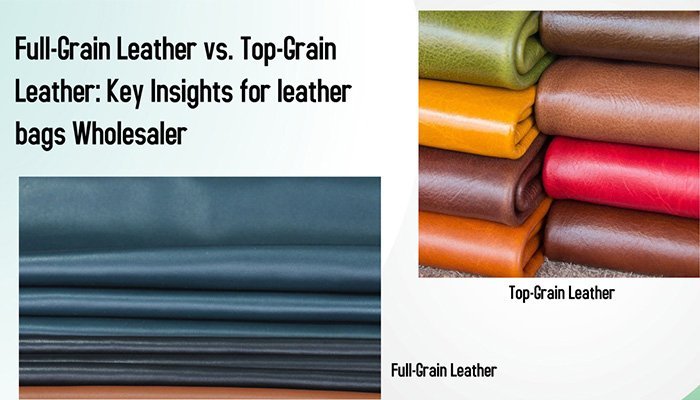
Material capability affects both product positioning and consistency. Reliable factories can source full grain, top grain, and eco materials with a stable supply, rather than switching materials between sample and bulk.
Finally, quality control systems make a major difference. Factories that follow AQL standards with both in-line and final inspections are far less likely to deliver defective batches compared to those relying only on final checks.
How to Choose a Leather Shoulder Bag Factory in China
MOQ vs Price
Factories offering lower MOQs usually come with higher unit costs. For example, a 50-piece MOQ often carries a noticeable premium compared to 100–300-piece orders. Buyers need to balance testing flexibility with cost efficiency.
Sample vs Bulk Difference
One of the most common issues in sourcing is inconsistency between samples and bulk production. Always confirm that the same materials, hardware, and construction methods will be used in mass production—not just in the prototype.
Compliance Requirements
For EU markets, REACH compliance is essential. For the US, CPSIA awareness and testing are equally important. Factories without proper documentation or testing experience may cause shipment delays or even product recalls.
Need help evaluating the right factory for your shoulder bag project?
Top 10 Leather Shoulder Bag Manufacturers in China
- Guangzhou Herder Leather Products Co., Ltd.
Location: Baiyun District, Guangzhou
Website:bagsplaza.com
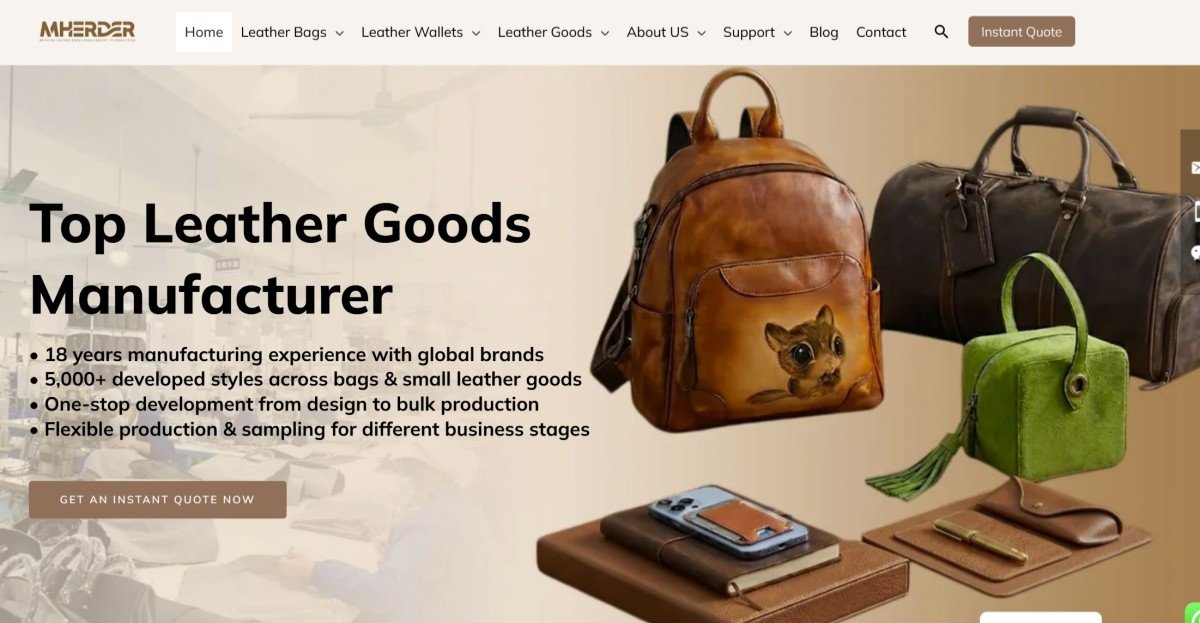
Guangzhou Herder is a leading manufacturer of genuine leather shoulder bags, crossbody bags, and hobo bags, with 18 years of OEM and private label production experience. The factory maintains a design library of over 5,000 styles and develops more than 100 new designs each month, allowing brands to respond to market trends quickly.
Manufacturing capabilities: REACH, CPSIA, BSCI, SMETA, and WRAP certified. DDP shipping is supported for simplified global delivery.
Differentiating strength: What sets Herder apart is its ability to combine low MOQ flexibility with full compliance systems and structured production control. Many factories offer one or the other—but rarely both. The factory supports small-batch testing while maintaining stable AQL 2.5 quality in bulk production.
In addition, strong OEM development capabilities—including pattern making, material sourcing, and hardware customization—allow brands to move from concept to production with fewer revisions and more predictable results.
Best for: Brands targeting US/EU markets that cannot afford compliance issues, shipment delays, or unstable quality when scaling from 100 pcs to 1,000+ pcs.
Real-world positioning insight
What makes Herder different in real sourcing scenarios is not just certifications, but how these systems are applied during sampling and bulk production.
For example, when developing structured shoulder bags, the factory can adjust reinforcement methods, edge finishing, and hardware alignment early in sampling — reducing the need for multiple revisions later. This is where many factories fail: they can produce samples, but cannot scale them consistently.
- S. Bag Factory
Location: Guangzhou
Website: bsbagfactory.com
B.S. Bag Factory focuses on serving small brands and startups, offering leather, canvas, and mixed-material bags.
Manufacturing capabilities: MOQ starts from 50 pieces, with relatively fast turnaround and flexible material options.
Differentiating strength: The business model is designed around startup needs, providing more personalized support than larger factories.
Limitation: While flexible, the factory is less suited for large-scale production or highly structured compliance requirements.
Best for: Startups and small brands launching their first products.
- Guangzhou Fiedle Leather Bag Co., Ltd.
Location: Baiyun District, Guangzhou
Website: fiedle.com
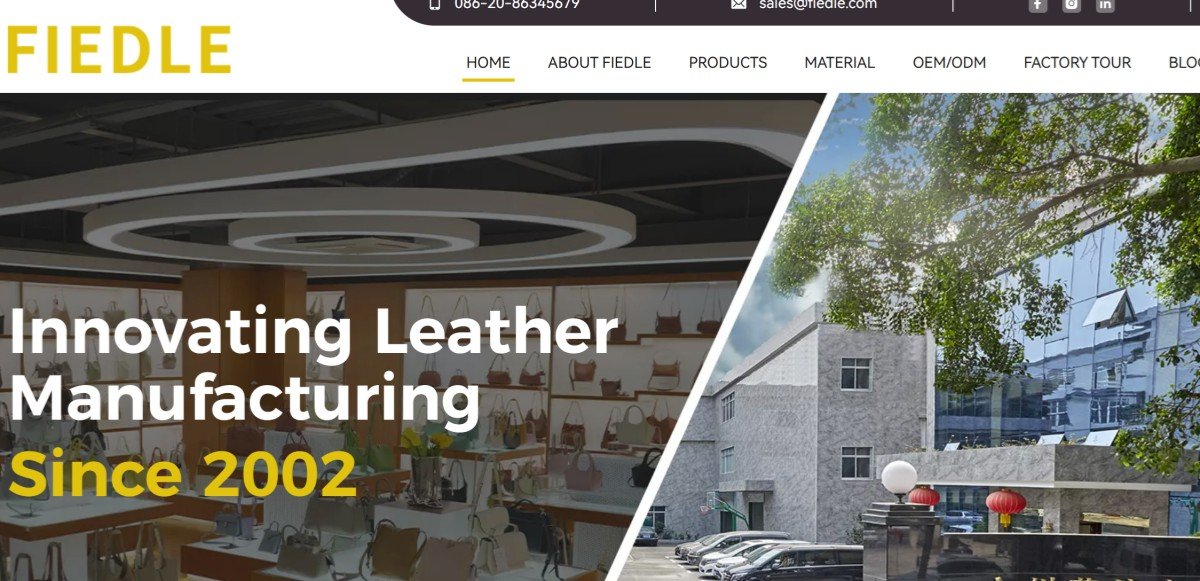
Fiedle operates a large production facility with over 400 workers and extensive experience in fashion handbags.
Manufacturing capabilities: Monthly output of 60,000–80,000 pieces. Certified with ISO 9001, BSCI, and SEDEX. A dedicated sample team of 70+ technicians develops hundreds of new styles quarterly.
Differentiating strength: Strong sampling capability and large production scale.
Limitation: Less flexible for low-MOQ or highly customized small-batch projects.
Best for: Brands requiring large-scale production with consistent output.
- Guangzhou Boshen Leather Goods Ltd.
Boshen has over 28 years of OEM experience and focuses heavily on private label production.
Manufacturing capabilities: Full customization, including branding elements such as zippers, linings, and packaging.
Differentiating strength: Private labeling is deeply integrated into their production system rather than treated as an add-on.
Limitation: Typically better suited for established brands with stable order volumes.
Best for: Fashion brands focusing on brand identity and customization.
- Guangzhou Huadu Leathergoods Co., Ltd.
With over 20,000 square meters of production space and 800+ workers, Huadu is a large-scale manufacturer with strong quality systems.
Manufacturing capabilities: ISO 9001, BSCI, and GRS certified. Uses a 5-step QC process throughout production.
Differentiating strength: Quality control is built into every stage of production, not just final inspection.
Limitation: Higher production thresholds and less flexibility for small runs.
Best for: Brands prioritizing strict quality control and consistency.
- RONEER Bags
RONEER focuses on both leather and eco-material bags, with increasing emphasis on sustainability.
Manufacturing capabilities: MOQ around 300 pieces. Sample lead time 7–10 days. Production 30–45 days.
Differentiating strength: Strong expertise in eco-material development beyond standard PU options.
Limitation: Higher MOQ makes it less suitable for early-stage testing.
Best for: Brands focused on sustainable product lines.
- SL Bag Manufacturer
SL operates through a network of partner factories, offering a wide range of materials and styles.
Manufacturing capabilities: Multiple leather types, logo methods, and design options. MOQ around 100 pieces.
Differentiating strength: Flexibility and variety across multiple production sources.
Limitation: Quality consistency can vary depending on the selected factory.
Best for: Brands needing diverse product options.
- Guangzhou Tiangang Leather Co., Ltd.
Tiangang combines manufacturing with its own brand operations, providing insight into both production and retail markets.
Manufacturing capabilities: 300+ workers, 50,000+ monthly output, and an in-house design team.
Differentiating strength: Experience from operating its own brands gives practical market insight.
Limitation: Strong focus on domestic and e-commerce markets.
Best for: Brands exploring both Chinese and international markets.
- Guangzhou Evergreen Leather Goods Co., Ltd.
Evergreen offers one of the lowest MOQs in the industry.
Manufacturing capabilities: 3–5 pieces per style, with a wide range of fashion designs.
Differentiating strength: Extremely low MOQ allows real product testing with minimal risk.
Limitation: Not ideal for consistent large-scale production.
Best for: Testing new designs before scaling.
- Kai Yu Bags
Kai Yu specializes in PU and synthetic leather bags with strong export experience.
Manufacturing capabilities: Efficient systems for synthetic materials and competitive pricing.
Differentiating strength: Focused expertise in synthetic leather production.
Limitation: Limited capability in genuine leather manufacturing.
Best for: Price-driven brands targeting mid-market segments.
Leather Shoulder Bag Factory Pricing & MOQ Comparison
| Factory Name | MOQ | Price Level | Hidden Cost Risk | Development Capability | Risk Level | Best Fit |
| Guangzhou Herder | 100 pcs (OEM) / 20 pcs (stock) | Medium | Low (consistent materials + AQL control + compliance ready) | Strong (pattern + OEM + hardware customization) | Low | US/EU brands scaling safely |
| B.S. Bag Factory | 50 pcs | Medium–High | Medium (less structured QC in bulk scaling) | Medium | Medium | Startups testing products |
| Fiedle | High | Medium | Low–Medium (large system but less flexible) | Strong | Low | Large volume buyers |
| Boshen | Medium | Medium–High | Medium (less cost efficiency for small runs) | Strong | Medium | Branding-focused companies |
| Huadu | Medium–High | Medium | Low (strong QC reduces defect loss) | Medium | Low | Quality-focused brands |
| RONEER | 300 pcs | Medium–High | Medium (material sourcing variability) | Medium | Medium | Sustainable brands |
| SL Bag | 100 pcs | Medium | High (multi-factory inconsistency risk) | Medium | Medium–High | Variety sourcing |
| Tiangang | Medium | Medium | Medium (focus split between own brands & OEM) | Medium–Strong | Medium | CN + global brands |
| Evergreen | 3–5 pcs | High | High (not designed for bulk consistency) | Low | High | Testing only |
| Kai Yu | Medium | Low–Medium | Medium–High (synthetic focus limits upgrades) | Low | Medium | Price-driven buyers |
Why China Leads Leather Shoulder Bag Manufacturing
Guangzhou’s leather markets allow factories to source materials and hardware within the same day, significantly reducing development timelines. In other regions, similar sourcing may take weeks.
The manufacturing clusters in Guangzhou, Dongguan, and Shenzhen integrate raw materials, production, and logistics within a short distance, improving efficiency and reducing costs.
OEM and ODM flexibility further strengthens China’s position. Brands can either provide detailed designs for production or select ready-developed styles and customize them quickly.
Common Mistakes When Sourcing Leather Bags
Choosing a factory based only on price often leads to compromised materials, weaker construction, or inconsistent hardware.
Ignoring differences in leather grades—such as full grain versus corrected grain—creates mismatched expectations.
Failing to verify sample and bulk consistency is one of the most common sourcing risks.
Overlooking compliance can result in customs delays, rejected shipments, or regulatory issues in target markets.
Key Takeaways
- Low MOQ factories are useful for testing, but often come with higher unit costs
- Large factories offer better cost efficiency but less flexibility
- Compliance and QC systems matter more than price in long-term scaling
- Sample-to-bulk consistency is one of the biggest sourcing risks
Buyer Decision Framework
How Buyers Should Shortlist Factories (Practical Framework)
Step 1: Define your MOQ and budget range
Step 2: Decide if compliance is required (US/EU vs other markets)
Step 3: Evaluate OEM capability (can they develop, or only copy?)
Step 4: Test sample vs bulk consistency
Step 5: Compare 3–5 factories, not 20
Conclusion
China offers the most efficient ecosystem for leather shoulder bag manufacturing, but success depends on selecting the right factory for your specific needs.
Instead of comparing dozens of suppliers, it is more effective to shortlist 3–5 factories that match your order size, compliance requirements, and development needs, then evaluate them through samples and communication.
For brands targeting US and EU markets, working with a factory that combines compliance, flexible MOQ, and stable production—such as Guangzhou Herder—can significantly reduce risk and improve long-term scalability.
If you already have a design or are planning a new product line, reviewing it with an experienced factory early can help avoid costly revisions later and speed up your time to market.
Planning a new shoulder bag collection or comparing manufacturers for your next project?
Contact us to discuss your design, leather options, MOQ, and sample plan before moving into production.
Frequently Asked Questions (FAQ)
What is the typical MOQ for leather shoulder bag manufacturers in China?
Most manufacturers require 100–300 pieces per style for OEM production. Some factories offer lower MOQs (20–50 pcs) for testing, but unit prices are usually higher. For brands planning long-term scaling, starting with 100 pcs is a more balanced approach.
How much does it cost to manufacture a leather shoulder bag in China?
Pricing depends on leather type, structure, hardware, and quantity. PU bags may start from $8–15, while genuine leather shoulder bags typically range from $20–80+ per piece. Lower prices often come with compromises in material or construction quality.
What is the difference between OEM and ODM in leather bag manufacturing?
OEM means the buyer provides the design, and the factory produces based on a tech pack. ODM means the factory provides ready-made designs that can be customized with your branding. OEM offers more control, while ODM allows faster market entry.
How long does it take to develop and produce leather shoulder bags?
Sample development usually takes 7–14 days, depending on complexity. Bulk production typically requires 25–40 days after sample approval and deposit. Lead times may vary based on order quantity and material sourcing.
What certifications should a leather bag manufacturer have for the US and EU markets?
For EU markets, REACH compliance is essential. For the US, CPSIA awareness and testing are important. Many reliable factories also hold BSCI, SMETA, or WRAP certifications for social compliance and production standards.
How can I ensure sample quality matches bulk production?
Always confirm that the same leather, hardware, and construction methods are used in bulk production. Request pre-production samples made with actual bulk materials and clarify specifications in detail before production starts.
What types of leather are commonly used for shoulder bags?
Common options include full-grain leather (premium, natural texture), top-grain leather (more uniform), split leather, and PU or vegan leather. The choice depends on your target price point and brand positioning.
Can Chinese factories customize logos and hardware?
Yes, most OEM factories support logo customization through embossing, metal plates, laser engraving, or custom molds. Hardware such as zippers, buckles, and chains can also be customized based on branding requirements.
What are the biggest risks when sourcing leather bags from China?
The most common risks include inconsistent quality between samples and bulk, unclear material specifications, lack of compliance documentation, and choosing suppliers based only on price. Working with experienced and structured factories helps reduce these risks.
How do I choose the right leather bag manufacturer for my business stage?
Startups should prioritize low MOQ and flexibility. Growing brands should focus on stable quality and development capability. Established brands should work with factories that offer compliance, scalability, and consistent production across multiple orders.