What Makes a Good Full-Grain Leather Minimalist Wallet?
Leather, thickness, card capacity, construction, and sourcing standards for buyers and brands

| Quick answer: A good full-grain leather minimalist wallet uses leather whose temper and thickness suit the pattern, stays slim at its realistic card capacity, holds cards securely after repeated use, and shows controlled skiving, stitching and edge finishing. Full-grain leather alone does not guarantee quality. The finished wallet must match the user’s carry habits, price point and durability expectations. |
A minimalist wallet looks simple, but its simplicity exposes every decision. There is little room to hide uneven skiving, bulky layer buildup, weak slot tension or rough edges. Two wallets can both be advertised as full-grain leather and still feel completely different after a month of use.
At Mherder, we evaluate a wallet as a system: leather article, grain treatment, tannage, temper, thickness, pattern, layer count, reinforcement, card-slot geometry, edge method, stitching and packaging. This guide explains how consumers can recognize a well-resolved wallet and how brands can turn that standard into a repeatable OEM or private-label product.

1. What Defines a Good Minimalist Wallet?
The best minimalist wallet is not automatically the thinnest one or the one carrying the most famous leather name. It should reduce unnecessary bulk without making cards difficult to insert, cash awkward to carry or the body too weak to retain its shape.
| Quality factor | What good looks like | Common warning sign |
| Leather | Consistent article, suitable temper and controlled thickness | Vague “genuine full-grain” claim with no specification |
| Capacity | Comfortable at the stated card and cash load | Maximum capacity used as the normal recommendation |
| Slot fit | Secure at first use and stable after conditioning | Painfully tight new slots or rapid loosening |
| Construction | Accurate skiving, aligned layers and reinforced stress points | Bulges where several card-slot layers overlap |
| Finishing | Straight stitches and intentional painted, burnished, folded or raw edges | Sticky paint, rough fiber, thread buildup or uneven corners |
| Positioning | Material and workmanship support the retail price | Premium story that is visible only in marketing copy |
A good product promise is specific. “Best for 4–6 cards and folded bills” is more useful than “holds up to 10 cards” when the wallet becomes uncomfortable at the maximum load. A minimalist wallet succeeds by serving the right user well, not every possible user.

2. What Full-Grain Leather Actually Means
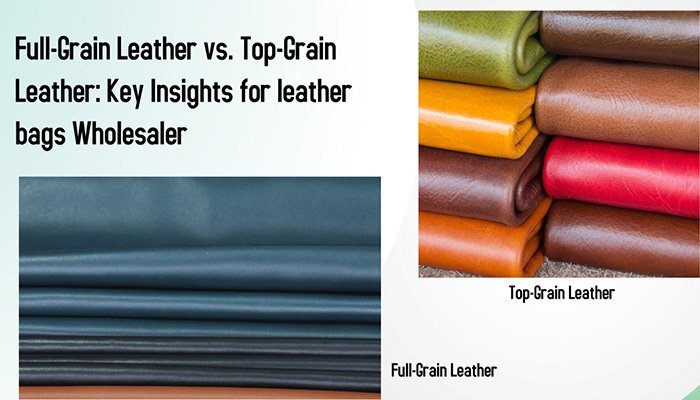
Full-grain leather generally retains the natural grain layer without significant sanding or buffing to remove surface character. The term does not define the animal, tanning method, finish, softness, thickness, colorfastness, or construction quality. Full-grain leather may still be dyed, waxed, lightly coated or embossed, depending on the article and intended appearance.
It is therefore incorrect to treat “full-grain,” “vegetable-tanned,” “calfskin” and “bridle leather” as interchangeable categories. A single material might be described as full-grain calfskin, chrome-tanned, smooth finished, and medium temper. Brands should specify each relevant dimension.
| Specification dimension | Examples | Why it matters |
| Hide type | Cowhide, calfskin | Grain scale, hand feel, yield and price |
| Grain treatment | Full-grain, lightly corrected, corrected | Surface character and claim accuracy |
| Tannage | Vegetable, chrome, combination | Temper, aging, color and processing behavior |
| Finish | Aniline, semi-aniline, pigmented, waxed, pull-up, pebbled | Scratch visibility, consistency and care |
| Temper | Soft, medium, firm | Slot stretch, folding and structure |
| Thickness | Component-specific after splitting and skiving | Bulk, strength and sewing performance |
Full-grain is not automatically the best choice
A well-made top-grain wallet may outperform a poorly engineered full-grain wallet. Full-grain leather can be excellent for natural character and aging, but a very soft or inconsistent article may stretch too quickly in card slots. A firm article may hold shape but feel stiff during break-in. The material must fit the design rather than carry the entire quality story by itself.
3. How Can Buyers Verify a Full-Grain Leather Claim?
Product photographs and leather smell are not reliable proof. Natural-looking grain can be embossed, and genuine leather can carry a substantial finish. For a meaningful claim, buyers should request a traceable material description and confirm which components use it.
- Request the leather article name, hide type, grain treatment, tannage, finish, temper, color, and target thickness.
- Ask whether the grain surface has been significantly buffed, corrected, or covered by a heavy finish.
- Confirm whether full-grain leather is used for the outer shell only or also for card slots and internal components.
- Review the cut edge and flesh side, but do not rely on appearance alone to identify a claim.
- If a tannery name such as Horween or Wickett & Craig is used, verify the exact leather article and supporting purchasing documentation.
- Keep approved swatches with the golden sample so bulk material can be compared for color, grain, hand feel, and thickness.
- Avoid marketing claims that the available documents and bill of materials cannot support.
| Practical rule: “Full-grain leather” should be one line in a material specification, not the complete specification. A credible supplier should be able to explain what the leather is, where it is used, and how it is controlled in production. |
4. Choose Temper, Finish and Thickness Together
Leather temper describes relative softness or firmness. A soft article can feel luxurious but may stretch in narrow slots. Medium temper suits many everyday slim wallets. Firm leather can support a crisp heritage card holder, although it may require break-in and precise skiving at folds.
| Leather characteristic | Good fit | Trade-off to evaluate |
| Firm temper | Structured card holders and heritage bifolds | Break-in and fold stiffness |
| Medium temper | Balanced everyday wallets | Requires consistent thickness control |
| Soft temper | Flexible designs and soft hand feel | Slot stretch and loss of shape |
| Waxy or pull-up finish | Patina and heritage story | Visible scuffs and color movement |
| Smooth finish | Modern, clean branding | Dents and scratches can be obvious |
| Pebbled finish | Practical daily use and scratch masking | Less visually minimal for some brands |
Thickness must be specified by component
A hide varies across the back, shoulder, side, and belly. Splitting and skiving are therefore production controls, not optional finishing details. Buyers should define where thickness is measured and whether the target applies before or after local skiving.
| Component | Illustrative range | Development note |
| Outer shell | About 1.0–1.4 mm | Adjust for fold, lining, reinforcement and desired hand feel |
| Inner card slots | About 0.6–1.0 mm | Layer count and slot construction control total bulk |
| Folded edges | Locally skived | Must fold cleanly without a ridge or weak feather edge |
| Stress areas | Design-specific | Reinforcement should add stability without a visible lump |
These are development references, not universal pass/fail standards. The final decision should consider empty thickness, loaded thickness and the number of overlapping layers. A wallet built from individually thin parts can still become bulky where several card pockets stack together.
5. Balance Thinness with Real Capacity
Minimalism should reduce clutter, not usefulness. An ultra-slim card holder may suit 3–5 cards and little cash. A front-pocket wallet may carry several cards and folded bills. A slim bifold keeps bills flat but adds a central fold. RFID lining, pull tabs, tracker pockets, coin sections, and money clips add utility and thickness.
| Wallet type | Best for | Main advantage | Trade-off |
| Ultra-slim card holder | 3–5 cards; little or no cash | Lowest bulk | Limited capacity |
| Front-pocket wallet | Cards plus folded bills | Compact daily carry | Cash can feel compressed |
| Slim bifold | Cards and full-length bills | Familiar function | More layers at the fold |
| Money-clip wallet | Cards and quick cash access | Fast cash handling | Clip adds hardware bulk |
| Feature-added wallet | RFID, pull tab or tracker pocket | Targeted utility | Less minimal and more tolerance-sensitive |

Measure the finished wallet, not only the leather
| Test condition | What to record |
| Empty wallet | Closed dimensions, weight, thickness, and whether it lies flat |
| Recommended card load | Loaded thickness, closure, pocket comfort, and card access |
| Maximum advertised load | Deformation, slot resistance and realistic user experience |
| After repeated insertion | Slot opening, edge stress, stitching and leather stretch |
| After several days loaded | Permanent expansion, shape recovery and card retention |
| With cash | Bill fit, fold line, protrusion and added bulk |
A standard payment card is commonly about 0.76 mm thick, but embossed cards, metal cards and stacked pockets change the actual experience. Test with the card types the target customer is likely to carry rather than one flat sample card.

6. Construction Details That Reveal Quality
Skiving and layer control
Accurate skiving reduces bulk at folds and slot overlaps while leaving enough material around stitch lines. Over-skiving can create weak edges or visible steps; under-skiving creates ridges and a wallet that never closes cleanly. Inspect both the outside profile and the internal transition between layers.
Card-slot tension
A new slot should be firm but usable. Test flat plastic cards, embossed cards, and multiple cards in adjacent pockets. Leave the advertised load inside, then check whether the opening permanently stretches. A beautiful sample is not production-ready if the slot works only with one test card.
Stitching
Straight, parallel lines, balanced tension, and clean corner turns matter more than a universal stitch count. Approximately 7–10 stitches per inch can suit many machine-stitched minimalist wallets, but the correct density depends on leather thickness, thread size, seam construction, and the approved appearance. Dense stitching on a weak or over-skived edge can perforate rather than strengthen it.
Edge finishing
Painted edges deliver a modern look but require compatible paint, preparation, adhesion and controlled coats. Burnished edges suit many vegetable-tanned articles. Folded edges can feel refined but add material and demand accurate skiving. Raw edges can work for a rugged product when they are intentionally cut and finished—not simply left rough.
- Check for sticky, rubbery or cracked edge paint.
- Run a finger along the edge for rough fibers, sharp transitions or uneven buildup.
- Inspect corners for thread congestion and paint separation.
- Confirm the flesh side is acceptable when the design is unlined.
- Check logo depth, position and clarity against the approved standard.

7. Practical Wallet Sample Testing Checklist
Sample testing should reproduce actual use and record changes rather than rely on a quick visual review.
- Measure the wallet empty and at the recommended load.
- Insert the advertised number of realistic cards and add one extra card as a tolerance check.
- Test adjacent pockets together to expose layer buildup.
- Repeat insertion and removal at least 20–30 times as an initial development screen.
- Leave cards inside for 24 hours or several days, then reassess retention and permanent stretch.
- Carry the loaded wallet in the intended front or back pocket and check comfort.
- Add the correct banknotes and confirm whether bills fold, protrude, or catch.
- Inspect slot openings, needle holes, skived edges, paint, and corners for early failure.
- Treat this as development validation—not as a substitute for any required laboratory durability test.
8. Common Minimalist Wallet Development Mistakes
- Choosing leather by country or tannery name without specifying the exact article.
- Promising maximum capacity as the normal comfortable capacity.
- Approving slot fit with one flat card while nearby pockets are empty.
- Reducing leather thickness without controlling reinforcement and seam strength.
- Adding RFID, a tracker pocket or a money clip without recalculating finished thickness.
- Using the same edge method for every leather and price point.
- Approving a beautiful sample without defining measurable bulk-production standards.
- Describing the whole wallet as full-grain when only the outer shell uses that material.
9. How Brands Should Prepare an OEM/ODM Brief
A clear brief helps suppliers quote the same product and makes samples easier to compare. Start with the target user and retail position, then define the construction.
| Brief item | Example |
| Target user | Front-pocket customer carrying 4–6 cards and folded bills |
| Material | Full-grain cowhide; medium-firm temper; specified finish and color |
| Thickness | Outer 1.2 mm; slots 0.8 mm; local skiving per approved sample |
| Finished capacity | Comfortable at 4–6 cards; maximum claim separately verified |
| Edge and stitching | Painted edge; tonal thread; stitch density approved visually and technically |
| Branding | Debossed logo at the lower front corner; depth matched to golden sample |
| Packaging | Box, tissue, care card and barcode label |
| Inspection | Dimensions, loaded fit, leather, edges, stitches, logo and packaging |
Typical Mherder development information
| Item | Typical arrangement |
| Custom wallet MOQ | Approximately 300 pieces per style |
| Sample cost | Usually USD 100–200 per style, depending on design and materials |
| Sample lead time | Approximately 10–15 working days after details are confirmed |
| Bulk lead time | Normally about 25–40 days after sample and material approval |
| Branding | Debossing, foil stamping, laser engraving, and custom metal-logo options |
| Inspection | Factory QC with third-party inspection available when required |
Exact cost, MOQ and lead time depend on leather availability, hardware, packaging, testing, and customization. Buyers should confirm the commercial terms for the specific project rather than treating a general range as a fixed quotation.
10. Control Production Against a Golden Sample
A golden sample converts subjective preferences into a shared production standard. It should be signed or otherwise clearly identified and kept together with the technical specification and approved material swatches.
- Leather article, color, grain, temper and component thickness
- Finished dimensions, empty thickness and target loaded thickness
- Card capacity and slot-tension expectation
- Skiving locations, reinforcement and layer alignment
- Stitch density, thread specification and corner treatment
- Edge method, edge color, smoothness and adhesion standard
- Logo method, placement, size and depth
- Packaging, labeling and care-card requirements
- Acceptable tolerances and inspection method
Bulk inspection should compare incoming leather, cutting, skiving, assembly, stitching, edge finishing, logo placement, capacity, dimensions and packaging with this approved standard. A single attractive sample is not enough unless the factory can repeat it across the order.
Frequently Asked Questions
Is full-grain leather always best for a minimalist wallet?
No. It can offer natural character and durability, but temper, thickness, finish and construction determine whether it suits the design. A well-made top-grain wallet can outperform a poorly engineered full-grain product.
How many cards should a minimalist wallet hold?
Many designs are most comfortable with about 3–8 cards. Ultra-slim card holders often suit 3–5, while slim bifolds can carry more plus cash. State a recommended capacity separately from the absolute maximum.
What leather thickness is best?
There is no universal number. Many projects use roughly 1.0–1.4 mm for an outer shell and 0.6–1.0 mm for internal slots, but layer count, folds, lining, reinforcement and local skiving determine the final result.
Is RFID blocking necessary?
It depends on the customer and positioning. RFID material adds a layer and may affect thickness or flexibility. Any performance claim should be supported by appropriate material information and testing.
What edge finish looks most premium?
Painted, burnished and folded edges can all look premium when matched to the leather and executed consistently. Choose the method by material, structure, aesthetic and price rather than by a universal hierarchy.
How can I tell whether a sample is ready for production?
Approve it only when leather, dimensions, loaded capacity, slot tension, skiving, stitches, edges, logo, and packaging match documented standards and the wallet remains usable after practical handling tests.
Conclusion
A good full-grain leather minimalist wallet is not defined by one material name or the lowest possible thickness. It combines an accurately described leather with controlled component thickness, realistic capacity, stable slot fit, precise construction and finishing that supports the price promise.
For brands, the safest development route is to verify material claims, measure both empty and loaded performance, approve a detailed golden sample and inspect bulk production against documented standards. Mherder supports OEM, ODM, and private-label wallet projects with material selection, sampling, branding, packaging, and quality control. Visit www.bagsplaza.com to discuss your wallet program.