How Thick Should Leather Handles Be for Large Tote Bags?

Leather handles can make or break a large tote bag, especially when the bag is designed for daily work, travel, shopping, or laptop use. If the handles are too thin, users may feel discomfort or worry about durability. If they are too thick, the bag can feel bulky. The practical solution is to specify handle thickness together with structure, material, and attachment strength.
For large tote bags, leather handles are often developed around a practical starting range of about 2.5 mm to 5.0 mm in finished thickness, depending on the leather type, number of layers, reinforcement, handle width, and expected load. The final specification should always be confirmed through sampling, wear simulation, and supplier evaluation.
At Mherder, we usually do not start with one fixed millimeter answer. We start with the product’s use case. A large fashion tote, a laptop tote, and a heavy shopping tote may look similar on paper, but their handle requirements can be very different.

Why Is There No Universal Thickness Standard for Leather Handles?
A simple thickness number feels convenient, but it can mislead buyers during tote bag development. Many sourcing teams ask for “strong handles” and assume extra thickness solves the problem. That assumption can create stiff, uncomfortable, or visually unbalanced handles without solving the real weak points.
The right thickness for leather handles depends on the complete handle system: leather type, layers, reinforcement, stitching, edge finishing, rivets, attachment area, and the bag’s intended load. Thickness is only one variable. A thinner, well-reinforced handle can outperform a thicker handle with weak stitching or poor attachment design.
Thickness Is Only One Part of Handle Strength
In OEM and ODM production, we rarely evaluate leather handles by thickness alone. We look at the handle as a structure. A large tote bag may carry a laptop, books, cosmetics, water bottles, groceries, or travel items. The stress does not stay inside the leather strip. It transfers through the stitching, reinforcement, body panel, lining, and sometimes rivets or metal rings.
A handle may fail in several ways:
- The leather stretches and deforms.
- The stitching breaks.
- The rivet pulls through the leather.
- The handle attachment tears from the bag body.
- The edge paint cracks because the handle bends too tightly.
- The user finds the handle painful and stops using the bag.
That is why a single thickness standard is not enough.
Common Starting Points in Product Development
The following table shows how we often think about handle thickness during early sampling. These are starting points, not universal standards.
| Tote Bag Type | Typical Use | Handle Structure | Practical Finished Thickness Range |
| Lightweight fashion tote | Light daily items | Single or folded leather with light reinforcement | 2.0–3.0 mm |
| Daily large tote | Wallet, makeup, tablet, daily goods | Folded or layered leather with moderate reinforcement | 2.5–4.0 mm |
| Laptop/work tote | Laptop, documents, tech accessories | Layered leather with reinforcement/core | 3.0–5.0 mm |
| Heavy shopping tote | Groceries, books, heavier goods | Wider reinforced handles with strong attachment | 3.5–5.5 mm or structure-specific |
The final handle may be thinner or thicker than these ranges based on the design. For example, a wide folded handle may feel comfortable at a lower thickness, while a narrow rounded handle may need a different internal core to avoid cutting into the hand.
Why “Thicker” Can Create New Problems
Thicker leather handles may seem premium at first glance, but they can create issues:
- Bulk at attachment points: Thick handles can be difficult to stitch cleanly.
- Stiff hand feel: Users may find them uncomfortable.
- Higher weight: The bag may feel heavy before it is filled.
- Higher material cost: Thick full-grain leather can increase price.
- Poor proportion: Oversized handles can make a refined tote look clumsy.
We have seen during sampling that a handle may look excellent on a flat drawing but feel awkward after the sample is carried. That is why we always recommend physical sampling before confirming bulk production.
How Should Leather Handles Be Specified for Different Large Tote Bag Uses?
Large tote bags do not all carry the same weight or serve the same customer. If a buyer specifies leather handles only by size, the supplier may not understand the actual performance target. This can lead to handles that look correct but fail in comfort, balance, or durability.
Specify leather handles based on the tote’s real use: fashion, work, laptop, shopping, travel, or promotional retail. The key questions are: What will the user carry? How often will they carry it? Will they hold it by hand, shoulder, or both? The answers guide thickness, width, reinforcement, and attachment design.
Start With the User Scenario
When Mherder develops large tote bags with brands, we often ask simple but important questions before discussing exact millimeters:
- What is the target customer?
Office worker, student, traveler, shopper, or fashion consumer?
- What will the bag likely carry?
Laptop, books, clothing, groceries, cosmetics, documents, or light personal items?
- How often will the bag be used?
Occasional use, daily commuting, retail shopping, or business travel?
- How will the user carry it?
By hand, over the shoulder, on the forearm, or mixed?
- What price level is the product targeting?
Entry-level, mid-range, premium, or luxury-inspired private label?
These answers affect the handle design more than a simple request like “make it 4 mm thick.”
Handle Requirements by Tote Category
| Tote Category | Main Buyer Concern | Handle Design Priority |
| Fashion tote | Appearance and proportion | Clean edges, balanced thickness, soft hand feel |
| Work tote | Daily comfort and stability | Reinforcement, comfortable width, secure attachment |
| Laptop tote | Load and shape retention | Core material, strong stitching, body reinforcement |
| Shopping tote | Repeated carrying weight | Wider handles, stronger anchor points, durable material |
| Promotional tote | Cost and visual branding | Simple construction, acceptable comfort, efficient production |
A large fashion tote may not need the same handle as a work tote. A tote designed for Instagram visuals may prioritize a sleek profile. A tote designed for commuters may need wider leather handles with internal reinforcement and stronger stitching.

Width Matters as Much as Thickness
Many buyers focus on thickness but forget width. Width affects both comfort and perceived strength. A narrow handle may dig into the hand, even if it is thick. A wider handle spreads pressure better.
Common large tote handle widths may include:
- 12–15 mm: Slim visual style, usually for lighter bags.
- 18–22 mm: Common for daily totes and shoulder carry.
- 25–30 mm: Better comfort for heavier work or shopping totes.
- 30 mm and above: Often used for utility-inspired or heavy-duty designs.
A 3.0 mm thick handle that is 25 mm wide may feel more comfortable than a 5.0 mm thick handle that is only 12 mm wide. This is why buyers should specify both dimensions, not just thickness.

Handle Drop Also Changes the Experience
Handle drop is the vertical distance from the top of the bag to the highest point of the handle. It affects how the user carries the tote.
- Short drop: Better for hand carry, less comfortable for shoulder carry.
- Medium drop: Suitable for hand and forearm carry.
- Long drop: Better for shoulder carry, but creates more swinging movement.
For large tote bags, a shoulder-friendly handle drop often needs more attention to stitching and attachment because the bag moves more during use. Movement creates repeated stress. Repeated stress is often more important than static weight.
What Materials and Reinforcements Affect Leather Handles Most?
A handle can look like one strip of leather, but many production versions include several layers inside. If buyers do not specify material and reinforcement clearly, they may receive a handle that meets the requested thickness but not the expected performance. This is a common sourcing risk.
The most important factors behind leather handles are the leather type, backing material, internal core, adhesive quality, stitching, edge treatment, and attachment reinforcement. Full-grain leather, top-grain leather, microfiber synthetic leather, vegan leather, and PU materials behave differently, so each material needs a suitable handle construction.
Leather Type Changes the Handle Feel
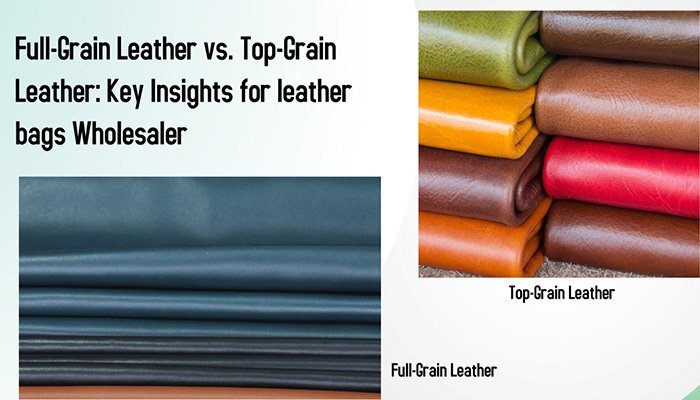
At Mherder, we work with full-grain leather, top-grain leather, recycled leather, vegan leather, microfiber synthetic leather, and PU materials. Each material behaves differently when folded, stitched, edge-painted, or used with a core.
| Material | Handle Feel | Development Notes |
| Full-grain leather | Natural, strong hand feel, premium appearance | Thickness and temper vary by hide; sampling is important |
| Top-grain leather | Smooth, consistent, refined | Good for structured handles and clean edges |
| Recycled leather | Cost-conscious, uniform | Needs careful reinforcement for stressed parts |
| Microfiber synthetic leather | Stable and consistent | Often useful for private label and vegan collections |
| PU material | Cost-efficient and flexible | Handle durability depends heavily on backing and construction |
| Vegan leather | Brand-positioning friendly | Needs careful testing for peeling, cracking, and stretch |
A 3.0 mm full-grain leather handle and a 3.0 mm PU handle do not perform the same way. Buyers should avoid assuming that equal thickness means equal durability.
Note: “vegan leather” is a market category rather than one single material. It may refer to PU, microfiber synthetic leather, plant-based composites, or other non-animal materials. Buyers should confirm the actual composition because handle performance depends on the specific substrate and coating.
Common Handle Constructions
There are several ways to build leather handles for large tote bags.
1. Single-Layer Handle

A single leather strip is cut, finished, and attached. This can work for light bags, but it may stretch or feel unfinished depending on material.
Best for:
- Lightweight fashion totes
- Simple market-style totes
- Cost-sensitive collections
Risk:
- Less structure
- More visible stretch
- Less premium hand feel
2. Folded Handle

The leather is folded and stitched, often with edge finishing. This gives a cleaner look and better comfort than a raw single strip.
Best for:
- Daily totes
- Private label fashion bags
- Mid-range retail products
Risk:
- Folded edges can become bulky if leather is too thick.
- Poor glue or stitching can cause separation.
3. Layered Handle With Reinforcement

Two leather layers or one leather layer plus reinforcement are combined. This is common for work totes and laptop totes.
Best for:
- Laptop totes
- Office totes
- Travel-ready daily bags
Risk:
- More production steps
- Higher cost
- Needs precise stitching alignment
4. Rolled or Padded Handle

A rolled handle uses inner filling or core material to create a rounded grip. It can feel comfortable and premium, but it requires skilled production.
Best for:
- Premium tote bags
- Structured handbags
- Designs needing a soft grip
Risk:
- More difficult to control shape consistency
- May look too formal for casual totes
- Higher labor cost
Reinforcement Materials Matter
The core or reinforcement inside leather handles can include leather board, webbing, microfiber strips, synthetic reinforcement sheets, or other structure-supporting materials. The goal is not only to make the handle thicker. The goal is to control stretch, improve hand feel, and distribute stress.
Buyers should discuss:
- Reinforcement type
- Reinforcement width
- Whether reinforcement extends into the attachment area
- Stitching distance from edge
- Compatibility with edge paint or folding
- Flexibility after repeated bending
A handle can feel strong during inspection but become uncomfortable after repeated use if the core is too stiff. So comfort and durability must be evaluated together.
How Do Stitching, Rivets, and Attachment Points Change Leather Handles?
Many handle problems do not happen in the middle of the handle. They happen where the handle connects to the tote body. If the attachment area is weak, increasing handle thickness may not prevent failure. This is why buyers should evaluate the complete connection system.
Stitching, rivets, bar tacks, reinforcement patches, and body panel construction often matter more than the finished thickness of leather handles. A well-designed attachment spreads stress across a larger area. A weak attachment concentrates force in one small point and can tear even when the handle itself is thick.
The Weakest Point Is Often the Connection
In large tote bag manufacturing, the handle attachment is a critical area. A large tote may have a clean body panel, soft lining, and simple top opening. However, once the user carries weight, all force travels through the handle anchors.
Common attachment structures include:
- Stitched handle tabs
- Riveted handle ends
- Stitched and riveted combinations
- Handles inserted into the seam
- Handles attached with metal rings
- Reinforced leather patches inside the body
- Webbing reinforcement hidden between outer material and lining
Each option has a different look, cost, and strength profile.
Stitching Design Should Be Clear in the Tech Pack
A buyer’s tech pack should not only say “strong stitching.” It should include visible details.
Useful specifications include:
- Stitch type
- Stitch length or stitches per inch
- Thread color and material preference
- Stitch distance from edge
- Box stitch or X stitch pattern, if required
- Reinforcement patch size
- Rivet position, if used
- Handle placement distance from side seam
Even small changes can affect the final result. For example, stitching too close to the edge may look neat, but it can reduce tear resistance in some materials. Stitching too far from the edge may look bulky or unfinished.
Rivets Are Helpful, but They Are Not Magic
Rivets can improve attachment strength and add a visual detail. However, rivets must be supported by suitable material and backing. A rivet through thin or weak material can still pull through under stress.
Buyers should consider:
| Rivet Decision | Why It Matters |
| Rivet size | Larger rivets may spread pressure better but affect appearance |
| Rivet material | Hardware quality affects corrosion, finish, and consistency |
| Backing washer | Can help distribute stress in some designs |
| Placement | Poor placement can weaken leather or create discomfort |
| Finish color | Must match other hardware for brand consistency |
A rivet should support the structure. It should not be used as a substitute for proper reinforcement.
Body Material Affects Handle Security
A tote made from thick leather body panels may support handle stitching differently from a tote made with soft PU or lightweight fabric lining. If the outer body material is flexible, the inside reinforcement becomes more important.
For laptop or work totes, we often recommend reviewing:
- Outer material thickness
- Lining strength
- Internal reinforcement at handle anchors
- Top edge binding or folding method
- Whether the handle stress pulls on one panel or multiple layers
This is why sourcing teams should review a complete sample, not just a handle sample. The handle and tote body must work together.
How Can Buyers Test Leather Handles Before Bulk Production?
A handle can look perfect in photos, but photos do not show comfort, stiffness, balance, or stress behavior. If buyers skip proper sampling, they may discover problems only after inventory arrives. That is expensive and difficult to fix.
Buyers should test leather handles through physical samples, load simulation, repeated carrying checks, hand-feel review, and attachment inspection before approving bulk production. For application-specific performance claims, buyers should use qualified professional testing or third-party evaluation rather than relying only on appearance or supplier statements.
Sample Review Should Be Practical
Mherder usually treats sampling as a development process, not just a confirmation step. A first sample may show the shape and style. A second sample may refine thickness, width, reinforcement, or handle drop. A pre-production sample should confirm the final construction before mass production.
A practical review can include:
- Visual inspection
Check symmetry, edge finishing, stitching alignment, and proportion.
- Hand-feel check
Carry the bag empty and filled. Notice pressure on the hand or shoulder.
- Basic load simulation
Place realistic items inside the tote and carry it as the user would.
- Attachment inspection
Look for stretching, tearing, loose stitches, or rivet movement.
- Flexibility review
Bend the handle repeatedly to check stiffness and edge paint behavior.
- Fit-for-purpose discussion
Compare the sample to the target retail price and user expectation.
This is not the same as certified lab testing. It is a practical factory-side review that helps buyers make better decisions before production.
What Buyers Should Ask Suppliers
Sourcing teams should ask clear questions before approving leather handles:
- What is the finished handle thickness?
- Is the handle single-layer, folded, layered, rolled, or padded?
- What material is used inside the handle?
- Does reinforcement continue into the attachment area?
- What stitching method is used at the connection point?
- Are rivets decorative, structural, or both?
- Is there internal backing behind the attachment?
- Can the factory make a revised sample if the handle feels too stiff or weak?
- Can the supplier support inspection standards before shipment?
These questions help avoid misunderstandings. They also help suppliers recommend realistic structures based on production experience.
What Should Go Into the Tech Pack?

A clear tech pack reduces risk. It also makes supplier comparison easier.
For large tote bag handles, buyers should include:
| Specification | Example Detail |
| Finished handle thickness | 3.5 mm after folding and stitching |
| Handle width | 22 mm |
| Handle drop | 23 cm |
| Material | Top-grain leather or approved alternative |
| Construction | Folded with reinforcement |
| Stitching | Matching thread, specified stitch spacing |
| Attachment | Box stitch plus internal reinforcement |
| Hardware | Rivets if required, finish to match logo hardware |
| Edge finish | Painted edge or folded edge |
| Sample requirement | Approval sample before bulk production |
A supplier can still advise changes. However, a detailed starting point helps everyone evaluate the same target.
When Professional Testing Makes Sense
For most fashion totes, practical sampling and inspection may be enough for product development. For heavier-use bags, corporate programs, travel products, or large retail orders, buyers may need more formal testing.
Professional evaluation may be useful when:
- The tote is advertised for laptop or work use.
- The product will be sold through strict retail channels.
- The order quantity is large.
- The buyer needs documented performance evidence.
- The bag uses new vegan leather, recycled leather, or unfamiliar materials.
- The brand wants to reduce return risk before launch.
Mherder can support sampling and manufacturing evaluation from a factory perspective. However, any formal load rating, certification, or compliance claim should be verified through qualified testing bodies or buyer-approved inspection partners.
How Should Buyers Balance Comfort, Cost, and Style in Leather Handles?
A technically strong handle can still be a poor product decision if it is uncomfortable, too expensive, or visually wrong for the bag. Brands need handles that match the target customer, retail price, and product positioning. This balance is where development decisions become practical.
Buyers should balance leather handles by reviewing comfort, appearance, cost, material yield, production complexity, and expected use. A premium work tote may justify reinforced layered handles. A lightweight seasonal tote may need a simpler construction. The best handle is not the thickest one; it is the most suitable one.
Comfort Comes From Shape, Not Only Thickness
A comfortable handle usually has a good mix of:
- Suitable width
- Smooth edge finishing
- Moderate flexibility
- Correct handle drop
- Balanced thickness
- Stable attachment
- Material that does not feel sharp or sticky
A handle that is too thin may cut into the hand. A handle that is too thick may feel rigid. A sharp painted edge may irritate users. A very soft handle may stretch too much over time.
This is why we like to evaluate handles with weight inside the bag. An empty sample can hide comfort problems. A filled sample reveals them quickly.
Cost and Production Feasibility Matter
Every handle decision affects cost. Thick leather may use more material. Rolled handles may require more labor. Reinforcement may add material and processing steps. Extra rivets add hardware cost and inspection points.
For private label and e-commerce sellers, this matters because the handle must support the target margin. A buyer may want a premium handle, but the retail price may not support complex construction. In that case, the supplier should suggest a balanced option.
Possible cost-control methods include:
- Using top-grain or microfiber synthetic leather instead of very thick full-grain leather
- Choosing folded handles instead of rolled handles
- Increasing width slightly instead of increasing thickness heavily
- Adding reinforcement only where needed
- Simplifying hardware while strengthening stitching
- Using consistent material thickness for efficient cutting
The goal is not to make the cheapest handle. The goal is to avoid over-engineering where it does not improve user experience.
Style and Brand Positioning Should Guide the Final Choice
A minimalist tote may need slim, elegant leather handles. A utility tote may look better with wider reinforced handles. A luxury-inspired tote may need rolled or padded handles. A corporate gift tote may need clean, durable handles with controlled cost.
Here is a simple decision guide:
| Brand Positioning | Handle Direction |
| Minimal fashion | Slim folded handles, refined edge finish |
| Office/work | Medium-width reinforced handles |
| Premium/luxury-inspired | Padded or rolled handles with clean stitching |
| Heavy shopping | Wider reinforced handles with strong anchors |
| Promotional/private label | Simple folded handles with practical reinforcement |
A good manufacturer should help buyers match style with structure. At Mherder, we often adjust handle thickness, core material, and attachment details across sample rounds until the bag feels right in the hand and fits the product brief.
Frequently Asked Questions
Are thicker leather handles always stronger?
No. Thicker leather handles are not always stronger. Durability depends on leather type, reinforcement, stitching, rivets, attachment design, and body material. A thinner reinforced handle with strong stitching may perform better than a thick handle with weak anchor points.
What is a good starting thickness for large tote bag handles?
A practical starting range is often around 2.5 mm to 5.0 mm finished thickness for many large tote bags. However, this depends on material, handle width, construction, and expected use. Buyers should confirm the final thickness through sampling and supplier review.
Should laptop tote bags use reinforced handles?
Yes, laptop tote bags usually benefit from reinforced handles because laptops add concentrated weight. Buyers should review handle thickness, width, internal core, stitching pattern, and attachment reinforcement. The bag body should also be reinforced where the handles connect.
Are rivets necessary for leather tote handles?
Rivets are not always necessary. They can support attachment strength and add style, but they must be used with proper backing and material thickness. Strong stitching and internal reinforcement may be more important than rivets in some tote bag designs.
What should we include in a tote bag handle tech pack?
A handle tech pack should include finished thickness, width, drop length, material, construction type, reinforcement, stitching details, edge finish, rivet or hardware details, and attachment method. Clear specifications help suppliers quote accurately and produce consistent samples.
Conclusion
Leather handles for large tote bags should be specified as a complete structure, not as one fixed thickness number. Buyers should consider material type, handle width, layers, reinforcement, stitching, rivets, attachment points, comfort, cost, expected load, and use case. A finished thickness around 2.5–5.0 mm can be a useful development starting range for many large totes, but the approved sample and fit-for-purpose testing should confirm the final specification. If you are developing a large leather tote bag, send Mherder your bag size, intended use, target material, expected load, quantity, and reference design. We can recommend a practical handle thickness, width, reinforcement, attachment structure, and sampling plan for production.