Leather Picture Frames Buying Guide: Materials, Styles & Customization Options

Leather picture frames may look simple in a catalog, but B2B sourcing becomes more complex once material, structure, branding, packaging, and bulk consistency are involved. For brands, importers, wholesalers, corporate gift companies, and hospitality buyers, choosing between genuine leather, PU, microfiber, recycled leather, or other alternatives is only the first step.
A reliable sourcing decision should evaluate material, frame structure, logo performance, backing quality, edge finishing, packaging, and inspection standards together. Genuine leather can support premium retail and executive gifting, while PU or microfiber can be practical for color-consistent promotional and corporate programs.
How Should B2B Buyers Choose Materials for Leather Picture Frames?
Material is usually the first question buyers ask, but it should not be the only one. A premium-looking surface can still create problems if the color is unstable, the logo effect is unclear, the backing is weak, or the material cost does not match the intended sales channel.

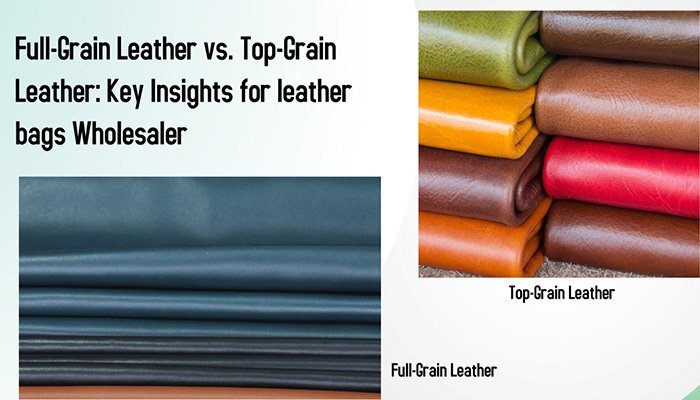
Full-grain and top-grain leather can support a higher perceived value because of their natural grain, tactile feel, and premium presentation. They are often suitable for executive gifts, boutique retail, private-label home accessories, hospitality gifting, and luxury presentation sets.
- Premium retail collections
- Executive desktop gifts
- Private-label home and office accessories
- Luxury presentation sets
- Boutique hotel and hospitality gifting
Genuine leather naturally varies in grain, small surface marks, and shade. Buyers who expect every unit to look nearly identical should define an approved appearance range and color tolerance before production. Stricter sorting may also affect material yield and cost.
PU, microfiber, recycled, and vegan alternatives can be practical

PU and microfiber should not automatically be treated as low-end choices. In large B2B programs, consistent surface texture and color can be more important than natural grain variation. These materials can also simplify brand-color matching for corporate gifts and promotional orders.
| Material | Main Advantage | Sourcing Consideration | Typical Use |
| Full-grain leather | Natural premium texture | Higher cost and natural variation | High-end gifting and retail |
| Top-grain leather | Refined premium surface | Confirm finish and shade tolerance | Private-label accessories |
| PU leather | Color consistency and cost control | Quality varies by grade | Corporate/promotional programs |
| Microfiber leather | Consistent finish and durable hand feel | Higher cost than basic PU | Retail/mid-high gifts |
| Recycled leather | Recycled-material positioning | Composition and claims need documentation | Eco-focused collections |
| Vegan leather | Animal-free positioning | Composition and claims need verification | Vegan lifestyle brands |
What should buyers verify before approving a material?
- Surface feel and brand positioning
- Logo performance on the actual material
- Bulk color tolerance
- Edge wrapping, folding, painting, or bonding performance
- Resistance to rubbing and compression during transport
- Required material declarations or test reports
Material and branding should be tested together. A surface can look excellent as a plain swatch but produce a weak or uneven logo. Approving the logo effect on the actual production material reduces this risk.
For buyers evaluating leather supply-chain controls, the Leather Working Group’s Leather Manufacturer Standard provides a useful reference for areas such as traceability, chemical management, restricted substances, and environmental performance.
Which Leather Picture Frame Styles Fit Different Selling Scenarios?
Style is not only an aesthetic decision. A desktop frame requires stable support, a folding frame requires accurate alignment and hinge durability, and a wall-mounted frame requires reliable backing and hanging hardware.
Desktop standing frames

Desktop frames are common for office gifts, executive accessories, hospitality programs, and retail home-office collections. The back stand should hold the frame at a stable angle without sliding or collapsing.
- Stand thickness and stiffness
- Back-panel rigidity
- Hinge or fold-line strength
- Display angle
- Photo insertion method
- Horizontal and vertical orientation options
Packaging should be checked using a physical pre-production sample. Raised logos, metal plaques, or decorative trims can press against the inner box during transport if packaging clearance is too tight.
Folding double-photo frames

Folding frames can display two photos or combine one photo with a branded panel. They work well for corporate awards, graduation gifts, executive desk sets, and premium presentation programs.
| Style Detail | Why It Matters |
| Center hinge/fold line | Affects durability and opening angle |
| Inner lining | Affects premium feel and photo protection |
| Magnetic/snap closure | Adds function but increases assembly and cost |
| Two-window alignment | Requires accurate cutting and QC |
| Packaging thickness | Affects box size, carton volume, and freight |
Wall-mounted and decorative frames

Wall-mounted frames require checks on hanging hardware, backing-board strength, weight distribution, and orientation. Decorative designs may add stitched borders, padding, contrast panels, or metal logo plates, but every additional component creates another point for color matching and inspection.
| Selling Scenario | Recommended Focus |
| Corporate gift | Stable desktop structure, clean logo, protective packaging |
| Retail collection | Material texture, refined stitching, presentation box |
| Promotional campaign | Controlled cost, simple construction, consistent color |
| Premium private label | Premium leather, custom lining, refined finishing |
| Hospitality project | Durable backing, easy maintenance, understated branding |
What Customization Options Matter Most for Leather Picture Frames?
Customization should be developed as one specification. The logo method, material, color, size, edge treatment, packaging, and hardware all affect the final result.
Logo methods should match the material
| Logo Method | Visual Effect | Best For | Confirm |
| Embossing | Raised logo | Premium branding | Tooling, pressure, material response |
| Debossing | Pressed-in logo | Executive branding | Depth, clarity, placement |
| Foil stamping | Metallic/colored mark | Gift and retail | Foil adhesion, color match |
| Screen printing | Flat printed logo | Promotional programs | Ink coverage, durability |
| UV printing | Multicolor artwork | Complex graphics | Surface compatibility |
| Laser engraving | Subtle tonal mark | Selected materials | Test appearance |
| Metal logo plate | Premium hardware effect | High-end gift sets | Attachment, plating, cost |
There is no single best logo method. The correct process depends on material grain, surface finish, artwork complexity, logo size, order quantity, and desired brand image.
Color, lining, and size affect batch consistency
Pantone references are useful targets, but the visible result can change with grain, gloss, material base, and lighting. PU and microfiber are generally easier to standardize for color, while genuine leather may require an approved shade range and stricter sorting.
- Outer material color
- Inner lining color
- Thread color
- Edge-paint color
- Backing-board color
- Logo or foil color
- Packaging color
Changing from a 4 x 6 inch format to 5 x 7 or 8 x 10 can affect board dimensions, stand strength, window opening, tooling, packaging, and carton configuration.
- Finished product size
- Photo size
- Visible window opening
- Material and approved color
- Logo method, size, and position
- Lining material and color
- Back-stand structure and display angle
- Packaging method
- Carton packing requirement
- Inspection criteria and tolerances
How Can Buyers Control Quality When Sourcing Leather Picture Frames?
Quality problems usually come from small details: weak stands, window misalignment, bulky corners, glue marks, uneven edges, color variation, or inconsistent logo placement. A clear QC checklist is therefore as important as the material name.
Key quality checkpoints for bulk production
- Material surface: scratches, marks, wrinkles, approved shade range
- Cutting accuracy: window shape, outer dimensions, corner symmetry
- Edge finishing: smoothness, edge paint, wrapping or folding quality
- Stitching: straightness, thread tension, skipped stitches
- Logo placement: position, depth, color, clarity
- Photo-window alignment: even borders and clean openings
- Backing board: stiffness, flatness, thickness
- Stand stability: approved display angle and balance
- Glue control: no visible stains, lifting, or excess adhesive
- Packaging: protection against compression and rubbing
Use a sealed or golden sample
A sealed sample gives the buyer and factory a common reference for material, color, structure, logo effect, workmanship, and packaging. For larger orders, a pre-production sample made with bulk materials is especially useful.
- Approved finished product sample
- Approved material swatch
- Approved logo sample where practical
- Approved packaging sample
- Approved color reference
Inspection standards should be written, not assumed
Buyers using third-party inspection should define critical, major, and minor defects and agree on the sampling plan before inspection.
| Inspection Area | Unacceptable/Critical | Major | Minor |
| Structure | Frame cannot perform intended display function | Stand angle unstable | Slight stiffness variation within tolerance |
| Logo | Wrong logo/artwork | Clearly off-center | Minor depth variation within approved range |
| Surface | Severe damage/contamination | Visible scratch outside standard | Approved natural grain variation |
| Size | Incorrect photo format | Visible window misalignment | Minor variation within tolerance |
| Packaging | Wrong required label | Crushed presentation box | Small outer-carton scuff |
For statistical acceptance sampling, buyers can refer to the ISO 2859 series for inspection by attributes when establishing an appropriate inspection plan.
What Should Be Confirmed Before Bulk Ordering Leather Picture Frames?
A sample proves what can be made; bulk production proves whether the specification can be repeated. Before placing a purchase order, buyers should lock the material grade, color tolerance, construction, logo method, packaging, MOQ, lead time, inspection criteria, shipping terms, and required documentation.
Supplier evaluation should include production control
Price should be evaluated together with production control. A lower price may be reasonable for a simple structure, but it can become expensive if backing-board stiffness, edge finishing, logo performance, or packing protection have not been confirmed.
At Guangzhou Herder Leather Products Co., Ltd. (BagsPlaza), our OEM/ODM workflow typically reviews product purpose, sales channel, target price, material preference, reference sample or tech pack, branding, packaging, order quantity, inspection requirements, and shipping terms.
Questions to ask before production
- What exact material will be used for bulk production?
- Can the material swatch be approved before sampling?
- What color tolerance applies?
- How will the logo be made and tested?
- What board thickness and reinforcement will be used?
- How stable is the back stand at the approved angle?
- How will the frame be packed to avoid surface marks?
- Which defects are acceptable or unacceptable?
- Can a pre-production sample be approved?
- Can inspection be arranged before shipment?
Documents and claims should be verified
Depending on the market and procurement program, buyers may request material declarations, packaging details, inspection reports, test reports, or other compliance documentation. Sustainability, recycled-content, and vegan claims should be supported by documentation appropriate to the exact material and market.
Leather Picture Frames B2B Buying Checklist
| Check | What to Confirm |
| Material | Genuine leather, PU, microfiber, recycled or specified alternative |
| Size | Finished frame, photo size, visible window |
| Logo | Deboss, emboss, foil, print, engraving, metal plate |
| Structure | Board thickness, stand stability, hinge/fold construction |
| Color | Approved swatch and shade tolerance |
| Packaging | Individual packing, gift box, labels, carton protection |
| Sample | Golden sample and pre-production sample if required |
| QC | Defect definitions, tolerances, sampling/inspection plan |
| MOQ & pricing | Quantity by design/material/color and price breaks |
| Lead time | Sampling, approval, bulk production, shipment timing |
Frequently Asked Questions
Are genuine leather picture frames always better than PU leather frames?
No. Genuine leather can suit premium retail and high-end gifting, while PU can be practical for consistent brand colors, controlled cost, and large corporate orders.
What logo method works best on leather picture frames?
The best method depends on the material and brand style. Debossing, embossing, foil stamping, printing, engraving, and metal logos should be tested on the approved material.
What should I check in a leather picture frame sample?
Check material feel, color, logo position and clarity, stitching, edge finishing, photo-window alignment, backing-board stiffness, stand stability, lining, and packaging.
Can leather picture frames be customized for private-label brands?
Yes. Material, color, size, logo, lining, stitching, packaging, and selected hardware details can be customized, subject to project feasibility and MOQ.
What is the main risk when buying leather picture frames in bulk?
The main risk is inconsistency between the approved sample and bulk production. A clear specification sheet, golden sample, and inspection checklist reduce this risk.
Conclusion
A strong leather picture frames buying guide should connect material, style, customization, structure, packaging, and quality control instead of treating them as separate decisions. Genuine leather, PU, microfiber, recycled leather, and other alternatives can all work when they match the intended use, price point, branding requirements, and consistency target.
If you are sourcing custom leather picture frames for retail, corporate gifting, hospitality, or private-label programs, BagsPlaza can support material selection, sampling, custom logo development, packaging, OEM/ODM production, and quality inspection. Send us your design, reference image, size, logo, and estimated quantity for a project assessment. Learn more: https://bagsplaza.com/leather-picture-frames/