Why Two Chinese Leather Bag Factories Quote Different Prices for the Same Design

Two factories can receive the same drawing and still quote different prices because a drawing does not fully define the product. Each supplier may assume a different leather grade, material yield, internal reinforcement, hardware quality, workmanship standard, order quantity, inspection scope, packaging method, and delivery term. The quotations may describe bags that look similar in a rendering but are not equivalent in production.
The correct way to compare prices is to normalize the specifications first. Buyers should ask every factory to quote the same bill of materials, construction standard, quantity by color, packaging, quality requirements, Incoterm, and delivery date. Only then does a unit-price comparison become meaningful.
We have worked with overseas brands on OEM, ODM, and private label leather goods for more than 19 years. In our experience, most large price gaps can be traced to a small number of assumptions that were never written into the original request for quotation.
A Design Drawing Does Not Fully Define the Bag
A rendering communicates shape, proportion, color, and visible features. It rarely tells a factory exactly how the bag must be built. Two sample rooms may interpret the same image differently, especially when there is no reference sample or complete technical pack.
For example, a structured tote may use a full reinforcement panel in the front and back, partial reinforcement only around the base and handles, or a softer construction with no full panel. All three versions can follow the same outer dimensions. They will not have the same weight, hand feel, durability, labor time, or price.
Before comparing quotations, confirm at least these four layers of the product:
- Appearance: dimensions, silhouette, color, grain, logo position, and hardware finish.
- Materials: leather article or approved swatch, thickness, lining, reinforcement, edge paint, thread, zipper, and hardware.
- Construction: seam type, folded or raw edges, handle attachment, pocket construction, base support, and stress-point reinforcement.
- Commercial scope: quantity, color breakdown, packaging, testing, inspection, Incoterm, and deadline.

How a Leather Bag Quotation Is Calculated
A simplified factory quotation can be expressed as:
Unit cost = materials + material loss + labor + setup allocation + packaging + quality control + overhead + margin
The weight of each component changes by design. A soft unlined pouch may be dominated by leather cost. A structured handbag with several compartments, painted edges, custom hardware, and a rigid gift box may carry much more labor, reinforcement, setup, and packaging cost.
A responsible quotation should therefore state its assumptions. A single price without specifications may be fast, but it is not yet a reliable production offer.
Leather Grade and Cutting Yield
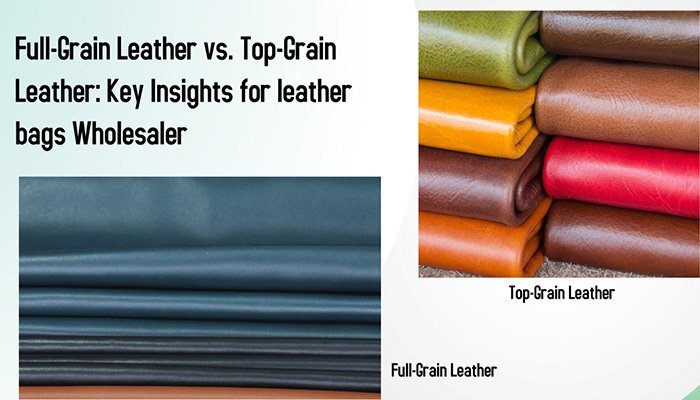
Leather is often one of the largest cost drivers, but the label alone is not enough. Two suppliers can both write top-grain cowhide while pricing different tannery articles, thicknesses, finishes, selections, and acceptable defect levels.

Why usable yield matters
Factories purchase hides by area, but not every part can be used for every visible panel. Natural marks, loose grain, wrinkles, shade variation, holes, and the shape of the hide affect cutting yield. Large uninterrupted panels, light colors, smooth finishes, and strict grain matching normally require more selective cutting than small components or heavily grained finishes.
One factory may calculate generous material loss to protect the approved appearance. Another may assume more natural variation is acceptable. The second quotation can be lower even when both suppliers use leather described by the same general name.
Ask each supplier to confirm:
- Leather type, tannery article or approved physical swatch.
- Finished thickness and permitted tolerance.
- Surface finish, grain, gloss level, and protective coating.
- Acceptable natural marks and grain variation on visible panels.
- Color standard and bulk shade tolerance.
- Required test reports and whether they match the actual material and destination market.

Hardware Lining and Reinforcement
Small components can create a large quotation gap because their descriptions are often incomplete. ‘Gold hardware’ may mean stock zinc-alloy fittings, a custom logo lock, stainless steel, solid brass, or different electroplating specifications. The visual rendering may not reveal the difference.
Custom hardware can involve a development drawing, mold charge, minimum casting quantity, plating minimum, color approval, and spare quantity for production loss. A factory that includes these items will appear more expensive than one that assumes stock hardware or excludes tooling.
The same issue applies inside the bag. Polyester lining, cotton twill, microfiber suede, foam, bonded leather board, fiberboard, and other reinforcement materials have different costs and performance. Buyers should define which panels require structure and how the bag should recover after loading or transport.
Workmanship and Labor Minutes
Labor cost is not simply the local hourly wage. It is the number of skilled minutes required for cutting, skiving, folding, stitching, edge finishing, assembly, shaping, cleaning, and inspection.
| Process | Lower cost assumption | Higher cost assumption | What the buyer should define |
| Leather cutting | Normal variation accepted | Selective grain and shade matching | Visible-panel acceptance standard |
| Edge finishing | Basic coats | Filling, drying, sanding, and multiple finishing passes | Approved edge sample and defect limits |
| Stitching | Standard production tolerance | Tighter stitch and alignment tolerance | SPI, thread, and reference photos |
| Handles | Basic folded construction | Shaped core and reinforced attachment | Construction section and load expectation |
| Inspection | Final visual check | Incoming, in-process, and final inspection | Inspection plan and acceptance criteria |
More handwork does not automatically mean better engineering, and more coats of edge paint do not automatically mean better quality. The correct process depends on the leather, edge construction, product position, and approved result. The buyer should define the result rather than rely on a vague label such as premium workmanship.

MOQ and Setup Cost
A factory does not start with a blank unit cost and multiply it by quantity. Pattern adjustment, sample confirmation, material ordering, color matching, logo setup, cutting preparation, line changeover, quality documents, and packing instructions all require work before or around production. At lower quantities, these costs are divided across fewer pieces.
Material suppliers also have minimum order quantities. The bag factory may need to buy more leather, lining, edge paint, or plated hardware than the order consumes. One supplier may charge the unused balance to the first order. Another may absorb it, use a similar stock component, or assume that the buyer will reorder. These are different commercial assumptions, not necessarily pricing mistakes.
For our customized production, the relevant MOQ depends on the product and material. As a working reference, custom leather bags generally start from 100 pieces per style per color, while PU, microfiber, and other non-leather customized bags generally start from 300 pieces per style, with up to two colors subject to material and design confirmation. The final MOQ should always be confirmed after we review the design.
Factory Scale Location and Production Model
Location influences wages, rent, supplier access, and logistics, but it does not determine value by itself. Guangzhou has a mature leather-goods supply network and access to materials, hardware, pattern makers, and export services. A supplier in another region may have a lower labor or operating baseline. Either can be competitive for the right order.
Factory organization also matters. A larger operation may allocate costs for production planning, incoming material checks, in-process inspection, final inspection, compliance documents, and export coordination. A small workshop may have lower overhead and greater flexibility but limited capacity or less formal process control. Buyers should select the production model that fits the order rather than assume that factory size alone predicts price or quality.
What May Be Included or Excluded
Two identical unit prices may still represent different total costs. Before comparing suppliers, check whether the following items are included:
| Quotation item | Questions to ask |
| Development | Are pattern making, prototype revisions, and sample shipping included? |
| Tooling | Are logo molds, clicker dies, or custom hardware molds separate? |
| Packaging | Does the price include a polybag, dust bag, custom box, inserts, labels, and export carton? |
| Quality control | Which incoming, in-process, and final checks are included? Is third-party inspection separate? |
| Testing | Are laboratory tests included, and which material, product, standard, and market do they cover? |
| Delivery term | Is the quotation EXW, FOB, CIF, DDP, or another Incoterm? What is the named place? |
| Freight and duties | Are international freight, destination charges, import duty, and tax included? |
| Payment and validity | What deposit, balance timing, currency, quotation validity, and price-adjustment conditions apply? |
Illustrative Comparison of Two Quotations
The example below is illustrative. It shows how two factories can quote the same drawing while making different production assumptions; it is not a market price list.
| Item | Factory A assumption | Factory B assumption | Likely effect |
| Outer material | Approved top-grain cowhide with selective cutting | Commercial cowhide with wider natural variation | Different leather cost and yield |
| Reinforcement | Full front, back, base, and handle support | Support only at base and stress points | Different shape, weight, and labor |
| Edge finish | Approved smooth finish with sanding between passes | Basic production finish | Different labor and drying time |
| Hardware | Custom logo fitting with controlled plating | Stock fitting in a similar color | Tooling and minimum purchase differ |
| Packaging | Dust bag, tissue, shape support, and custom carton | Polybag and standard export carton | Different packing cost and shipping volume |
| Inspection | Defined incoming, in-process, and final checks | Final visual check | Different prevention and QC cost |
| Trade term | FOB named port | EXW factory | Different logistics responsibility |
Factory B may offer an appropriate bag for a value-focused market. Factory A may better match a premium brief. The buyer cannot decide which quotation is better until the intended product standard is clear.
How to Normalize Quotations Before Comparing Prices
Use the following process when two quotations differ significantly:
- Send the same technical pack, dimensions, reference images, and quantity breakdown to every supplier.
- Approve or identify the same leather, lining, reinforcement, zipper, thread, edge paint, and hardware assumptions.
- Define visible workmanship using measurable specifications and clear reference photos.
- Ask suppliers to separate unit price, sample fee, tooling, testing, packaging, freight, duty, and tax.
- Require the same Incoterm and named place. EXW and DDP prices should never be compared as if they cover the same responsibility.
- Compare samples against one written standard, then confirm which approved sample will govern bulk production.
- Review total landed cost and execution risk, not only the lowest unit price.
Red Flags in an Unusually Low Quotation
A low quotation is not automatically unreliable. It should, however, trigger clarification when:
- The supplier cannot identify the leather type, thickness, or approved material reference.
- Custom hardware is shown, but no tooling or minimum purchase is discussed.
- The price remains unchanged after major construction or material revisions.
- MOQ, color quantity, packaging, and Incoterm are missing.
- The production lead time does not account for material or hardware development.
- Testing or certificates are promised without confirming the product, material batch, standard, or destination market.
- The supplier refuses to record the final specifications in the quotation or purchase order.
These points do not prove that a supplier is unsuitable. They show where the buyer needs written confirmation before paying for development or production.
RFQ Checklist for a Fair Factory Comparison
Include the following information when requesting comparable quotations:
| Category | Information to provide or confirm |
| Design | Technical drawings, dimensions, construction views, pockets, and closures |
| Materials | Leather article or swatch, thickness, lining, reinforcement, edge paint, thread, and zipper |
| Hardware | Material, dimensions, finish, logo details, and custom mold requirements |
| Workmanship | SPI, edge construction, grain matching, logo tolerance, and reference photos |
| Quantity | Total quantity plus breakdown by style, color, and size |
| Branding | Embossing, foil, metal logo, woven label, hangtag, and placement |
| Packaging | Polybag, dust bag, box, inserts, labels, barcode, and carton requirements |
| Compliance | Destination market, applicable tests, reports, restricted substances, and inspection plan |
| Commercial | Incoterm, named place, currency, payment terms, target completion date, and shipping method |
If some specifications are not yet decided, ask each supplier to state its proposed option and price it separately. This keeps alternatives visible instead of hiding them inside one number.
Frequently Asked Questions
Is the cheapest quotation always the riskiest
No. A lower quotation may come from efficient production, stock materials, lower overhead, a suitable production region, or a simpler service scope. Confirm that the material, construction, quality standard, quantity, packaging, and Incoterm match before judging the price.
Why can two factories quote different prices for top grain leather
Top-grain leather is a broad description, not a complete material specification. Tannery article, hide selection, thickness, finish, color consistency, surface protection, defect allowance, and usable cutting yield can all differ.
Should buyers disclose a target price?
A realistic target price helps a factory recommend the right construction and material level. It should not replace a specification. Ask the supplier to explain any value-engineering changes so the lower price does not quietly change the product.
Does an approved sample guarantee bulk quality
No. The approved sample establishes a reference, but bulk consistency also depends on material approval, pre-production confirmation, in-process control, final inspection, and clear acceptance criteria. Keep one signed or sealed sample available for comparison.
How many quotations should a buyer compare?
There is no fixed number. A short list of qualified factories is usually more useful than many unverified prices. Compare suppliers that can manufacture the required product, communicate clearly, document their assumptions, and support the expected order volume.
Conclusion
Two Chinese leather bag factories can quote different prices for the same design because they are often pricing different products and different responsibilities. The design image may be identical, but leather yield, reinforcement, hardware, labor minutes, MOQ allocation, quality control, packaging, and Incoterms may not be.
The most reliable comparison starts with one shared specification and a line-by-line quotation. Evaluate the approved sample, total landed cost, lead time, quality controls, and the supplier’s ability to repeat the standard in bulk. The lowest number is useful only when it represents the product you actually intend to buy.
If you are developing a leather bag, wallet, backpack, or private label accessory, we can review your drawings or reference sample and identify the specifications needed for an accurate quotation. Guangzhou Herder Leather Products Co., Ltd. supports OEM, ODM, sampling, material selection, custom branding, packaging, documented quality control, and international shipping solutions.