How to Choose a Leather Organizer Purse: Compartments, Materials & B2B Buying Guide

A leather organizer purse can look premium online but still disappoint customers if the compartments are awkward, the material tier is mismatched, or the filled purse becomes bulky. For B2B buyers, the right product balances material positioning, storage logic, protection, access, and repeatable production quality.
A leather organizer purse should be selected by matching the target user’s daily carry needs with the right material grade, compartment layout, lining, zipper, stitching, and price tier. Premium collections may use full-grain or top-grain leather, while value-focused or technical SKUs can use split leather, microfiber, recycled leather, or PU when the structure, access, and durability are properly specified and tested.

What Makes a Leather Organizer Purse Worth Buying?
A leather organizer purse is not only a small storage bag. It is a daily-use tool. The strongest designs combine appropriate material positioning, practical compartment design, reliable closure, smooth access, and durable construction.
Start With Product Positioning
| Positioning | Typical Material | Customer Expectation | Best Use |
| Entry-level | PU, recycled leather, basic microfiber | Clean appearance, controlled price | Promotional gifts, budget retail |
| Mid-range | Quality microfiber, split or corrected leather | Better hand feel and structure | Travel storage, office use |
| Premium | Top-grain or full-grain leather | Natural texture and higher perceived value | Executive gifts, boutique retail |
| Functional technical | Microfiber, coated leather, semi-rigid panels | Durability and organized layout | Cables, chargers, daily carry |
Avoid the “More Compartments Is Better” Mistake
More pockets do not automatically create more value. Excess compartments can add bulk, labor cost, stitching complexity, poor access, and reduced flexibility. A better approach is to design around the real objects the customer will carry.
- Pen loops for pens or styluses
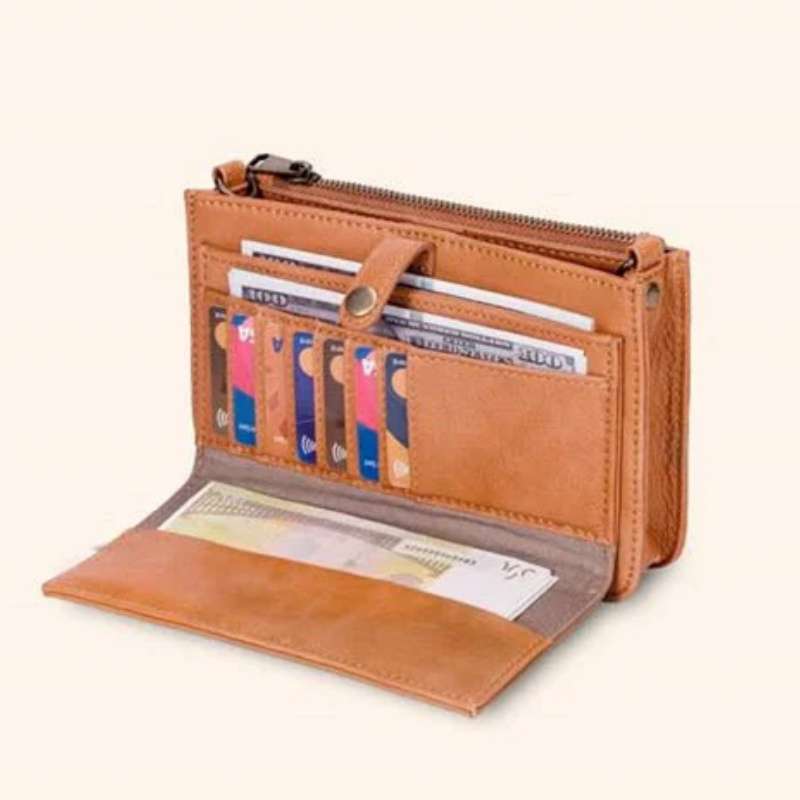
- Flat card slots for cards and receipts
- A zipper pocket for coins, keys, or valuables
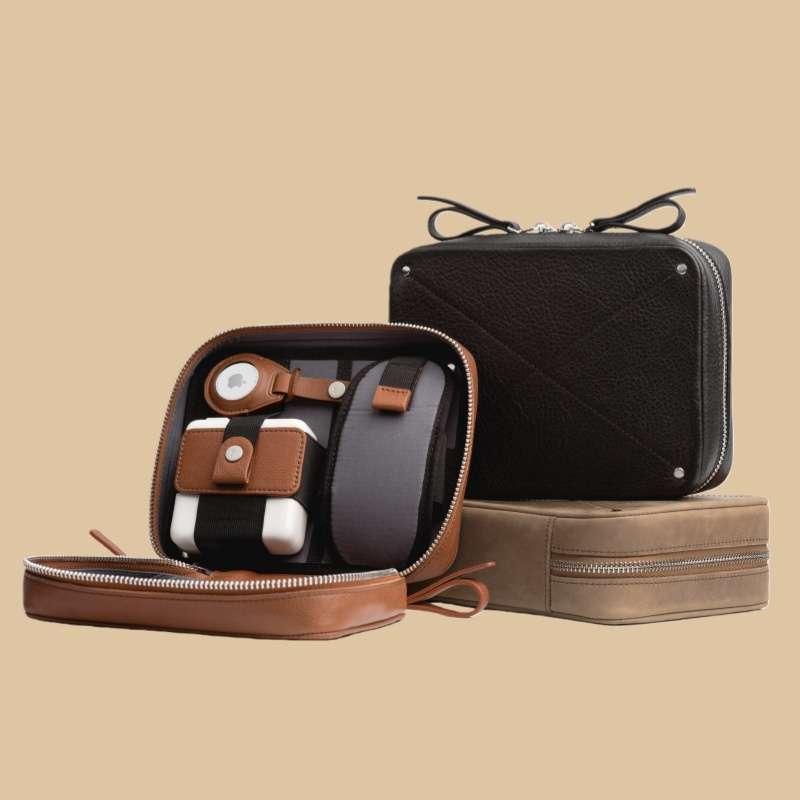
- Elastic loops for cables and chargers
- A soft open pocket for cosmetics or earbuds
- A semi-rigid section for delicate accessories
For sampling, we recommend preparing a loading list before pattern development. This helps prevent a visually attractive sample that cannot hold the customer’s real items comfortably.
Choose by Daily Carry Scenario
- Inside a tote bag: softer construction and slightly larger capacity may work well.
- Inside a backpack: stronger closure and better protection may be needed.
- As a standalone clutch: exterior leather, hardware, structure, and logo placement become more important.
- For travel: secure zipper closure, passport storage, card slots, and visibility matter more.
- For office use: pen loops, cable storage, and document-friendly dimensions may be priorities.
How Should Leather Organizer Purse Compartments Be Designed?
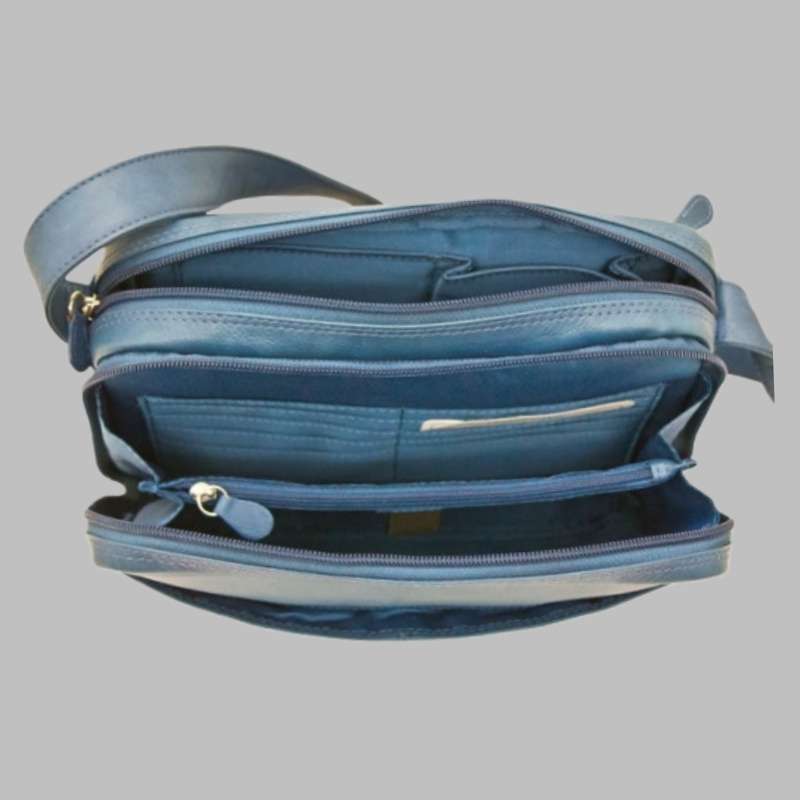
Compartment design should start with stored objects, not pocket count. Poor layouts cause loose items, blocked zippers, slow access, and excess thickness. The design should consider item size, access frequency, protection needs, and the thickness created when every compartment is loaded.
Design From the Object Outward
A useful loading list may include pens, styluses, USB cables, charging plugs, earbuds, cards, coins, keys, passports, cosmetics, receipts, glasses, and small tools. Standard pens are often around 14–15 cm long, but the exact target items should be verified before the pattern is finalized.
| Compartment Type | Strength | Weakness | Best For |
| Fixed flat pocket | Clean, organized, low bulk | Limited flexibility | Cards, receipts, slim tools |
| Elastic loop | Flexible, secure, space-saving | Elastic quality matters | Cables, pens, chargers |
| Zipper pocket | Secure storage | Adds cost and thickness | Coins, keys, valuables |
| Mesh pocket | High visibility | Less premium appearance | Tech accessories, travel goods |
| Soft open pocket | Easy access | Items may shift | Cosmetics, daily items |
| Semi-rigid section | Better protection | More structure and cost | Glasses and delicate items |
Do Not Ignore Closure Performance
- Does the zipper close smoothly when fully loaded?
- Does the shape distort after loading?
- Do internal pockets block the zipper path?
- Do stored items create pressure marks on the exterior?
- Does the purse feel balanced in hand?
- Can frequent-use items be accessed without disturbing everything else?
Visibility Is Part of Usability
- Light-colored lining for dark accessories
- Contrasting elastic loops
- Layered pockets with different heights
- Mesh sections for travel or tech-focused models
- A wider opening angle for faster access
Exterior appearance helps sell the product, but the customer interacts with the interior every day. For repeat purchases and strong reviews, interior usability deserves the same attention as the exterior.
Which Materials Are Best for a Leather Organizer Purse?
The material should match the product’s price tier, use case, weight target, and customer expectation. Full-grain or top-grain cowhide can suit premium positioning. Split leather, corrected leather, microfiber, recycled leather, vegan alternatives, or PU can work for value, promotional, or functional organizers when quality is specified clearly.
| Material | Characteristics | Best For | Buyer Watchpoint |
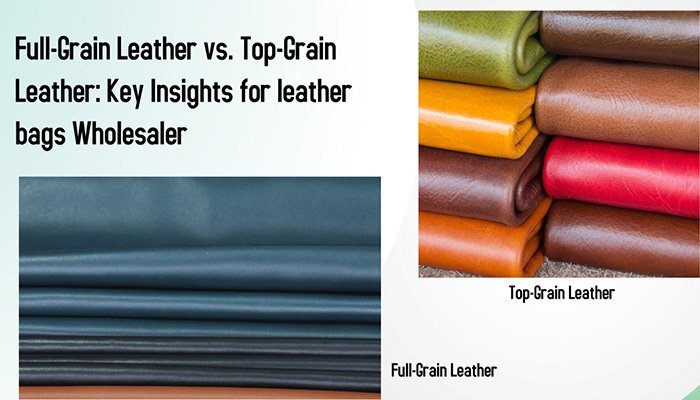
| Full-grain leather | Natural grain, premium appearance, patina | High-end organizers | Higher cost, natural marks |
| Top-grain leather | Refined surface, smoother consistency | Premium to mid-premium | Finish quality matters |
| Corrected leather | Sanded or coated surface | Mid-range products | May look less natural |
| Split leather | Lower hide layer, often coated | Budget leather goods | Durability depends on finish |
| Microfiber leather | Synthetic fiber base, consistent surface | Functional and vegan-positioned SKUs | Specify thickness and backing |
| PU leather | Wide colors and controlled cost | Entry-level and promotional | Aging varies by grade |
| Recycled leather | Leather-fiber composite | Eco-positioned value goods | Composition and claims need documentation |
“Genuine leather” alone is too vague for serious sourcing. Purchase documents should define the leather type, thickness, finish, backing, color tolerance, and other project-specific requirements.
Match Material to Use Case
An executive-gift organizer may justify full-grain or top-grain cowhide for natural texture and premium hand feel. A tech organizer may prioritize lighter weight, scratch resistance, surface consistency, and easier cleaning, making quality microfiber or coated leather a practical alternative.
Do Not Rely on Simple “Real Leather” Tests
Smell, pores, hand feel, water absorption, and edge appearance can provide clues, but finishes and coatings can make simple checks misleading. For high-value orders, buyers should use material specifications, supplier declarations, and professional testing where appropriate.
For standardized leather testing methods, buyers can also refer to ASTM International Leather Standards when evaluating relevant material properties
Material Thickness and Structure Matter
- What thickness is used for the outer shell?
- Is reinforcement added between leather and lining?
- Is the material suitable for the selected edge-finishing method?
- Will it crease excessively around fold areas?
- Does the surface resist scratches during normal handling?
- Does it meet the brand’s colorfastness expectations?
How Do You Evaluate Leather Organizer Purse Quality Before Ordering?
A leather organizer purse should be evaluated as a loaded product, not only as a flat sample. Empty samples can hide zipper tension, pocket depth, lining strength, edge finish, and internal-pressure problems.
Use a Real Loading Test
A simple test kit can include two pens, a phone cable, a charger, three cards, keys, lip balm, earbuds, a passport for travel models, and a small notebook for office-focused designs.
- Does every item fit without force?
- Does the purse close without distortion?
- Does the zipper move smoothly?
- Can one item be removed without disturbing the others?
- Does the lining pull or wrinkle?
- Does the exterior show pressure marks from internal items?
Check Stitching, Edge Finishing, Lining, Zipper, and Hardware
| Quality Detail | What to Check | Why It Matters |
| Stitching | Even spacing, no skipped stitches or loose thread | Durability and appearance |
| Stitch density | Consistent stitches per inch or cm | Strength and premium feel |
| Edge paint/finish | Smooth layers, no cracking or bubbling | Visible quality |
| Glue control | No overflow or sticky residue | Production discipline |
| Lining | Secure attachment and clean seams | Daily use and lifespan |
| Zipper | Smooth pull, no catching | Organizer access |
| Hardware | Consistent finish, no sharp edges | Brand perception and usability |
| Logo | Correct position, depth, color, clarity | Private-label consistency |
Confirm a Golden Sample and Written Production Standard
- Approved material swatch
- Approved color standard
- Approved hardware finish
- Approved lining
- Approved logo method
- Approved dimensions and tolerances
- Approved compartment layout
- Approved packaging
- Carton packing method
- Inspection criteria
For larger orders, a pre-production sample made with bulk materials can further reduce the risk of differences between sampling materials and production lots.
For statistical acceptance sampling, B2B buyers can refer to the ISO 2859 series for inspection by attributes when establishing an appropriate inspection plan.
How Should Brands Source a Leather Organizer Purse for Private Label?
Private-label sourcing should begin with a clear SKU brief rather than only a reference photo. The brief should connect the target customer, retail price, loading list, material, protection level, branding, packaging, and inspection requirements.
Build a Clear Product Brief
- Target customer and use scenario
- Target retail price
- Preferred material and finish
- Main items to be stored
- Required protection level
- Branding method and logo placement
- Packaging requirements
- Market-specific testing or compliance needs
Compare OEM, ODM, and Stock-Based Private Label
| Sourcing Method | Best For | Advantage | Watchpoint |
| OEM | Brands with drawings, tech packs, or reference samples | More design control | Requires clear specifications |
| ODM | Brands needing design support | Faster development from proven structures | Customization limits may apply |
| Stock-based private label | Small launches or test orders | Lower development risk | Less design uniqueness |
| Fully custom development | Brands building a signature product | Strong differentiation | More sampling time and cost |
Test the Sample Like a Customer
- Load the purse with intended items
- Open and close it repeatedly
- Remove items one by one
- Check whether it folds or collapses as intended
- Inspect stitching under good light
- Test elastic-loop recovery
- Check zipper pull and hardware edges
- Inspect edge finish at curves and corners
- Compare dimensions against the specification
- Review packaging fit
Align MOQ, Cost, and Customization
Custom colors, hardware, special lining, gift boxes, unique molds, additional compartments, and higher inspection requirements can increase cost, development time, or MOQ. For startups and growing brands, a focused organizer with strong usability can be more commercially practical than an overcomplicated design.
- Leather grade and thickness
- Number and type of compartments
- Zipper and hardware quality
- Edge-finishing complexity
- Logo method
- Lining material
- Reinforcement
- Packaging
- Inspection requirements
- Order quantity
Leather Organizer Purse B2B Buying Checklist
| Check | What to Confirm |
| Positioning | Entry, mid-range, premium, or technical |
| Material | Type, finish, thickness, backing |
| Size | Finished dimensions and usable internal space |
| Loading list | Actual items the customer will carry |
| Compartments | Pocket, elastic-loop, zipper, protected-section layout |
| Closure | Performance under full load |
| Lining | Material, color, attachment, visibility |
| Hardware | Finish, smooth edges, plating consistency |
| Branding | Deboss, emboss, print, metal logo, custom puller |
| Color | Approved swatch and bulk tolerance |
| Sample | Loaded golden sample; pre-production sample if required |
| QC | Dimensions, workmanship, defects, inspection plan |
| Packaging | Individual packing, gift box, labels, carton protection |
| MOQ & pricing | Quantity by style/color/material and price breaks |
| Lead time | Sampling, approval, production, shipment timing |
Material Documentation and Supply-Chain Claims
Buyers making sustainability, recycled-content, or leather-sourcing claims should request documentation that supports the exact material and supplier involved. A facility certification should not automatically be presented as certification of the finished organizer purse.
Buyers evaluating leather supply-chain controls can also refer to the Leather Working Group Leather Manufacturer Standard for areas such as traceability, chemical management, restricted substances, and environmental management.
The LWG standard covers areas including incoming and outgoing traceability, restricted substances, environmental management, chemical management, and other leather-manufacturing controls.
Frequently Asked Questions
Is full-grain leather always best for a leather organizer purse?
No. Full-grain leather is strong for premium positioning and natural character, but a tech or travel organizer may benefit from top-grain leather, quality microfiber, or coated material when lighter weight, consistency, or easier cleaning is more important.
How many compartments should a leather organizer purse have?
There is no ideal number. The layout should be based on the loading list, access frequency, and thickness created when the organizer is fully loaded.
How can buyers avoid misleading “genuine leather” descriptions?
Request a precise material specification covering leather type, finish, thickness, backing, and relevant performance requirements rather than relying on the term “genuine leather” alone.
What should be checked in a sample?
Check material consistency, pocket fit, zipper smoothness, stitching, edge finishing, lining, glue control, hardware finish, logo accuracy, and closure performance when fully loaded.
Can microfiber leather be a good option?
Yes. Quality microfiber can be useful for functional, vegan-positioned, or mid-range organizers because it offers surface consistency and controlled production quality. Thickness, backing, hand feel, colorfastness, and durability requirements should still be specified.
Conclusion
Choosing a leather organizer purse is a sourcing decision, not only a style decision. The material defines price positioning and customer expectation, while the compartment layout determines whether the product is genuinely useful. Buyers should begin with a real loading list and then validate materials, closures, lining, stitching, edge finishing, branding, packaging, and inspection standards through loaded samples.
If you are sourcing custom leather organizer purses for retail, travel, corporate gifting, or private-label programs, BagsPlaza can support material selection, compartment development, sampling, custom branding, packaging, OEM/ODM production, and quality inspection. Send us your design, reference sample, loading list, target material, and estimated quantity for a project assessment.