What Is Corrected Grain Leather? Quality, Pros, Cons & Uses Explained

Corrected grain leather is real leather whose surface has been buffed or sanded and then finished, pigmented, coated, or embossed to reduce visible scars, wrinkles, grain variation, and other natural marks. It is not full-grain leather, and it is not PU leather.
Quick answer: Corrected grain leather can be a good-quality material when the base leather, thickness, surface correction, coating, hand feel, workmanship, and sample-to-bulk consistency are well controlled. It is especially useful for brands that want real leather with a clean, repeatable appearance at a practical price point.

Corrected Grain Leather: Quick Comparison
| Factor | Full-Grain | Corrected Grain | Split Leather | PU Leather |
| Real leather | Yes | Yes | Yes | No |
| Base/layer | Natural outer grain | Grain surface that has been corrected and finished | Lower hide layer | Synthetic/coated material system |
| Surface character | Most natural | More uniform and controlled | Often coated or embossed | Highly controllable |
| Natural variation | High | Reduced | Limited when coated | Very low |
| Typical positioning | Premium | Mid to premium commercial | Budget to mid-range | Budget to mid-range / vegan-positioned |
| Patina potential | Strong | Finish-dependent | Limited | No natural leather patina |
| Typical cost | Higher | Medium to high | Lower | Often lower |
| Best fit | Premium natural-grain goods | Consistent real-leather collections | Cost-controlled leather goods | Promotional, fashion, vegan-positioned products |
What Is Corrected Grain Leather in Bag Manufacturing?
Corrected grain leather is genuine animal leather with a surface that has been mechanically buffed or sanded and then refined with pigments, coatings, embossing, or protective finishing. The purpose is to reduce visible natural defects and create a cleaner, more consistent surface.
Natural hides can contain scars, insect bites, wrinkles, scratches, growth marks, uneven grain, and color variation. Full-grain leather keeps more of this natural surface. Corrected grain leather intentionally reduces some of that variation.
A typical correction process may include:
- Buffing or sanding the grain surface to reduce visible imperfections.
- Applying pigments or finish layers to create more uniform color.
- Embossing a grain pattern for consistent texture.
- Adding a protective finish to improve surface stability and visual consistency.
For OEM/ODM buyers, the important question is not whether correction is automatically good or bad. The practical question is whether the corrected surface fits the bag structure, retail price, customer expectation, and required production consistency.
Is Corrected Grain Leather Good Quality?
Yes, corrected grain leather can be good quality. The material name alone does not determine quality. Buyers should evaluate the base leather, correction level, thickness, coating flexibility, embossing, hand feel, color consistency, workmanship compatibility, and bulk repeatability.
| Signs of Good Corrected Grain Leather | Warning Signs |
| Refined hand feel appropriate to the product | Overly plastic or rubbery hand feel |
| Flexible, even surface finish | Cracking or whitening when folded |
| Stable, natural-looking embossing | Artificial or unstable grain pattern |
| Consistent color and gloss | Uneven color, gloss, or cloudy coating |
| Clean cutting, skiving, stitching and edge behavior | Poor edge-paint adhesion or difficult folding |
| Approved sample closely matches bulk | Bulk leather is stiffer, glossier, or visibly different |
Corrected grain leather is often selected because consistency is part of its value. For that reason, sample-to-bulk mismatch is especially important to control.
Corrected Grain Leather vs Full-Grain Leather
| Feature | Full-Grain Leather | Corrected Grain Leather |
| Surface | Natural grain remains | Buffed, finished and often embossed |
| Appearance | Natural variation | More uniform and controlled |
| Natural marks | More visible | Reduced visually |
| Prestige positioning | Higher | Practical mid to premium positioning |
| Aging | Often develops stronger natural patina | Depends heavily on finish quality |
| Best for | Premium natural-character leather goods | Consistent commercial leather production |
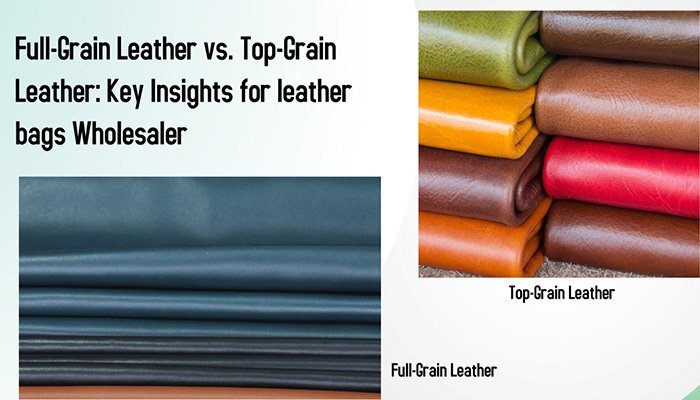
Full-grain leather is usually the stronger choice when natural surface character, heritage positioning, and patina are central to the brand story. Corrected grain leather can be the stronger commercial choice when buyers need cleaner panels, stable color, fewer visible defects, and more predictable bulk appearance.
Is Corrected Grain Leather the Same as Top-Grain Leather?
The terminology can be confusing because suppliers do not always use leather terms consistently. In sourcing conversations, “top-grain” may refer broadly to leather from the upper grain layer, while corrected grain describes a surface that has been mechanically altered and refinished.
Buyers should therefore avoid relying on the words “top grain” alone. Ask:
- Has the natural grain surface been buffed or sanded?
- Is the surface embossed?
- What pigment, coating, or protective finish is applied?
- What is the target thickness?
- What does the backside and cross-section look like?
- Can the supplier provide a physical swatch and finished product sample?
- Will the bulk leather match the approved material reference?
The safest purchasing approach is to define the material by construction and finish in the tech pack or purchase order rather than relying on a broad marketing term.
Corrected Grain Leather vs PU Leather: What Is the Difference?
| Factor | Corrected Grain Leather | PU Leather |
| Base material | Animal hide | Synthetic/textile-based material with polyurethane surface |
| Real leather | Yes | No |
| Surface | Corrected and finished real leather | Synthetic coated surface |
| Natural variation | Some remains | Very little |
| Aging | Depends on leather and finish | Depends mainly on coating and backing |
| Vegan positioning | No | Can be non-animal depending on construction |
| Typical positioning | Real-leather mid-range / commercial | Price-sensitive, fashion, promotional or vegan-positioned |
| Main buyer risk | Over-finishing, coating quality, inaccurate premium claims | Peeling, cracking, odor, backing and coating quality |
Neither is universally better. Corrected grain leather suits brands that want real leather with controlled appearance. PU can suit projects that prioritize cost, color consistency, animal-free positioning, or promotional use.
What Are the Pros and Cons of Corrected Grain Leather?
| Advantages | Disadvantages / Risks |
| Cleaner, more consistent surface | Less natural grain character |
| More stable visual color across panels | Patina potential is usually lower than full-grain |
| Fewer visible natural defects | Quality depends strongly on finishing and coating |
| Better usable yield can support controlled pricing | Poor coating can feel plastic or age unattractively |
| Practical for mid-range real-leather products | Can be over-marketed as premium natural-grain leather |
| Easier panel matching in bulk production | Bulk can differ from the approved sample if finishing changes |
Lower visible variation can be a commercial advantage for retail chains, Amazon sellers, Shopify brands, wholesalers, corporate gift suppliers, and private-label collections that need repeatable product photography and consistent shelf appearance.
When Should Brands Use Corrected Grain Leather?
Corrected grain leather is often a good fit when a brand wants real leather, a controlled appearance, and a practical price point. It is especially useful where clean panels and repeatable color matter more than untouched natural grain.
Good Product Matches
- Structured handbags
- Tote bags
- Crossbody bags
- Business backpacks
- Briefcases
- Wallets
- Card holders
- Travel organizers
- Corporate gift leather goods
- Private-label accessories

When Another Leather May Be Better
- Heritage products built around natural grain character
- Luxury collections where full-grain is a core selling point
- Products marketed around strong patina development
- Vegetable-tanned or pull-up leather stories
- Minimalist designs where natural surface authenticity is the main value

Match the Material to the Customer Promise
| Customer Promise | Possible Material Direction |
| Premium natural leather with unique grain | Full-grain or high-grade natural-grain leather |
| Real leather with a clean, consistent look | Corrected grain leather may fit well |
| Animal-free leather alternative | Microfiber, PU or another verified non-animal material |
| Cost-controlled real-leather product | Corrected grain or split leather depending on construction |
| Luxury patina over time | Full-grain, vegetable-tanned or suitable pull-up leather |
How Can Buyers Judge Corrected Grain Leather Quality?
A material swatch is only the first step. Corrected grain leather should be evaluated after cutting, skiving, folding, stitching, edge finishing, logo application, hardware installation, and final assembly.
Key QC Points
- Surface consistency: grain, gloss and color should look controlled across visible panels.
- Thickness: confirm the approved range for the specific product and component.
- Hand feel: the leather should match the intended positioning and bag structure.
- Coating: check evenness, flexibility and whether the finish looks overly plastic.
- Embossing: grain definition should be stable and visually appropriate.
- Panel matching: front, back, gussets, straps and pockets should be selected carefully.
- Crease behavior: folded areas should not show premature cracking during sampling.
- Edge performance: confirm compatibility with painting, folding or binding.
- Logo compatibility: test debossing, embossing, foil, print or metal-logo attachment.
- Bulk consistency: production material should remain close to the approved reference.
What Thickness Should Corrected Grain Leather Be?
There is no universal ideal thickness. The correct specification depends on product structure, leather temper, reinforcement, edge construction, final weight, and the component being made.
Some bag applications may use corrected grain leather around 0.8–1.4 mm, but this should be treated only as a possible working range rather than an industry standard. Wallets may require thinner material, while handles, structured panels, or reinforced components may need different specifications. Physical sampling should determine the final thickness.
Sample-to-Bulk Control
Because corrected grain leather is often chosen for consistency, buyers should establish clear approval references before production.
- Approved material swatch
- Approved product or golden sample
- Written material specification
- Pre-production confirmation
- Bulk material photos or video where useful
- Final inspection report
- Defined acceptable tolerance for color, gloss, grain and workmanship
How Should Brands Describe Corrected Grain Leather to Customers?
Corrected grain leather should be described honestly as real leather with a refined, finished, or corrected surface. Brands can emphasize its clean appearance, consistent color, and practical commercial performance without implying that it is untouched full-grain leather.
Clear Product Description Examples
- Made with real corrected grain leather for a clean and consistent surface.
- Crafted from finished leather with a smooth, uniform grain appearance.
- Designed with real leather selected for stable color and a refined look.
- This bag uses corrected grain leather to reduce visible natural surface variation.
Wording to Avoid Unless Verified
- Full-grain leather when the grain surface has been corrected.
- Untouched natural grain when the surface has been buffed and embossed.
- Highest-grade leather without supporting evidence.
- Develops a rich natural patina like full-grain leather without verification.
- 100% premium leather when the material description is unclear.
Clear material wording is not only a compliance issue. It reduces returns, protects reviews, and keeps the product promise aligned with what customers actually receive.
Testing and Professional Verification
For projects with strict durability, labeling, or market requirements, buyers may request application-specific testing. Depending on the product and destination market, this may include abrasion, flexing, colorfastness, coating adhesion, or chemical-compliance testing.
The correct test method depends on the product and claim, so buyers should confirm requirements with qualified testing professionals. Useful external references for publication can include the Leather Working Group for leather manufacturing and sourcing frameworks, and independent testing providers such as SGS or Intertek.
Mherder Sourcing Reference
Mherder has more than 19 years of OEM/ODM leather-goods experience in Guangzhou, with 5 production lines and more than 200 workers. For custom leather bags, the standard MOQ is typically 100 pieces per style per color. Wallets and small leather goods commonly start from 300 pieces per style.
Ready-to-ship products with a laser logo can start from 20 pieces per style, depending on stock. Typical custom sample cost is around USD 100+ per style, with approximately 10–15 working days for most developments. Bulk production is generally around 25–40 days after approval.
Mherder can compare full-grain, top-grain, corrected-grain, split, microfiber, PU, recycled, and other material directions during sampling, with support for custom logos, hardware, lining, packaging, inspection, and global shipping coordination.
Frequently Asked Questions
Is corrected grain leather real leather?
Yes. Corrected grain leather is made from animal hide. Its grain surface has been altered and refinished, but the base material is real leather.
Is corrected grain leather good quality?
It can be. Quality depends on the base leather, correction level, thickness, coating, embossing, hand feel, workmanship, and sample-to-bulk consistency. It should be judged against the intended product and price point.
Does corrected grain leather peel?
Peeling is not automatic. Surface problems can occur when a coating or finish is poorly bonded, too rigid, or unsuitable for the way the product bends and wears. Physical sampling and application-specific testing can reduce risk.
Is corrected grain leather better than PU leather?
Neither is universally better. Corrected grain is real leather and may suit brands wanting a consistent real-leather product. PU can suit lower-cost, promotional, fashion, or animal-free positioning.
Is corrected grain leather the same as top-grain leather?
The terms can overlap in supplier language, but they describe different ideas. Top-grain generally refers to the upper hide layer, while corrected grain describes a surface that has been mechanically altered and refinished. Buyers should verify the actual layer, correction, finish, and sample.
Can corrected grain leather be used for luxury bags?
It can look refined, but it is usually better suited to commercial mid-range or controlled-finish positioning than a luxury story built around untouched natural grain. Claims should match the actual leather and workmanship.
How long does corrected grain leather last?
There is no reliable universal lifespan. Service life depends on the base leather, finish, coating, thickness, construction, abrasion, usage, storage, climate, and care. Fixed longevity claims should not be made without supporting evidence.
How should buyers check corrected grain leather before production?
Review physical swatches, approve a finished product sample, confirm thickness and hand feel, test folds and logo application, define acceptable color and gloss tolerance, and compare bulk material against the approved reference.
Conclusion
Corrected grain leather is a practical real-leather material when brands need a clean appearance, stable color, fewer visible natural defects, and controlled commercial positioning. It is not fake leather, but it should not be presented as untouched full-grain leather.
If you are developing leather bags, wallets, briefcases, backpacks, or accessories, send Mherder your design or reference, target quantity, target price, preferred material direction, logo, packaging requirements, and destination. We can compare corrected grain with full-grain, top-grain, split, microfiber, or PU options and prepare samples before bulk production.