What Is Split Leather? Types, Quality, Uses, Pros & Cons Explained

Split leather is real leather made from the lower layer of an animal hide after the stronger grain layer is separated. It can be left fibrous, made into suede, or finished with pigment, embossing, film, or polyurethane coating. It is generally less dense and less naturally durable than full-grain or quality top-grain leather, but it can be a practical material when the product tier, finish, construction, and application area are clearly defined.
Quick answer: Split leather is not fake leather and it is not automatically a bad material. It usually offers lower cost and more surface consistency than premium grain leather, but buyers should be more cautious in handles, straps, corners, bottom panels, and products sold with strong premium or durability claims.
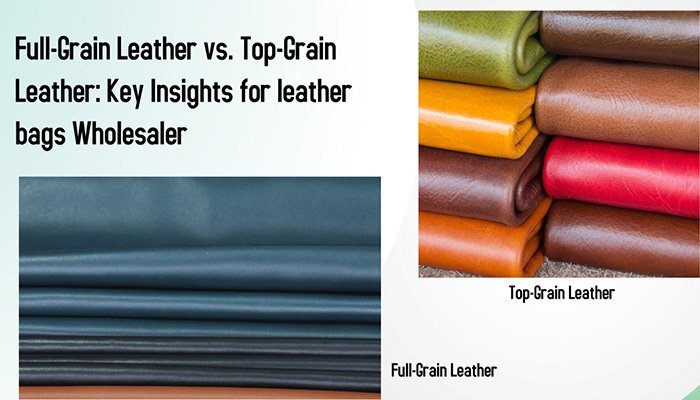
Split Leather vs Full-Grain vs Top-Grain Leather: Quick Comparison
| Factor | Full-Grain Leather | Top-Grain Leather | Split Leather |
| Hide layer | Outer grain | Upper layer | Lower layer |
| Fiber density | Highest | High | Lower |
| Natural surface | Strong natural character | Natural or corrected finish | Usually limited or finished |
| Typical durability | Generally highest | High when well specified | Application-dependent |
| Typical cost | Higher | Mid to high | Lower |
| Surface consistency | Natural variation | Good | High when coated/embossed |
| Premium positioning | Excellent | Strong | Limited to moderate |
| Budget products | Less common | Possible | Strong fit |
| High-stress areas | Strong when construction is suitable | Strong when suitable | Use carefully |
What Is Split Leather and How Is It Made?

A hide can be thick enough to separate into layers during leather processing. The upper grain layer has a tighter fiber structure and retains the natural outer surface. Split leather comes from the lower layer beneath that grain.
- Full-grain leather keeps the natural outer grain surface.
- Top-grain leather uses the upper layer but may be corrected, sanded, or finished.
- Split leather comes from the lower layer beneath the grain.
- Suede is often produced from split leather with a brushed, fibrous surface.
- Coated split leather may receive pigment, embossing, film, or polyurethane finishing.
The key technical difference is fiber density. Split leather has a looser, more fibrous structure than the grain layer, so its performance depends heavily on thickness, finishing, backing, reinforcement, and where it is used in the product.
Is Split Leather Good Quality?
Split leather can be good quality for the right application, but it should not be assumed to perform like full-grain or top-grain leather. Quality depends on the split layer, thickness, surface finish, coating adhesion, backing, construction, and the stress the material will experience.
| Application | Typical Suitability | Why |
| Wallet lining | Medium to high | Lower stress if thickness and finish are suitable |
| Card holder exterior | Medium | Can work when finish matches the price tier |
| Decorative trim | Medium | Depends on rubbing and edge treatment |
| Main handbag panel | Medium | Can suit budget or mid-tier products |
| Shoulder strap | Low to medium | Needs flex resistance, reinforcement and strength |
| Handle | Low | High hand contact, bending, sweat and load |
| Bottom panel | Low | High abrasion and pressure |
| Travel bag corners | Low | High impact and abrasion |
The practical rule is simple: evaluate split leather by application area, not by material name alone.
Is Split Leather the Same as Genuine Leather?
Split leather is real leather and may be described under the broad term “genuine leather,” but “genuine leather” is not a precise quality grade. It does not tell the buyer whether the material is full-grain, top-grain, corrected grain, suede split, or coated split.
Two suppliers can therefore both quote “genuine leather” while offering very different materials. A clearer sourcing document should identify the leather layer, finish, thickness, and product component.
| Vague Description | Better Sourcing Description |
| Genuine leather bag | Coated split cow leather, specified thickness, used on main panels |
| Leather handle | Top-grain cowhide handle with reinforcement |
| Suede accessory | Split suede; colorfastness to be verified for the application |
| Premium leather wallet | Top-grain exterior; split leather lining only if approved |
| Embossed leather tote | Embossed coated split leather; coating performance to be checked |
What Types of Split Leather Should Buyers Know?
| Type | Appearance | Common Uses | Main Concern |
| Suede split | Soft, fuzzy nap | Small bags, linings, trims, fashion accessories | Staining, abrasion, color transfer |
| Coated split | Smooth coated surface | Budget bags, panels, promotional goods | Coating cracking or peeling |
| Embossed split | Pressed grain pattern | Fashion bags, wallets, belts | Wear on raised areas |
| Pigmented split | Uniform colored finish | Structured accessories | Finish quality and flexibility |
| Laminated split | Film-covered surface | Cost-controlled leather goods | Bonding quality |
Suede Split Leather

Suede split offers a soft hand feel and fashion-friendly texture. It can work well for small pouches, decorative panels, interior accents, and low-friction trims. It is more sensitive to dirt, water, oil, abrasion, and color transfer, so packaging, care instructions, and intended use matter.
Coated and Embossed Split Leather

Coated split leather uses a surface finish to create a smoother, more uniform appearance and may improve stain resistance. Embossing can add pebble, saffiano, crocodile-effect, or other patterns. These finishes improve appearance and consistency, but they do not change the underlying split-leather fiber structure.
For coated materials, coating flexibility and adhesion become critical. Bending, rubbing, or high-load areas can expose cracking or peeling if the finish is unsuitable.
Split Leather vs PU Leather: What Is the Difference?
| Factor | Split Leather | PU Leather |
| Source | Animal hide lower layer | Synthetic/coated material system |
| Real leather | Yes | No |
| Internal structure | Natural leather fibers | Synthetic or textile-based backing with coating |
| Surface | Often finished, coated or embossed | Usually coated and highly controllable |
| Typical positioning | Budget to mid-range real-leather products | Budget, promotional, vegan-positioned or fashion products |
| Natural aging | Limited compared with grain leather; finish matters | Coating behavior determines aging |
| Vegan | No | Can be non-animal depending on construction |
| Main risk | Lower fiber density and coating performance | Peeling, cracking, odor or coating quality |
Neither material is automatically better. Split leather may suit buyers who want real-leather content at a controlled cost. PU may suit buyers who prioritize color consistency, non-animal positioning, or lower-cost fashion programs. The correct choice depends on the product promise and required performance.
Where Can Split Leather Be Used in Bags and Accessories?
Split leather is often most practical in budget-conscious products, decorative areas, small accessories, linings, and lower-stress components. It requires more caution in handles, straps, corners, bottom panels, heavy work bags, travel goods, and premium handbags.
Lower-Risk Applications
- Card holders
- Wallet interiors
- Decorative overlays
- Small pouches
- Low-friction panels
- Fashion trims
- Budget handbags
- Gift items
- Seasonal collections
Higher-Risk Applications
- Handles
- Shoulder straps
- Bag corners
- Bottom panels
- Laptop-bag stress points
- Travel-bag handles and corners
- High-friction exterior panels
- Premium handbag exteriors
- Products with strong long-life claims
A Practical Hybrid-Material Approach
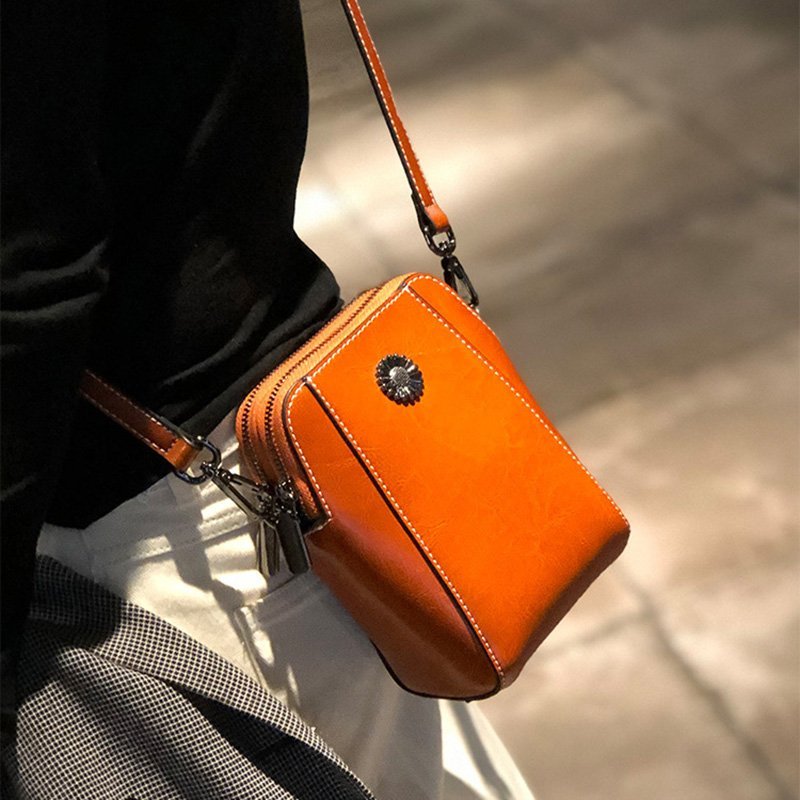
A startup developing a structured crossbody bag at a tight target price might use coated split leather on body panels while using top-grain leather or reinforced microfiber on the strap. This can control cost without placing the highest stress on the lower-density material.
For a premium daily-use tote, the handles, bottom, corners, and main panels face more repeated stress. Full-grain, top-grain, or a verified high-performance alternative may be more appropriate. Material location matters as much as material name.
What Are the Pros and Cons of Split Leather?
| Advantages | Disadvantages |
| Lower material cost | Lower fiber density than grain leather |
| Real leather content | Less natural surface character |
| Consistent appearance when coated or embossed | Coating can crack or peel |
| Flexible colors and textures | Greater dependence on finishing quality |
| Useful for small goods and low-stress parts | Limited fit for premium/high-stress applications |
| Efficient use of the hide | Higher risk of vague or misleading material claims |
Lower first cost does not always mean better business value. Brands should also consider retail price, product category, return risk, review sensitivity, warranty expectations, and whether the material supports the customer promise.
How Should Buyers Evaluate Split Leather Before Ordering?
1. Define the Product Tier
Decide whether the product is entry-level, mid-range, or premium, and define the retail price and durability promise before selecting the material.
2. Map the Material by Product Part
| Bag Component | Possible Material | Risk Level | What to Check |
| Main body | Coated split leather | Medium | Coating, bending and surface consistency |
| Handle | Top-grain leather | Lower | Reinforcement and attachment |
| Strap | Top-grain or microfiber | Lower | Load-bearing construction |
| Interior pocket | Split leather or PU | Medium | Price tier and edge finish |
| Bottom panel | Top-grain leather | Lower | Abrasion and structure |
| Trim | Split leather | Medium | Edge-paint adhesion |
3. Review Thickness and Hand Feel
Thickness affects structure, sewing, edge finishing, folding, and final product weight. Many bag leathers may fall within approximately 1.0–2.0 mm, but there is no universal ideal thickness. Wallets and small accessories often use thinner materials, while handles or structural parts may need different specifications. The correct thickness should be confirmed through the actual design and physical sample.
4. Check Coating and Embossing
- What coating or finish is used?
- Is the surface embossed?
- Is the finish flexible enough for bends?
- Can the bulk color match the approved sample?
- Does the product need special care instructions?
- Does the supplier have production experience with this material?
5. Verify Supplier Transparency
Good signs include clear material naming, physical swatches, component-level material descriptions, pre-production sample approval, bulk material confirmation, quality-control checkpoints, and honest discussion of limitations.
Warning signs include vague “genuine leather” wording, refusal to identify the leather layer, unrealistically low prices for claimed premium leather, material changes between sample and bulk, or no clear inspection process.
6. Build Quality Control Into Production
For split leather projects, quality control should focus on surface consistency, thickness, coating condition, cutting direction, edge performance, reinforcement, and high-stress construction areas.
- Incoming material: color, thickness, surface defects, coating and batch consistency.
- Cutting: avoid weak or damaged areas and control visible-panel selection.
- In-process: check stitching tension, folding behavior, edge paint and reinforcement placement.
- Final inspection: check scratches, early peeling/cracking, shape, straps/handles and packaging protection.
Testing and Material Claims
For demanding projects, buyers may request application-specific testing such as abrasion, colorfastness, flexing, or chemical-compliance testing. The appropriate test method depends on the product, destination market, material, and claim, so buyers should confirm requirements with a qualified testing provider.
Marketing language should also match the actual material. A coated split leather product should not be described as full-grain or premium top-grain leather. Broad durability or environmental claims should be supported by suitable evidence.
Useful authority references for publication include the Leather Working Group for leather manufacturing and sourcing frameworks, and independent testing organizations such as SGS or Intertek for application-specific testing services.
Mherder Sourcing Reference
Mherder has more than 19 years of OEM/ODM leather-goods experience in Guangzhou, with 5 production lines and more than 200 workers. For custom leather bags, the standard MOQ is typically 100 pieces per style per color. Wallets and small leather goods commonly start from 300 pieces per style. Ready-to-ship products with a laser logo can start from 20 pieces per style, depending on stock.
Typical custom sample cost is around USD 100+ per style, with approximately 10–15 working days for most custom developments. Bulk production is generally around 25–40 days after approval. Mherder can compare full-grain, top-grain, split, microfiber, PU, recycled, and other material directions during sampling, and supports custom logo, hardware, lining, packaging, inspection, and global shipping coordination.
Frequently Asked Questions
Is split leather real leather?
Yes. Split leather comes from the lower layer of an animal hide after the grain layer is separated. It is real leather, but it differs from full-grain and top-grain leather in fiber density, surface character, aging, and typical performance.
Is split leather good quality?
It can be good quality for the right application. Quality depends on the split layer, thickness, coating, backing, finishing, construction, and where it is used. It is generally less suitable for premium or high-stress applications than quality grain leather.
Is split leather good for handbags?
It can work for budget or fashion-focused handbags and lower-stress panels. Buyers should be more cautious with handles, straps, corners, bottom panels, and premium daily-use bags.
Does genuine leather mean split leather?
Not always. “Genuine leather” is a broad term for real leather and can include split leather. Buyers should ask whether the material is full-grain, top-grain, corrected grain, split, suede, or coated split.
Does split leather peel?
The fibrous leather layer itself is not a plastic film, but coated or laminated split leather can peel or crack if the surface finish or bonding fails, especially in high-flex or high-abrasion areas.
Is split leather better than PU leather?
Neither is universally better. Split leather provides real-leather content, while PU can offer controlled color, texture, cost, and non-animal positioning. Compare the actual material specification, application, customer promise, and physical sample.
How long does split leather last?
There is no reliable universal lifespan. Service life depends on leather quality, coating, thickness, construction, application area, frequency of use, abrasion, moisture, storage, and care. Buyers should avoid fixed longevity claims without supporting testing.
Conclusion
Split leather is not fake leather, and it is not automatically a poor material. It is a real leather option with clear strengths and limitations. The right decision depends on product tier, finish, thickness, application area, construction, customer expectation, and the claims the brand plans to make.
If you are developing bags, wallets, belts, or small leather goods, send Mherder your product design or reference, target quantity, price level, preferred material direction, logo, packaging requirements, and destination. We can compare split leather with top-grain, full-grain, microfiber, or PU options and prepare samples before bulk production.